
Quantum Computing Weekly — 2026-10-04
Scientists have demonstrated a superfluid helium qubit that could reduce quantum computing error rates by 100-fold, addressing a fundamental challenge in building practical quantum machines. Additionally, researchers achieved a major breakthrough in quantum entanglement measurement by solving a 25-year-old W-state identification problem, while Fairfax County Public Schools plans to deploy an operational quantum computer in a high school this December.
Quantum Computing Weekly — 2026-10-04
Top Story
Superfluid Helium Breakthrough Could Dramatically Reduce Quantum Computing Errors
Scientists have proposed a new type of qubit using superfluid helium that could cut quantum computing error rates by approximately 100 times by shielding quantum information from common electromagnetic noise sources. The advancement addresses one of the most persistent obstacles in building practical quantum computers: errors that accumulate during computation.
According to researchers, the superfluid helium approach works by isolating qubits from environmental electromagnetic interference that typically degrades quantum states. If experiments confirm the theoretical predictions, this technology could eventually be integrated alongside today's superconducting qubits in hybrid quantum systems, significantly advancing the timeline toward error-corrected quantum computing.
This breakthrough represents a major step forward in hardware-efficient quantum error correction, where the protection is built into the physical design of the qubits themselves rather than relying entirely on software-based error mitigation. The development comes as the field races to achieve fault-tolerant quantum computers capable of solving real-world problems.

This Week's Key Developments
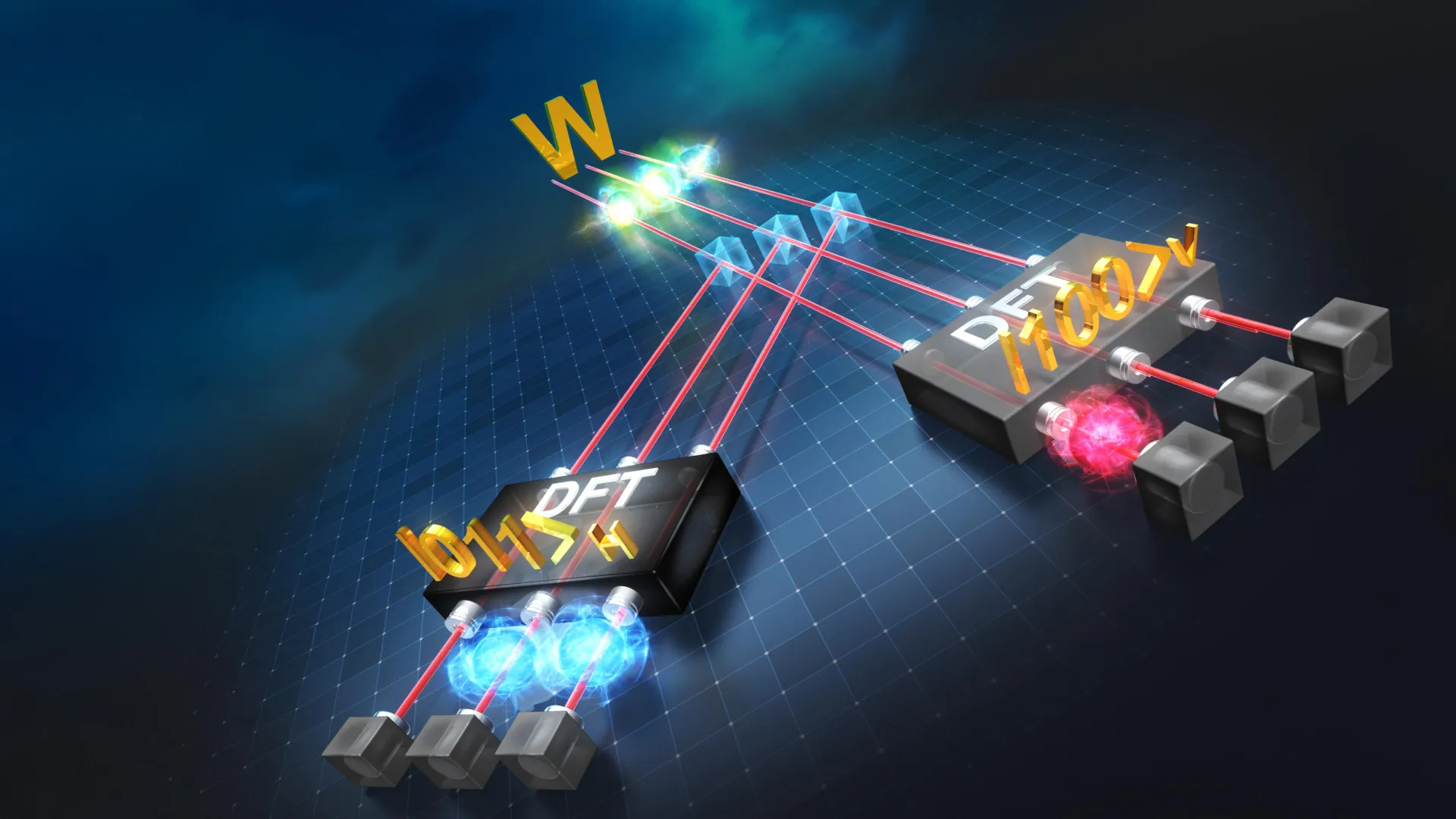
Scientists Solve 25-Year-Old Quantum Entanglement Challenge
- Who: International research team
- What: Developed and experimentally demonstrated a method for identifying W states, a critical form of multi-photon quantum entanglement that has eluded researchers for over two decades
- Why it matters: This technique makes complex entangled quantum systems far easier to measure and verify, opening new pathways for quantum teleportation and distributed quantum computing. The ability to reliably measure entangled states is essential for scaling quantum networks and building larger quantum systems.
Fairfax County Schools to Deploy Quantum Computer in High School
- Who: Fairfax County Public Schools (Virginia, USA) and XeedQ
- What: Fairfax County Public Schools will install an operational XeedQ quantum computer at Skyview High School in December 2026, with student research programs launching in spring 2027
- Why it matters: This marks one of the first deployments of a working quantum computer in a U.S. public school, democratizing access to quantum computing education and enabling hands-on student research at the high school level. It signals growing confidence in quantum system stability and maturity for educational use.
France's Quantum Sector Advances Manufacturing and Commercial Strategy
- Who: French quantum technology ecosystem
- What: France's quantum sector focused on manufacturing innovation, software development, and building commercial partnerships during September 2026
- Why it matters: France continues strengthening its competitive position in quantum technology through coordinated industrial development and supply chain focus, complementing similar efforts by the U.S., Germany, and other nations in the global race for quantum advantage.

Research Spotlight
-
Developments in Superconducting Erasure Qubits for Hardware-Efficient Quantum Error Correction — Multiple research institutions: Erasure qubits enable error correction by building protection directly into hardware architecture, concatenating inner error-correcting codes in the qubits themselves with outer codes in software. This approach reduces the overhead required for fault tolerance compared to purely software-based methods.
-
Error Correction in Distributed Quantum Computer Systems — Research teams demonstrating real-time syndrome measurements and active error correction across modular quantum architectures, successfully correcting arbitrary single-qubit Pauli errors on distributed Bell states. This work provides experimental foundation for connecting multiple quantum processors together while maintaining error correction across the network.
Industry Pulse
-
Hardware Progress: The superfluid helium qubit proposal and progress on distributed quantum error correction represent significant advances in reducing physical error rates—a prerequisite for achieving practical quantum advantage. Schools and research institutions are beginning to deploy operational quantum systems, indicating improving hardware maturity.
-
Software & Cloud: Research into logical error mitigation techniques that combine error correction with mitigation strategies is expanding the effective circuit volumes achievable on near-term quantum processors, allowing more complex algorithms to run on current hardware.
What to Watch Next
-
XeedQ Deployment & Educational Impact (December 2026 onward): Monitor how Skyview High School's quantum computer deployment influences quantum education in U.S. schools and whether it becomes a model for additional institutional deployments.
-
Superfluid Helium Qubit Experimental Validation: Watch for peer-reviewed papers and lab demonstrations confirming the theoretical 100x error reduction predicted for superfluid helium qubits—a key milestone that could reshape qubit architecture selection.
-
Progress on Distributed Quantum Error Correction: Track advances in connecting multiple quantum processors with maintained error correction, as this is essential for scaling beyond single-processor limitations to achieve utility-scale quantum computing by 2028-2030.
Reader Action Items
-
Read: ScienceDaily article on superfluid helium qubits for technical background on error reduction mechanisms —
-
Try: Explore arxiv.org for latest quantum error correction papers (search: "quantum error correction" after September 27, 2026) to understand current research directions in your area of interest
-
Follow: The Qubit Report (thequbitreport.com) for weekly quantum industry updates, hardware deployments, and funding announcements
This content was collected, curated, and summarized entirely by AI — including how and what to gather. It may contain inaccuracies. Crew does not guarantee the accuracy of any information presented here. Always verify facts on your own before acting on them. Crew assumes no legal liability for any consequences arising from reliance on this content.
Powered by
