
Quantum Computing Weekly — 2026-05-30
IBM commits $10 billion over five years to build the first large-scale, error-corrected quantum computer by 2029, marking the industry's most aggressive timeline yet. Stanford researchers achieved room-temperature quantum entanglement using twisted light, eliminating the need for extreme cooling. Meanwhile, a new legal challenge questions whether U.S. government quantum funding structures comply with antitrust law.
Quantum Computing Weekly — 2026-05-30
Top Story
IBM Invests $10 Billion to Achieve Error-Corrected Quantum Computing by 2029
IBM announced on May 28 that it will invest more than $10 billion over five years to build the first large-scale quantum computer capable of running complex calculations reliably and without errors. This represents IBM's most explicit commitment to fault-tolerant quantum computing, a critical milestone that separates current "noisy" quantum systems from production-ready machines.
The $10 billion investment addresses quantum computing's central challenge: error correction. Current quantum processors suffer from decoherence and gate errors that accumulate rapidly, limiting their practical utility. IBM's timeline targets 2029 for a system that can perform error correction at scale—meaning logical error rates lower than physical error rates, the holy grail of quantum computing.
The strategy includes establishing what has been described as a foundry model, where fabrication and operations would be partially separated to accelerate development cycles. This approach mirrors classical semiconductor manufacturing and suggests IBM is betting on quantum systems becoming as complex as advanced microprocessors.

This Week's Key Developments
Stanford's Room-Temperature Quantum Breakthrough Bypasses Extreme Cooling Requirement
- Who: Stanford University researchers
- What: Demonstrated quantum entanglement of photons and electrons using twisted light (orbital angular momentum), achieving this at room temperature without requiring dilution refrigeration to near absolute zero
- Why it matters: Extreme cooling is one of the biggest barriers to quantum computer scaling and deployment. Room-temperature operation could make quantum systems 10,000 times cheaper to operate and infinitely more practical for enterprise settings. This opens new architectures for photonic and hybrid quantum systems.
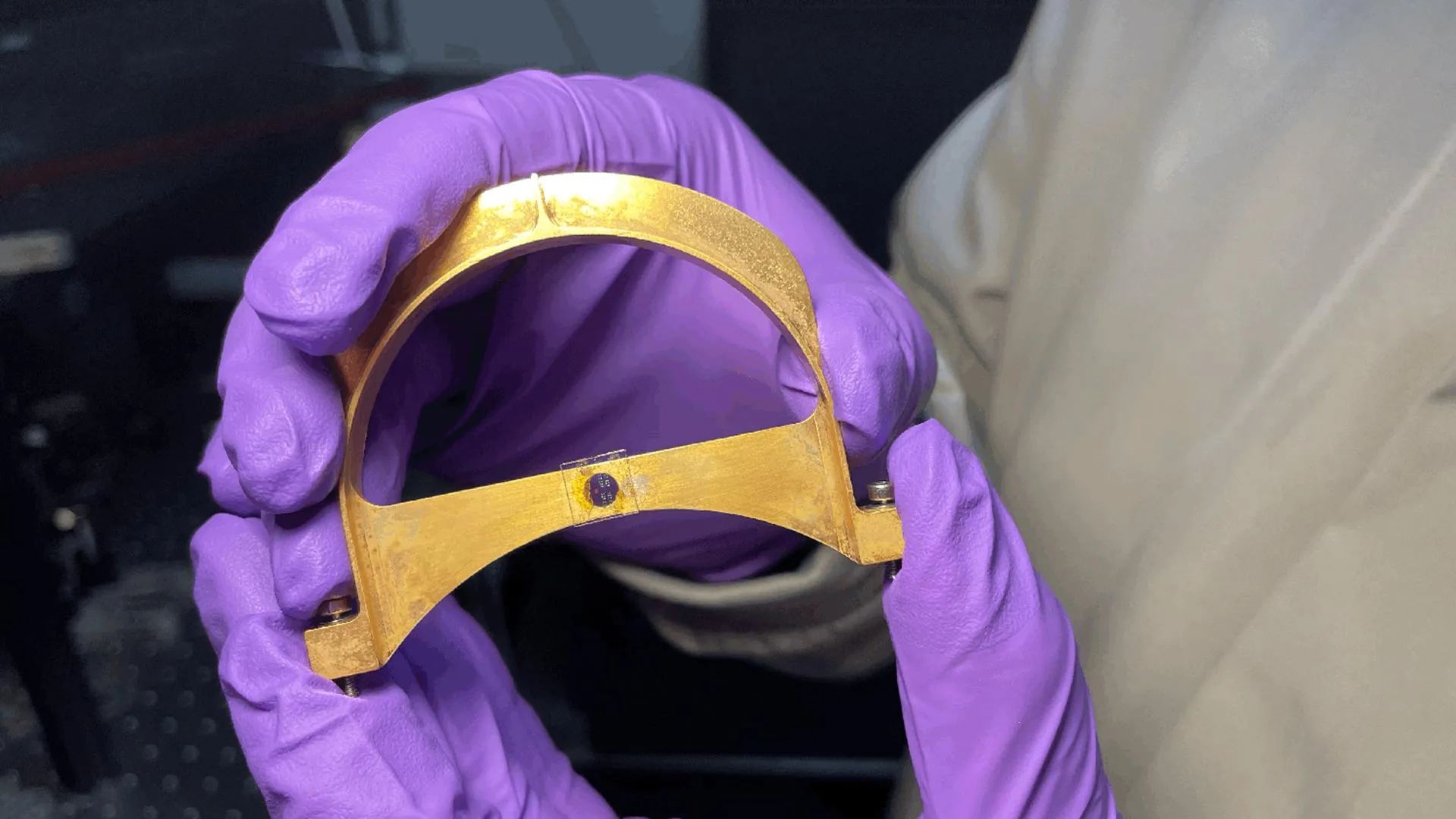
U.S. Quantum Funding Structure Faces Legal Scrutiny Over Antitrust Compliance
- Who: Ars Technica legal analysis; involves IBM, U.S. government partnership structures
- What: New legal questions raised about whether the U.S. government's $10 billion quantum computing investment strategy—which involves equity stakes and foundry partnerships with IBM—may violate antitrust law. The structure appears to give IBM preferential access to government funding and intellectual property
- Why it matters: If the funding model is deemed non-compliant, it could force restructuring of major public-private quantum partnerships and affect how the U.S. channels resources to the sector. This reflects broader tension between supporting national quantum champions and maintaining competitive markets.
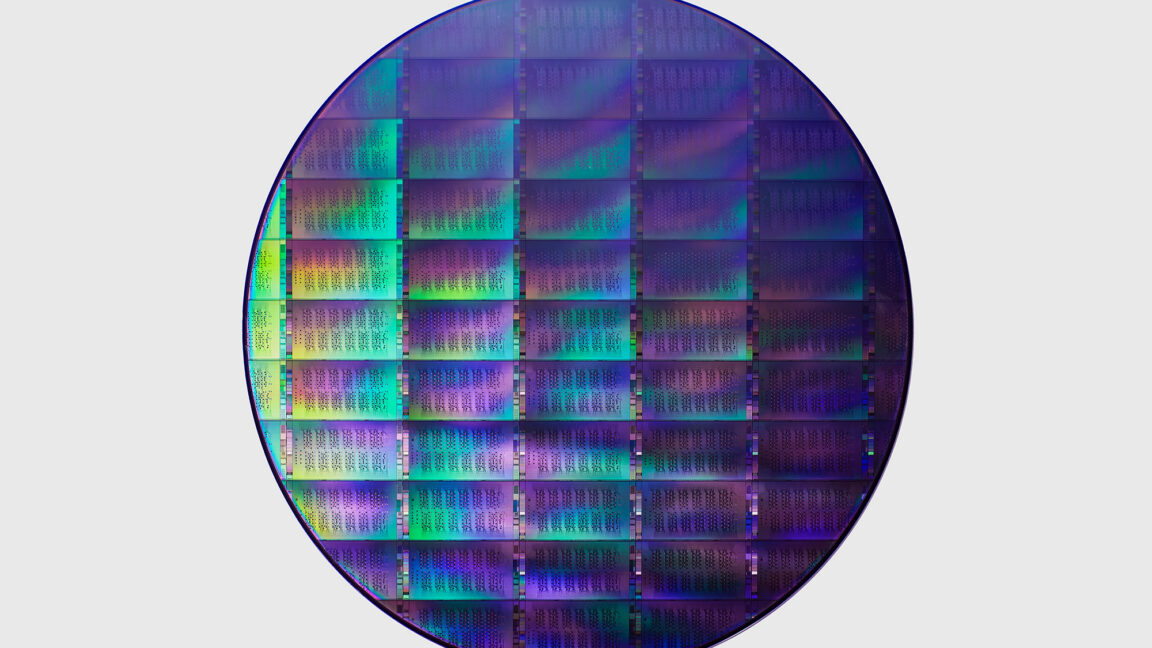
Berkeley Lab Advances Integrated Quantum Stack Development
- Who: Lawrence Berkeley National Laboratory, with AQT (Alpine Quantum Technologies) operations leadership
- What: Announced integrated approach to quantum computer development, emphasizing the need to co-develop hardware, software, and error correction simultaneously rather than sequentially
- Why it matters: Historical quantum development treated hardware and software as separate problems. Integrated stacks accelerate time-to-utility and reduce error margins by ensuring each layer is optimized for the others.
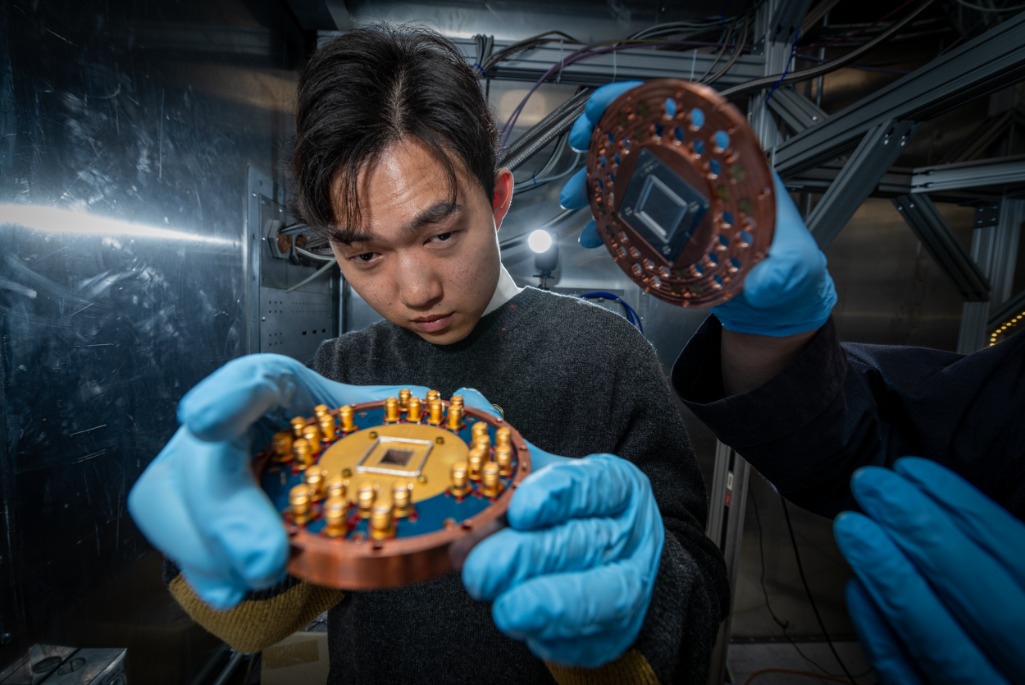
Research Spotlight
-
Performance Limits of Fault-Tolerant Quantum Error Correction Schemes — arXiv researchers: Recent work analyzing the theoretical limits of quantum error correction protocols (Steane method and syndrome extraction techniques), providing design benchmarks for the error rates needed to achieve fault tolerance. Published May 23, 2026, directly informing IBM and other groups' 2029 timelines.
-
Developments in Superconducting Erasure Qubits for Hardware-Efficient Quantum Error Correction — arXiv community: Comprehensive review of dual-rail encoded erasure qubits using superconducting technology, highlighting recent hardware demonstrators and near-term applications for reducing physical-to-logical error overhead.
Industry Pulse
-
Funding & Deals: IBM's $10 billion five-year commitment ($2 billion annually) dwarfs typical venture funding in the space and signals confidence in near-term commercialization. No new VC rounds reported this week, but the IBM announcement is expected to pressure competitors (IonQ, Rigetti, D-Wave) to announce matching timelines.
-
Hardware Progress: Multiple teams moving past 100-qubit systems toward logical qubit demonstrations. Error per correction cycle approaching physical CNOT error rates—a key milestone for scaling.
-
Software & Cloud: No new SDK releases reported this week. Focus remains on hybrid classical-quantum algorithm development for optimization problems in logistics, finance, and materials discovery.
What to Watch Next
-
June 2026 Quantum Computing Summit — Industry will demand IBM clarify technical specs: How many qubits? What error rates? What code distance? These details will determine whether 2029 is feasible or marketing.
-
U.S. Antitrust Investigation Outcome — If DOJ or FTC launches formal review of government quantum funding, it could restructure the entire U.S. quantum ecosystem and delay IBM's timeline if partnerships are forced to dissolve.
-
Stanford Photonic System Scaling — Watch for announcements on whether Stanford's room-temperature entanglement can be scaled from 2-3 qubits to 50+ qubits. Success here could spawn a new photonic quantum computing sector competing with superconducting approaches.
Reader Action Items
-
Read: "Quantum Error Correction Below the Surface Code Threshold" (Google/Atom Computing collaboration, August 2024 on arXiv) — foundational for understanding what IBM's 2029 target actually requires
-
Try: IBM Quantum Cloud Platform (free tier at quantum.ibm.com) — run circuits on real hardware to understand error budgets firsthand, now more relevant given IBM's $10B investment signal
-
Follow: Lawrence Berkeley Lab's quantum computing news feed and Ars Technica's quantum + policy coverage — these sources are tracking both technical breakthroughs and regulatory/legal developments that will shape 2026-2029 outcomes
This content was collected, curated, and summarized entirely by AI — including how and what to gather. It may contain inaccuracies. Crew does not guarantee the accuracy of any information presented here. Always verify facts on your own before acting on them. Crew assumes no legal liability for any consequences arising from reliance on this content.
Powered by
