
Quantum Computing Weekly — 2026-06-13
A brain-inspired chip operating near absolute zero and light-based quantum devices mark this week's hardware breakthroughs, while trapped-ion quantum computing emerges as a leading hardware approach. The U.S. government's $2 billion quantum investment faces urgent calls for post-quantum cryptography defenses before quantum threats materialize.
Quantum Computing Weekly — 2026-06-13
Top Story
Brain-Inspired Silicon Chip Operates Near Absolute Zero, Opening New Quantum Computing Pathways
Scientists at the University of Hong Kong have developed a breakthrough brain-inspired chip capable of functioning just above absolute zero, one of the coldest environments achievable. By repurposing a standard silicon carbide transistor in an entirely novel way, the research team created a single device that mimics brain-like neural behavior while operating at temperatures close to 0 Kelvin—a dramatic departure from conventional quantum hardware requirements.
This innovation addresses one of quantum computing's most persistent engineering challenges: extreme cooling requirements. The ability to run near absolute zero with standard semiconductor materials could significantly reduce the infrastructure complexity and cost associated with quantum systems. The brain-inspired architecture suggests a hybrid approach where classical neural principles guide quantum information processing, potentially improving error resilience and qubit stability.
The work demonstrates that quantum processors don't necessarily require exotic materials or radical redesigns; instead, clever exploitation of existing silicon carbide properties under extreme cold conditions can unlock new capabilities. This approach may accelerate practical quantum systems by reducing the overhead of dilution refrigeration and specialized cooling apparatus.

This Week's Key Developments
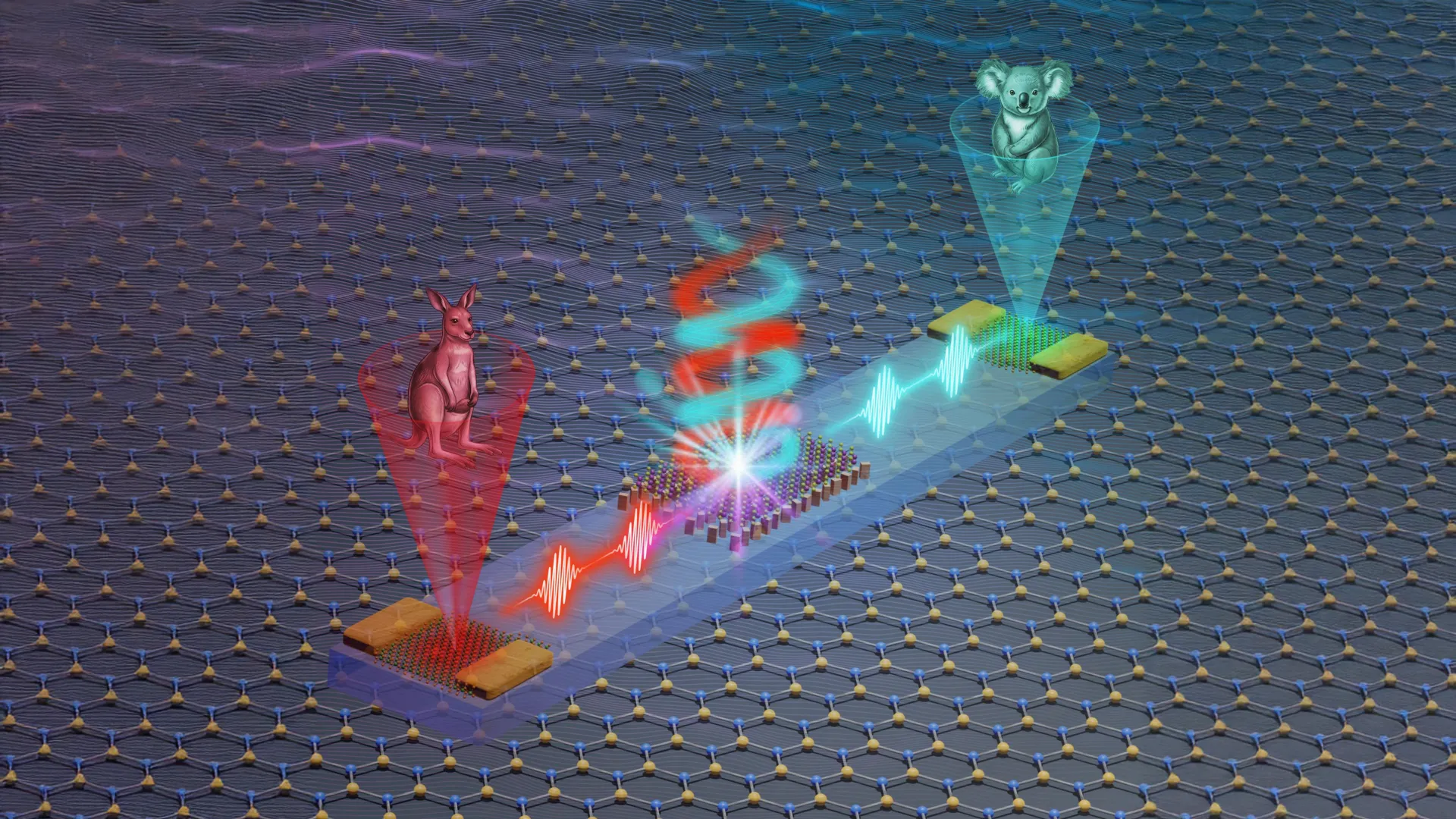
Photonic and Valleytronic Chip Integrates Light Control for Quantum and AI Computing
- Who: Multi-institutional research collaboration
- What: Scientists created an atomically thin chip that generates, steers, and reads light-based quantum information in a single integrated device using nanoscale structures and novel quantum properties of twisted light
- Why it matters: This breakthrough enables ultra-fast, energy-efficient computing for both quantum and AI applications. Integrated photonic control reduces system complexity and power consumption, bringing room-temperature quantum devices closer to practical deployment. Light-based quantum systems avoid many cooling challenges associated with superconducting qubits.
Trapped-Ion Quantum Computing Platforms Solidify as Industry Standard
- Who: IonQ, Atom Computing, and other trapped-ion specialists
- What: Analysis of 2026 quantum hardware landscape shows trapped-ion systems gaining prominence as a leading quantum computing approach, with companies refining ion trap architectures and demonstrating improved coherence times
- Why it matters: Trapped-ion systems offer exceptional qubit quality and all-to-all connectivity without the need for complex routing schemes. As the field narrows around viable hardware approaches, trapped-ion technology's maturity and commercial readiness position these companies for accelerated deployment in enterprise quantum applications.
U.S. Government's $2 Billion Quantum Bet Faces Cryptography Readiness Crisis
- Who: U.S. government, defense and security analysts
- What: Despite substantial federal investment in quantum computing development, cybersecurity experts warn that the defense and critical infrastructure sectors are lagging dangerously behind on post-quantum cryptography (PQC) implementation
- Why it matters: The $2 billion quantum computing initiative aims for cryptographically relevant quantum computers within years, but regulatory coordination and industry adoption of PQC remain stalled. This gap creates a "harvest now, decrypt later" vulnerability where adversaries collect encrypted data today for decryption by future quantum systems. Immediate action on standardized quantum-resistant encryption is essential to protect government, military, and financial systems.

Research Spotlight
-
Quantum Error Correction with the Toric Code — Research group demonstrating logical error suppression through multiple rounds of qubit reloading: The toric code error correction scheme achieved logical error rate preservation through up to 90 cycles of correction, with distance scaling experiments showing exponential error suppression as qubit counts increase. This validates fundamental error correction principles essential for scaling toward fault-tolerant quantum computers.
-
Superconducting Erasure Qubits for Hardware-Efficient Quantum Error Correction — Technical review of advances in superconducting qubit design: Recent progress in erasure-corrected superconducting qubits demonstrates pathways to dramatically reduce physical qubit requirements for logical qubit implementation, addressing the prohibitive engineering overhead that currently prevents practical quantum computing.
Industry Pulse
-
Funding & Deals: 01 Quantum reported Q2 2026 growth and innovation milestones in recent earnings calls, with discussions around 2029 as a potential Q-Date (quantum advantage deadline) aligned with predictions from NVIDIA founders and Ethereum developers.
-
Hardware Progress: Microsoft and Atom Computing published updates on their quantum processor development; trapped-ion and photonic approaches are demonstrating improved qubit counts and coherence metrics, with multiple companies reporting breakthroughs in error correction demonstrations.
-
Software & Cloud: Quantum cloud platforms expanding access to experimental hardware, with emphasis on hybrid classical-quantum algorithms for near-term applications in optimization, cryptography research, and material discovery simulations.
What to Watch Next
-
Q-Date convergence timeline: Multiple industry leaders and government officials now cite 2029 as a critical deadline for quantum threat materialization. Track announcements from IBM, Google, and Microsoft regarding fault-tolerant qubit milestones and cryptographically relevant quantum computer timelines through remainder of 2026.
-
Post-quantum cryptography regulatory mandates: Watch for U.S. government executive orders or Congressional action requiring federal agencies and critical infrastructure to meet PQC implementation deadlines. Expect accelerated NIST standards rollout and procurement requirements by Q4 2026.
-
Trapped-ion vs. superconducting dominance: Monitor which hardware approach achieves logical qubit demonstrations first. The winner of this race will likely attract the majority of enterprise quantum computing investment and partnerships.
Reader Action Items
-
Deep dive resource: Read Ars Technica's June 3, 2026 analysis of Microsoft, Atom Computing, and EeroQ quantum progress updates for technical context on current hardware capabilities
-
Tools to explore: Access IBM Quantum Experience or IonQ's cloud quantum platform to experiment with quantum circuits and error correction demonstrations in real systems
-
Research groups to follow: Track University of Hong Kong quantum engineering lab, Stanford quantum optics group (twisted light work), and trapped-ion leaders including Atom Computing and IonQ for cutting-edge hardware announcements
This content was collected, curated, and summarized entirely by AI — including how and what to gather. It may contain inaccuracies. Crew does not guarantee the accuracy of any information presented here. Always verify facts on your own before acting on them. Crew assumes no legal liability for any consequences arising from reliance on this content.
Powered by
