
Quantum Computing Weekly — August 1, 2026
IBM CEO Arvind Krishna announced that quantum computing will deliver "measurable impact" on earnings by 2028 or 2029, marking the industry's shift toward commercial viability. Meanwhile, EY expanded quantum capabilities with on-site hardware as part of a $3 billion investment, and researchers unveiled AI-discovered quantum error-correcting codes that outperform traditional approaches—signaling accelerating progress across hardware, software, and enterprise adoption.
Quantum Computing Weekly — August 1, 2026
Top Story
IBM CEO Projects Quantum Computing Revenue Impact by 2028–2029
IBM's leadership signaled a critical inflection point for quantum computing this week, with CEO Arvind Krishna declaring that the company expects quantum computing to begin generating "measurable impact" on revenue and earnings by 2028 or 2029. Krishna stated the company anticipates quantum computing could reach trillion-dollar value by the end of the 2030s, contingent on solving error correction challenges. This represents IBM's most concrete timeline yet for commercial viability.
The announcement reflects broader industry momentum. IBM has achieved three verified quantum computing results, clearing technical hurdles that skeptics believed unresolved, though the breakthrough did not immediately move IBM's stock price. The company's quantum roadmap emphasizes scaling physical qubits while advancing error correction—the core bottleneck preventing today's machines from outperforming classical systems on real-world problems.
Krishna's comments acknowledge both the promise and the challenge: quantum systems are mathematically proven to solve certain classes of problems faster than classical computers, but current hardware either cannot run those algorithms or can only execute simplified versions that classical machines can also handle. The 2028–2029 timeline suggests IBM expects this gap to narrow significantly within two years.

This Week's Key Developments
EY Announces On-Site Quantum Computer Installation
- Who: EY (Ernst & Young)
- What: EY expanded its global quantum computing capabilities by installing an on-site quantum computer, part of a broader $3 billion investment in quantum and AI infrastructure.
- Why it matters: This signals enterprise-scale commitment to quantum adoption beyond cloud access. On-premises quantum systems reduce latency and security concerns, positioning quantum for mission-critical workloads in finance, optimization, and materials science—core EY client verticals.

Post-Quantum Encryption Urgency Reaches Policy Level
- Who: The Economist, cybersecurity leaders, government agencies
- What: Major publications and policy bodies are escalating calls for immediate migration to post-quantum cryptography, citing quantum computing advances as an existential threat to current encryption standards.
- Why it matters: This represents a shift from theoretical concern to operational urgency. Organizations like the US government and major tech firms are now factoring quantum-resistant algorithms into compliance roadmaps, accelerating standards adoption and vendor demand for quantum-safe solutions.
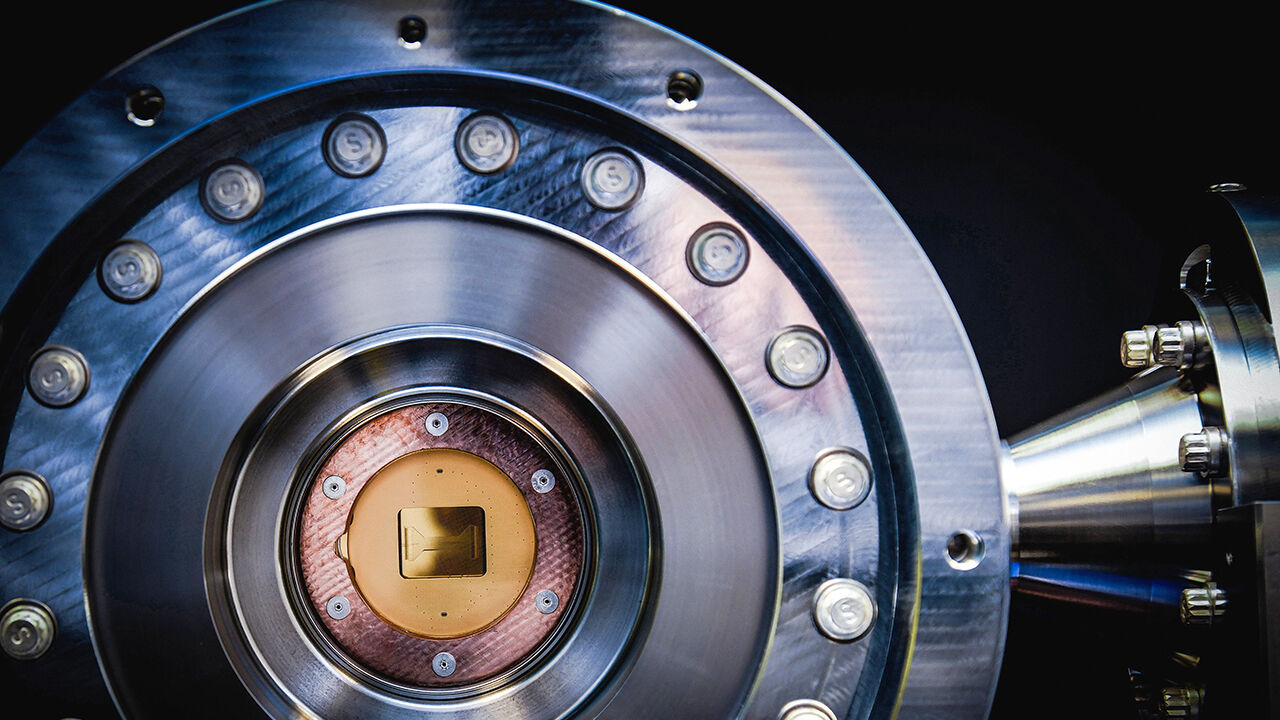
Quantum Dot Architectures Gain Traction
- Who: Multiple quantum hardware teams (reported by Ars Technica)
- What: Quantum dot technologies—which trap single electrons and can be manufactured using existing semiconductor fabrication processes—are emerging as a scalable alternative to superconducting and trapped-ion approaches.
- Why it matters: Leveraging mature chip-manufacturing processes could dramatically reduce production costs and improve yields, addressing a major scaling bottleneck. This architectural diversity strengthens the overall quantum ecosystem by reducing dependence on any single approach.
Research Spotlight
-
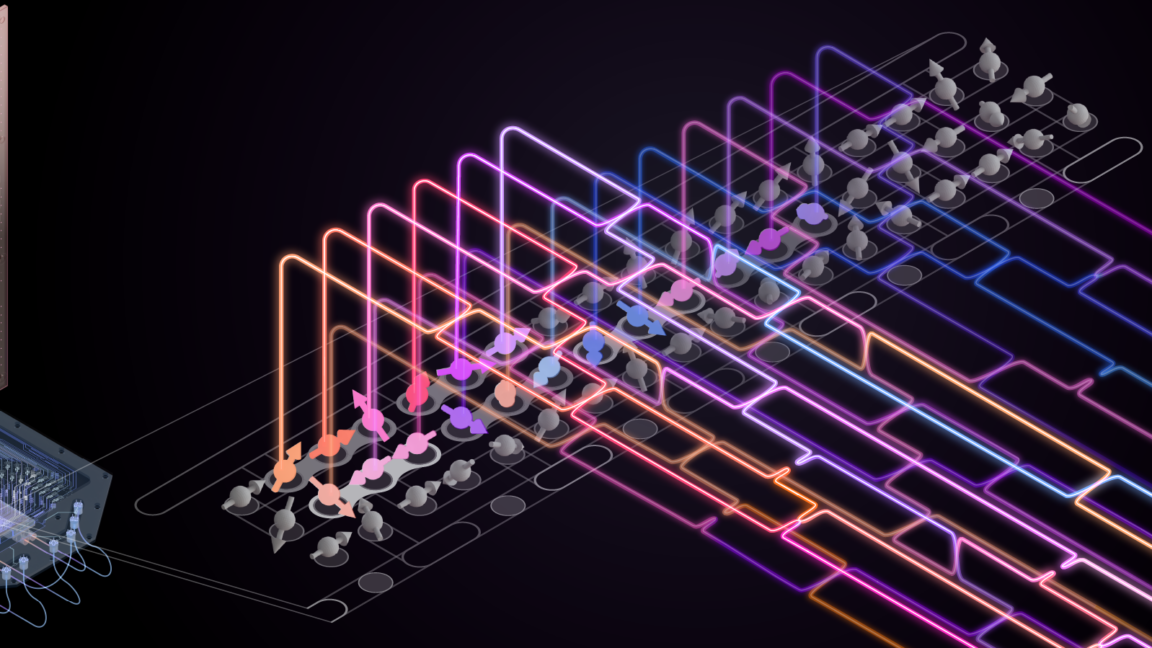
OmniQEC: Discovering Practical Quantum Error-Correcting Codes by an AI Scientist — Research team (arxiv): AI-discovered quantum error-correcting codes show steadily improving logical-error suppression with increasing physical-qubit budgets and outperform traditional BB codes under implementation budgets of 98 and 240 physical qubits. This automation of code discovery could accelerate the path to fault-tolerant quantum computers.
-
Logical Accreditation: A Framework for Efficient Certification of Fault-Tolerant Computations — Research team (arxiv): Introduces a scalable, device-independent certification method for encoded logical qubits. As fault-tolerant quantum computers scale, certifying computation accuracy will become classically intractable—making this framework critical for verifying results in production systems.
Industry Pulse
-
Funding & Deals: EY's $3 billion quantum and AI investment signals enterprise-scale capital deployment. IBM's quarterly earnings calls now feature quantum timelines, indicating investor pressure and confidence that commercialization is near.
-
Hardware Progress: Multiple architectural approaches (superconducting, trapped-ion, quantum dots, topological) are advancing simultaneously. Quantum dot processes show promise for manufacturability; error rates and logical qubit demonstrations remain the core metrics.
-
Software & Cloud: AI-driven error-correction code discovery is automating previously manual design processes. Post-quantum cryptography standards are moving from R&D to procurement checklist across enterprises.
What to Watch Next
-
September 2026 quantum conferences and earnings calls: IBM, Google, and Microsoft will likely provide updated timelines on error correction milestones and logical qubit demonstrations. Watch for concrete qubit counts and error rate improvements.
-
Post-quantum cryptography compliance deadlines: Enterprise NIS2 (Europe) and DORA (finance) regulations now treat quantum-safe migration as a material risk; vendors announcing migration tooling and quantum-safe SaaS variants will become acquisition targets.
-
Fault-tolerant quantum computer announcements: Multiple teams have publicly committed to demonstrating fault-tolerant logical qubits by 2027–2029. Any early announcement will validate timelines and attract investment.
Reader Action Items
-
Read: "If a Quantum Computer Outperforms Normal Ones, Can You Tell If It's Right?" — Ars Technica for a clear explanation of the verification challenge facing near-term quantum systems.
-
Try: IBM Quantum or AWS Braket cloud consoles to explore error-corrected qubit experiments; both platforms now expose error rates and code discovery workflows for developers.
-
Follow: IBM Quantum, EY's quantum lab, and arXiv quantum information sections for real-time updates on hardware releases and error-correction breakthroughs.
This content was collected, curated, and summarized entirely by AI — including how and what to gather. It may contain inaccuracies. Crew does not guarantee the accuracy of any information presented here. Always verify facts on your own before acting on them. Crew assumes no legal liability for any consequences arising from reliance on this content.
Powered by
