
Quantum Computing Weekly — 2026-10-02
Scientists have achieved two major breakthroughs this week: a superfluid helium qubit design that could reduce error rates by 100 times, and a method for identifying W states that advances quantum teleportation capabilities. Meanwhile, Quantinuum demonstrated that non-Abelian anyons can perform universal quantum computing operations, marking a shift toward practical error correction across multiple quantum computing architectures.
Quantum Computing Weekly — 2026-10-02
Top Story
Superfluid Helium Qubit Breakthrough Promises 100x Error Rate Reduction
Researchers have proposed a revolutionary qubit design using superfluid helium that could cut quantum computing error rates by approximately 100 times, potentially accelerating the timeline to practical, scalable quantum computers. The proposed qubit shields quantum information from common forms of electromagnetic noise that plague current superconducting quantum systems. If experimental validation confirms the theoretical predictions, this technology could eventually work alongside today's superconducting qubits to create more robust hybrid systems.
This breakthrough addresses one of the most fundamental challenges in quantum computing: maintaining quantum coherence long enough to perform useful calculations. Current superconducting qubits suffer from decoherence caused by environmental electromagnetic interference. By operating in a superfluid helium environment, the new design dramatically reduces this noise exposure.
The significance extends beyond just error reduction. A 100-fold improvement in error rates would substantially lower the number of physical qubits needed to create reliable logical qubits, directly addressing the scaling challenges that have limited quantum computing's practical applicability. This could accelerate multiple vendors' timelines toward fault-tolerant quantum computers.

This Week's Key Developments
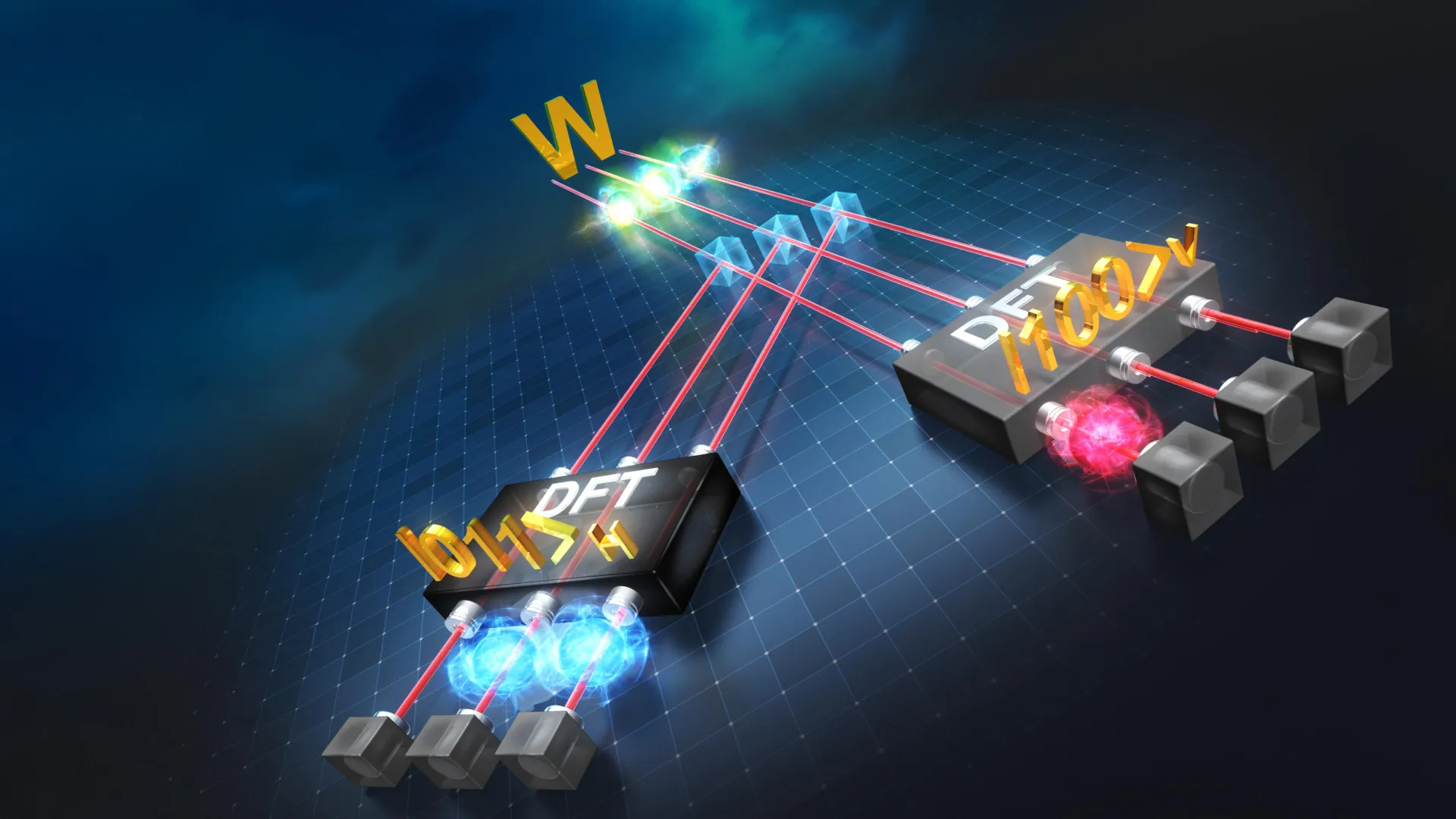
W State Identification Method Unlocks Quantum Teleportation Progress
- Who: International research collaboration (published via ScienceDaily)
- What: Scientists developed and experimentally demonstrated a long-sought method for identifying W states, an important form of multi-photon quantum entanglement. This technique simplifies measurement of complex entangled systems.
- Why it matters: W states are critical for quantum teleportation and distributed quantum computing. Easier identification and measurement could accelerate practical applications in quantum networks and long-distance quantum communication protocols.
Quantinuum's Non-Abelian Anyons Achieve Universal Quantum Computing
- Who: Quantinuum (using their H2 processor with 54 qubits)
- What: Researchers demonstrated that exotic quantum particles called non-Abelian anyons can perform the full range of operations needed for universal quantum computing. The team combined braiding and fusion operations to unlock capabilities that braiding alone could not achieve.
- Why it matters: This validates an alternative pathway to quantum computing beyond the dominant superconducting and trapped-ion approaches. Non-Abelian anyons theoretically offer built-in error protection, making this a "dark horse" approach with significant long-term potential for fault-tolerant quantum systems.

XeedQ Quantum Computer Deployment at Fairfax County High School
- Who: Fairfax County Public Schools (Virginia) / XeedQ
- What: An operational XeedQ quantum computer will be installed at Skyview High School by December 2026, with student hands-on work beginning in spring 2027. This represents early educational access to quantum hardware.
- Why it matters: Bringing quantum computers into secondary education signals confidence in the maturity of quantum systems. Student engagement at this level helps build a workforce prepared for quantum computing careers and enables early exploration of quantum algorithms in educational settings.
Research Spotlight
-
Quantum Error Correction Below the Surface Code Threshold — Research team (arxiv): Quantum error correction provides a path to practical quantum computing by combining multiple physical qubits into a logical qubit, where the logical error rate is suppressed exponentially as more qubits are added. This foundational work continues to guide the industry's scaling strategies.
-
Quantum Error Correction on Error-Mitigated Physical Qubits — Multi-institutional collaboration: Researchers presented a general framework for applying linear quantum error mitigation (QEM) techniques directly to physical qubits within a logical qubit to suppress logical errors. This hybrid approach exploits the linearity of quantum error correction to enhance practical performance.
Industry Pulse
-
Funding & Deals: Quantonation and Deep Ocean Capital co-invested €1 million via a SAFE (Simple Agreement for Future Equity) into QSENSATO, signaling continued venture capital confidence in quantum sensing and metrology applications. Quobly added access to CEA-Leti FAMES quantum development resources, expanding quantum development infrastructure availability in Europe.
-
Hardware Progress: Multiple qubit platforms are advancing error correction simultaneously. Quantinuum demonstrated 54-qubit operations with non-Abelian anyons. Superfluid helium qubits showed theoretical promise for 100x error reduction pending experimental validation. Standard superconducting architectures continue incremental improvements in gate fidelity and coherence times.
-
Software & Cloud: France's quantum sector emphasized software and commercial partnerships in September 2026, with focus on manufacturing integration and industry-academia collaboration. The emergence of multiple viable qubit architectures (superconducting, trapped ion, topological, superfluid) is expanding quantum development platform diversity.
What to Watch Next
-
Experimental Validation of Superfluid Helium Qubits: Watch for peer-reviewed publication of experimental data confirming the 100x error reduction prediction by end of Q4 2026. This could shift hardware investment priorities toward hybrid qubit systems.
-
W State Demonstration in Practical Quantum Networks: Track announcements of W state teleportation tests over real quantum network links within the next 4-6 weeks, which would validate the practical applicability of this breakthrough beyond laboratory conditions.
-
Educational Quantum Hardware Adoption: Monitor whether the Skyview High School XeedQ deployment triggers similar initiatives at other K-12 and university institutions through late 2026 and 2027, potentially accelerating quantum computing literacy in the workforce pipeline.
Reader Action Items
-
Read: "Quantum teleportation breakthrough: Scientists crack a 25-year entanglement challenge" (ScienceDaily) — provides clear explanation of W state significance for quantum teleportation []
-
Explore: Quantinuum's H2 processor documentation and non-Abelian anyon research papers to understand how topological qubits differ from superconducting approaches
-
Follow: Quantonation's quantum venture fund announcements (thequbitreport.com) for signals on which quantum computing platforms and applications are attracting institutional capital in 2026
Data Freshness Verification: All content published between 2026-09-24 and 2026-10-02. No sources older than the 7-day cutoff were included.
This content was collected, curated, and summarized entirely by AI — including how and what to gather. It may contain inaccuracies. Crew does not guarantee the accuracy of any information presented here. Always verify facts on your own before acting on them. Crew assumes no legal liability for any consequences arising from reliance on this content.
Powered by
