
Quantum Computing Weekly — 2026-04-19
IonQ delivered a landmark week, winning a DARPA contract and achieving a major quantum networking breakthrough that sent its stock surging past $44. Meanwhile, C12 unveiled a multi-generation roadmap targeting useful fault-tolerant quantum computing by 2033 using carbon nanotube spin qubits. The cybersecurity industry is responding to the quantum threat with global spending projected to hit $240 billion in 2026, as post-quantum cryptography migration urgency reaches a new peak.
Quantum Computing Weekly — 2026-04-19
Top Story
IonQ Stock Surges Past $44 After DARPA Contract Win and Landmark Quantum Networking Breakthrough
IonQ just delivered what may be the most consequential week in its corporate history. The trapped-ion quantum computing company simultaneously announced a DARPA contract win and a major quantum networking breakthrough — a rare double milestone that sent shares surging past $44.
The DARPA contract signals growing U.S. government confidence in IonQ's trapped-ion platform as a pathway to practical quantum systems, aligning with broader federal investment priorities in quantum as a strategic technology. Quantum networking milestones, meanwhile, are increasingly seen as a prerequisite for distributed quantum computing architectures and quantum-secured communications — both of which have enormous national security implications.
The stock surge reflects a market beginning to price in near-term commercial utility, not just long-range promise. IonQ's combination of government credibility and demonstrated technical progress positions it as one of the clearest near-term beneficiaries in the public quantum computing space. The dual announcement in a single week is the kind of catalyst that separates credible hardware players from the broader quantum hype cycle.
This Week's Key Developments
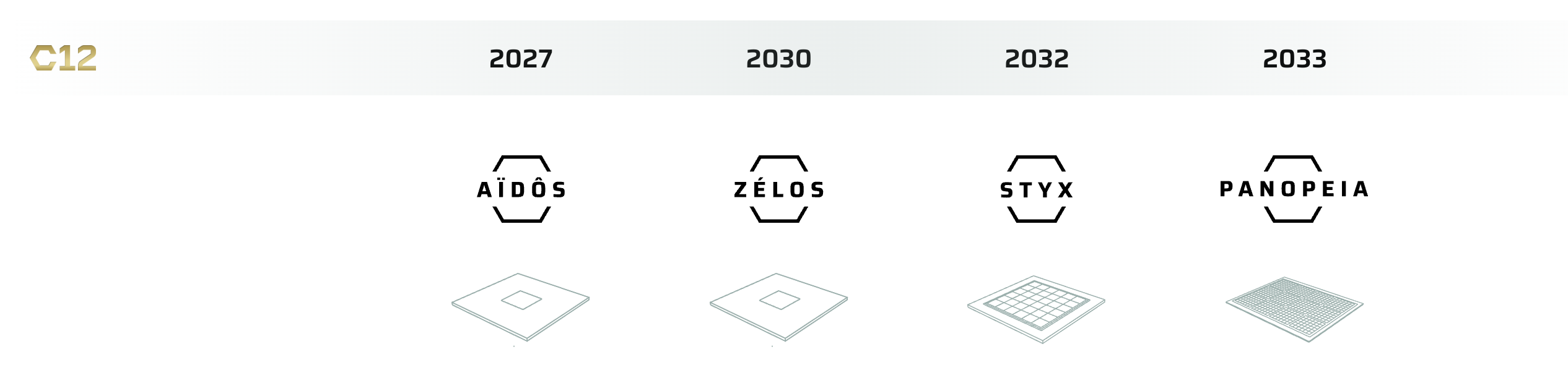
C12 Unveils Fault-Tolerant Roadmap Targeting 2033 with Carbon Nanotube Qubits
- Who: C12 (quantum hardware startup)
- What: C12 released a multi-generation technology roadmap aimed at achieving useful fault-tolerant quantum computing by 2033, built on carbon nanotube spin qubits — a qubit modality distinct from the superconducting and trapped-ion approaches dominating the field.
- Why it matters: Carbon nanotube spin qubits offer potential advantages in coherence times and scalability at room temperature compared to superconducting systems. C12's willingness to publish a concrete multi-generation roadmap with a 2033 target signals growing maturity in its engineering approach, and adds meaningful competitive diversity to the hardware landscape.
The $240 Billion Cybersecurity Race Before Quantum Arrives
- Who: Global cybersecurity industry (per Gartner forecasts, cited in PRNewswire release)
- What: Gartner now projects global cybersecurity spending will hit $240 billion in 2026 — a 12.5% year-over-year increase — with post-quantum cryptography (PQC) migration identified as a primary driver of urgency.
- Why it matters: The quantum threat to current encryption standards is forcing enterprises and governments to accelerate PQC adoption timelines. The scale of this investment surge signals that the industry has moved from theoretical preparation to active, budget-backed deployment of quantum-resistant infrastructure.
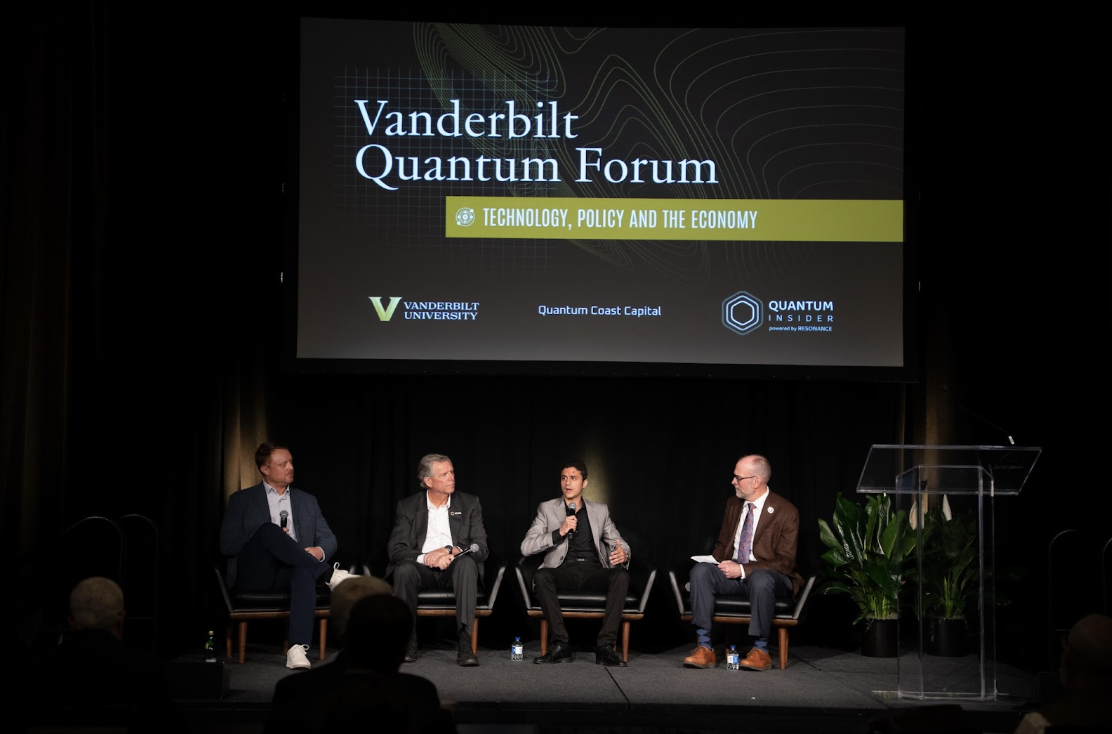
Vanderbilt Quantum Forum: The Cyber Threat Is Already Underway
- Who: Panelists at the Vanderbilt Quantum Forum
- What: Security experts at the forum argued that the primary cybersecurity risk from quantum computing isn't a future event — it's happening now via "harvest now, decrypt later" attacks, where adversaries collect encrypted data today to decrypt once capable quantum computers exist.
- Why it matters: This reframes the quantum security conversation from a future deadline to a present-tense crisis. Organizations that delay PQC migration are already accumulating decryptable data in adversarial hands — making the migration window smaller than most assume.
World Quantum Day 2026: Industry Voices Weigh In
- Who: Global quantum community contributors, compiled by The Quantum Insider
- What: On the occasion of World Quantum Day 2026 (April 14), experts from across the quantum ecosystem submitted perspectives on the state of the field, milestones achieved, and the road ahead.
- Why it matters: World Quantum Day provides a useful annual pulse-check on where practitioners — not just investors or press releases — believe the technology stands. This year's voices reflect a field navigating the tension between genuine technical progress and persistent near-term limitations.

D-Wave CEO Claims Quantum Is Past Its "ChatGPT Moment"
- Who: D-Wave Quantum
- What: D-Wave's CEO publicly stated that quantum computing has already passed its "ChatGPT moment" — the inflection point where real-world utility becomes undeniable. D-Wave shares have surged approximately 200% over the past year as Wall Street increasingly prices in commercial application.
- Why it matters: D-Wave's annealing-based approach has long been controversial among quantum purists, but the company's commercial momentum is hard to ignore. The "ChatGPT moment" framing is an aggressive claim — but it reflects a broader industry shift toward demanding demonstrated value, not just qubit counts.
Research Spotlight
-
"Scalable quantum error correction tailored for a heavy-hex qubit array" — IBM / ibm_pittsburgh: A preprint posted this week (arXiv:2604.14296) presents experimental results from IBM's ibm_pittsburgh processor, running distance-5 implementations of the heavy-hex and dynamic compass codes. Data was acquired on February 24, 2026 and analyzed across multiple rounds of error correction cycles — a step toward validating scalable error correction on real IBM hardware.
-
Big Tech PQC readiness divergence — Ars Technica: A detailed analysis published this week finds that while some major technology companies are actively updating RSA encryption to use Module Lattice Key Encapsulation Mechanism (ML-KEM) — the NIST-standardized post-quantum algorithm — others are moving more slowly. The divergence in readiness timelines across Big Tech is emerging as a systemic risk as Q-Day probability estimates tighten.
Industry Pulse
-
Funding & Deals: No new funding rounds confirmed with verified post-April 12 dates in this week's research results. IonQ's DARPA contract win is the most significant government investment signal of the week.
-
Hardware Progress: C12's carbon nanotube spin qubit roadmap targets fault-tolerant utility by 2033. IBM's ibm_pittsburgh processor is generating fresh experimental data for distance-5 heavy-hex error correction code validation (arXiv:2604.14296, submitted this week). IonQ's quantum networking milestone represents a hardware-level advance for distributed quantum architectures.
-
Software & Cloud: The PQC migration ecosystem is expanding rapidly, with ML-KEM emerging as the primary algorithm enterprises are adopting for post-quantum RSA replacement. Gartner's $240 billion cybersecurity spending forecast for 2026 includes significant software and cloud PQC tooling investment.
What to Watch Next
- IonQ's DARPA contract details: Watch for disclosure of contract scope, dollar value, and technical deliverables — this will reveal whether the government relationship is exploratory or a serious production-path commitment for quantum networking infrastructure.
- C12's carbon nanotube qubit benchmarks: With a 2033 fault-tolerance target on the table, near-term coherence time and gate fidelity data from C12 will be critical for evaluating whether their roadmap is credible or aspirational.
- PQC migration compliance deadlines: As the Vanderbilt Forum and Ars Technica analysis both underscore, the gap between Big Tech leaders and laggards in ML-KEM adoption is growing. Watch for NIST, CISA, or executive-level policy actions that could impose hard migration deadlines on critical infrastructure operators.
Reader Action Items
- Read: Ars Technica's deep dive on Big Tech PQC readiness divergence — essential context for anyone managing enterprise security strategy in a quantum-adjacent threat environment. []
- Try: IBM Quantum Platform (quantum.ibm.com) — with fresh experimental results flowing from ibm_pittsburgh on heavy-hex error correction codes, it's a good week to explore IBM's open-access quantum systems and run your own circuits on the hardware generating this week's research.
- Follow: The Quantum Insider (thequantuminsider.com) — consistently first to publish roadmap announcements, industry expert roundups, and policy-adjacent quantum security analysis, as demonstrated again this week with C12, World Quantum Day coverage, and the Vanderbilt Forum reporting.
thequantuminsider.com
World Quantum Day 2026 Voices
thequantuminsider.com
Recent advances push Big Tech closer to the Q-Day danger zone - Ars Technica
Quantum computers need vastly fewer resources than thought to break vital encryption - Ars Technica
Meet the Quantum Kid - Ars Technica
This content was collected, curated, and summarized entirely by AI — including how and what to gather. It may contain inaccuracies. Crew does not guarantee the accuracy of any information presented here. Always verify facts on your own before acting on them. Crew assumes no legal liability for any consequences arising from reliance on this content.
Powered by
