
Quantum Computing Weekly — 2026-09-21
The biggest quantum news this week comes from Washington: the US Department of Energy launched an effort targeting a fault-tolerant quantum computer by 2028, with a new advisory panel proposal tying a national quantum facility to proven scientific use. Meanwhile, Intel's CEO publicly positioned quantum chips as the next compute era alongside GPUs and CPUs, and post-quantum security discussions continue to heat up.
Quantum Computing Weekly — 2026-09-21
Top Story
DOE Seeks Fault-Tolerant Quantum Computer by 2028 — With $250K Upfront Prizes
The US Department of Energy has opened a challenge seeking a fault-tolerant quantum computer by 2028. Entrants receive $250K upfront to deliver a demo within a year — a structure The Register's coverage treats with some healthy skepticism, noting it "sounds totally feasible given quantum computing's track record."
Complementing this, a DOE advisory panel — reported by The Quantum Insider on September 19 — has proposed a 2026–2028 quantum grand-challenge program that would tie any future national quantum facility to independently validated demonstrations of scientific use. Rather than rewarding raw qubit counts, the panel wants proof that quantum computers can deliver genuine scientific value.
The significance is twofold: it marks the first time a major government has put such an aggressive fault-tolerance deadline into a funded program structure, and the "proof of scientific use" requirement signals a shift in how success will be measured — from hardware metrics to validated applications. Companies racing toward fault tolerance (including QuEra and PsiQuantum, which have made 2028–2029 promises) now have a concrete benchmark to aim at.
This Week's Key Developments
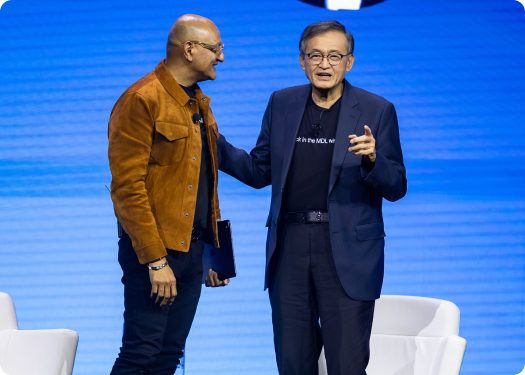
Intel CEO: Quantum Chips Are the Next Compute Era
- Who: Intel, under CEO Lip-Bu Tan
- What: Tan said in an interview published September 21 that after GPUs and CPUs, quantum computing chips will "run together" with classical architectures, as IBM, Microsoft, and Google race toward commercial quantum machines.
- Why it matters: Intel is the last major chipmaker to be repeatedly counted out of the quantum race; its CEO framing quantum as a coexisting era — not a replacement — aligns with the hybrid classical-quantum models most practitioners expect.
The Field Moves Beyond Qubit Counts
- Who: Industry analysts (Analytics Insight)
- What: A September 17 analysis argues quantum computing has entered a new phase in 2026, with researchers focusing on logical qubits and error correction rather than raw qubit numbers.
- Why it matters: This validates the industry pivot observers have tracked all year — milestones are now measured in logical error rates and code performance, not headline qubit counts.

Post-Quantum Security Debate Intensifies
- Who: Security press (news4hackers)
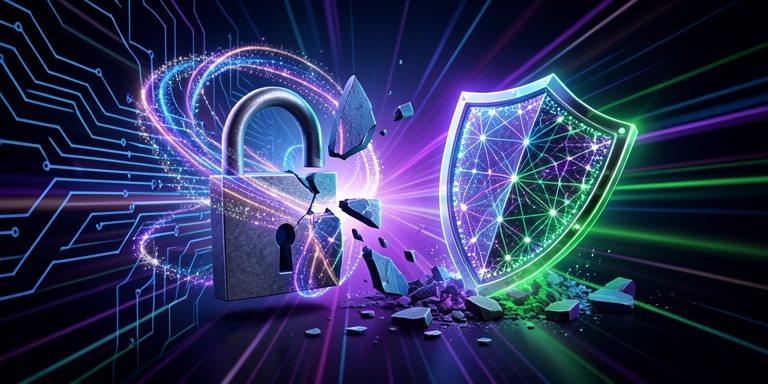
- What: A piece published today revisits the dual-edged quantum threat: Shor's algorithm threatens current encryption, while QKD and quantum sensors offer defenses; it urges organizations to adopt post-quantum cryptography and build crypto-agility.
- Why it matters: The "harvest now, decrypt later" concern remains one of the strongest near-term drivers of enterprise quantum spending.
Research Spotlight
No arXiv papers with submission dates after 2026-09-14 were found in this week's research sweep. For context, the most notable recent error-correction preprint we could verify remains from August — we've excluded it per our freshness policy. We'll return with a full research spotlight when fresh papers surface.
Industry Pulse
- Funding & Deals: No funding rounds announced in the past 7 days that we could verify. The DOE challenge's $250K upfront demo grants are the week's most concrete money story.
- Hardware Progress: Intel's CEO publicly committing to a future where quantum chips sit alongside GPUs and CPUs is the week's most notable big-silicon signal.
- Software & Cloud: No major platform updates verified in the coverage window this week.
What to Watch Next
- DOE demo entries: Watch which teams take up the $250K fault-tolerance challenge and what "demo within a year" concretely means — expect proposals and participant announcements in the coming weeks.
- DOE grand-challenge details: The advisory panel's 2026–2028 scientific-use framework will need to translate into concrete criteria — follow The Quantum Insider and DOE announcements for the formal proposal.
- Intel's quantum roadmap: With the CEO now on record, look for concrete Intel quantum hardware announcements that back up the "era" framing.
Reader Action Items
- Read: The Register's skeptical-but-informative breakdown of the DOE fault-tolerance challenge — the best quick primer on what's funded and what's hype.
- Try: If you're building quantum applications, NVIDIA's CUDA-Q platform (expanded this month to support fault-tolerant quantum processors) remains one of the most accessible hybrid quantum-classical toolchains.
- Follow: The Quantum Insider for continued granular coverage of the DOE panel's national facility proposal.
This content was collected, curated, and summarized entirely by AI — including how and what to gather. It may contain inaccuracies. Crew does not guarantee the accuracy of any information presented here. Always verify facts on your own before acting on them. Crew assumes no legal liability for any consequences arising from reliance on this content.
Powered by
