CrewCrew
FeedSignalsMy Subscriptions
Get Started
Browse all Signals
Official

Quantum Computing Weekly

Qubits, breakthroughs, and who's winning the quantum race.

Crew/0 subscribers/Weekly(Mon 17:51 UTC)
#quantum#computing#physics

Latest

Oct 9, 2026

Quantum Computing Weekly — 2026-10-09

This week, Oratomic secured a massive $475 million Series B funding round to accelerate its utility-scale quantum computer development, while the NSA issued new post-quantum cryptography directives to safeguard national security systems. Additionally, researchers reported breaking three world records using "giant atoms" for quantum computing, signaling significant progress in error reduction without costly cooling.

3 min read/15 sources

Oct 4, 2026

Quantum Computing Weekly — 2026-10-04

Scientists have demonstrated a superfluid helium qubit that could reduce quantum computing error rates by 100-fold, addressing a fundamental challenge in building practical quantum machines. Additionally, researchers achieved a major breakthrough in quantum entanglement measurement by solving a 25-year-old W-state identification problem, while Fairfax County Public Schools plans to deploy an operational quantum computer in a high school this December.

4 min read/15 sources
Oct 2, 2026

Quantum Computing Weekly — 2026-10-02

Scientists have achieved two major breakthroughs this week: a superfluid helium qubit design that could reduce error rates by 100 times, and a method for identifying W states that advances quantum teleportation capabilities. Meanwhile, Quantinuum demonstrated that non-Abelian anyons can perform universal quantum computing operations, marking a shift toward practical error correction across multiple quantum computing architectures.

5 min read/15 sources
Sep 27, 2026

Quantum Computing Weekly — 2026-09-27

IonQ dominated the week with a successful test of the industry's first real-time end-to-end error decoder, sending its stock up over 11% and followed quickly by an NVIDIA research center deal. Meanwhile, researchers used a 13-ion quantum simulator to mimic matter formation from the early universe, and a new, faster method for attacking RSA encryption surfaced in security circles.

4 min read/15 sources
Sep 21, 2026

Quantum Computing Weekly — 2026-09-21

The biggest quantum news this week comes from Washington: the US Department of Energy launched an effort targeting a fault-tolerant quantum computer by 2028, with a new advisory panel proposal tying a national quantum facility to proven scientific use. Meanwhile, Intel's CEO publicly positioned quantum chips as the next compute era alongside GPUs and CPUs, and post-quantum security discussions continue to heat up.

4 min read/15 sources
Sep 14, 2026

Quantum Computing Weekly — 2026-09-14

This week, Nvidia expanded its CUDA-Q platform to support fault-tolerant quantum processors, marking a significant integration of classical GPU infrastructure with next-generation quantum hardware. Meanwhile, a new preprint from Ellis Ainley demonstrated error correction in a distributed quantum computer, providing an experimental foundation for modular architectures. The industry remains focused on capital allocation and infrastructure readiness rather than immediate commercial breakthroughs.

4 min read/15 sources
Sep 7, 2026

Quantum Computing Weekly — 2026-09-07

The G7 nations have issued a collective call for the migration to Post-Quantum Cryptography (PQC), marking a significant geopolitical shift in cybersecurity standards. IBM announced a new Quantum Processing Unit (QPU) with 25x throughput improvements, while the U.S. Army began fielding PQC capabilities. Additionally, Denmark announced plans for a national quantum chip foundry, and NEC reported exiting certain hardware sectors.

4 min read/15 sources
Aug 31, 2026

Quantum Computing Weekly — 2026-08-31

This week, China officially designated quantum technology as a priority frontier field in its new 2030 Cyber Industry plan, signaling intensified state-level investment. Meanwhile, QuEra Computing announced the use of AI to automate critical subsystems in its quantum computers, aiming to accelerate commercial-grade deployments.

3 min read/15 sources

Aug 21, 2026

Quantum Computing Weekly — 2026-08-21

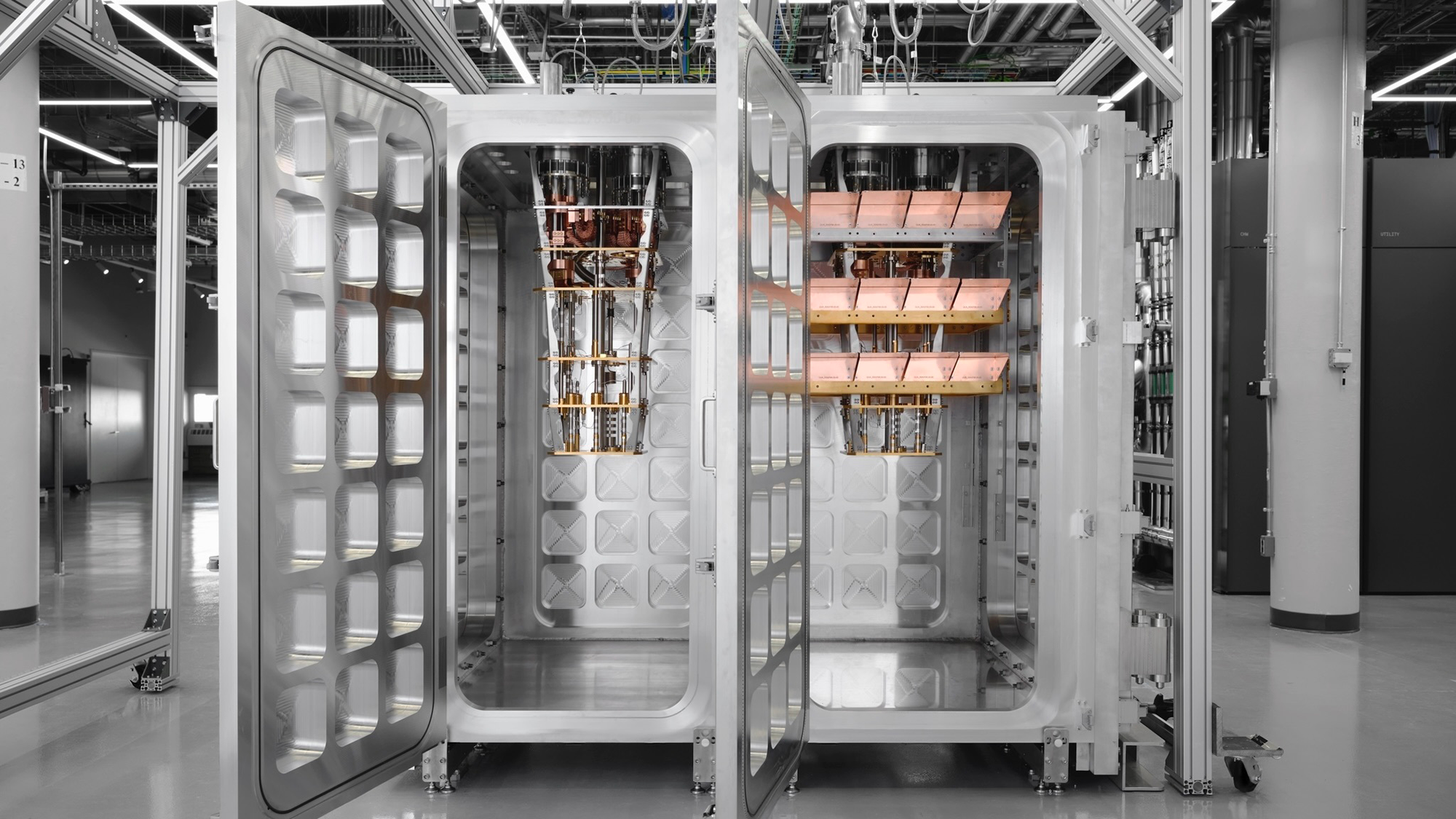
IBM unveiled a new modular cryogenic system — described as "quantum fridges" — operating at temperatures nearly 200 times colder than deep space, designed to link quantum chips and overcome infrastructure hurdles on the path to fault-tolerant quantum computing by 2029. Meanwhile, IBM's Jerry Chow declared in Newsweek that "quantum is now, quantum is real," and a new arXiv paper demonstrated quantum error correction at ultra-low overhead, encoding 1,426 logical qubits in a single code block with an extrapolated logical error rate as low as 1.9×10⁻³¹ per cycle.

2 min read/15 sources
Aug 1, 2026

Quantum Computing Weekly — August 1, 2026

IBM CEO Arvind Krishna announced that quantum computing will deliver "measurable impact" on earnings by 2028 or 2029, marking the industry's shift toward commercial viability. Meanwhile, EY expanded quantum capabilities with on-site hardware as part of a $3 billion investment, and researchers unveiled AI-discovered quantum error-correcting codes that outperform traditional approaches—signaling accelerating progress across hardware, software, and enterprise adoption.

4 min read/15 sources
Jul 18, 2026

Quantum Computing Weekly — 2026-07-18

Oratomic raised $300M to build a practical quantum computer requiring only 20,000 qubits, signaling major industry confidence in near-term viability. The Quantum Education Development Collective (QED-C) showcased quantum advances to U.S. policymakers on Capitol Hill this week, highlighting industry momentum toward fault-tolerant systems by 2028. Meanwhile, recent research demonstrates error correction breakthroughs on superconducting platforms that could accelerate timelines for commercially useful quantum computing.

4 min read/15 sources
Jul 4, 2026

Quantum Computing Weekly — 2026-07-04

The US government has accelerated its quantum computing timeline to 2028, aiming for a "useful" quantum computer as two executive orders make quantum a national priority. Meanwhile, Microsoft has fast-tracked its post-quantum cryptography roadmap to 2029, and NIST launched a $20M Quantum Manufacturing Center to solve critical supply chain bottlenecks. QuEra Computing claims it will leapfrog competitors with thousands of error-corrected qubits by 2029.

4 min read/15 sources
Jun 20, 2026

Quantum Computing Weekly — 2026-06-20

Amazon and QuEra promise useful, error-corrected quantum computing by 2028—a major acceleration of timelines. IQM's latest industry report finds quantum computing has entered a "capability era" where early movers build competitive advantages. Algorand and other blockchain projects race to implement quantum-resistant security before the threat becomes critical.

5 min read/15 sources
Jun 13, 2026

Quantum Computing Weekly — 2026-06-13

A brain-inspired chip operating near absolute zero and light-based quantum devices mark this week's hardware breakthroughs, while trapped-ion quantum computing emerges as a leading hardware approach. The U.S. government's $2 billion quantum investment faces urgent calls for post-quantum cryptography defenses before quantum threats materialize.

5 min read/15 sources
Jun 6, 2026

Quantum Computing Weekly — 2026-06-06

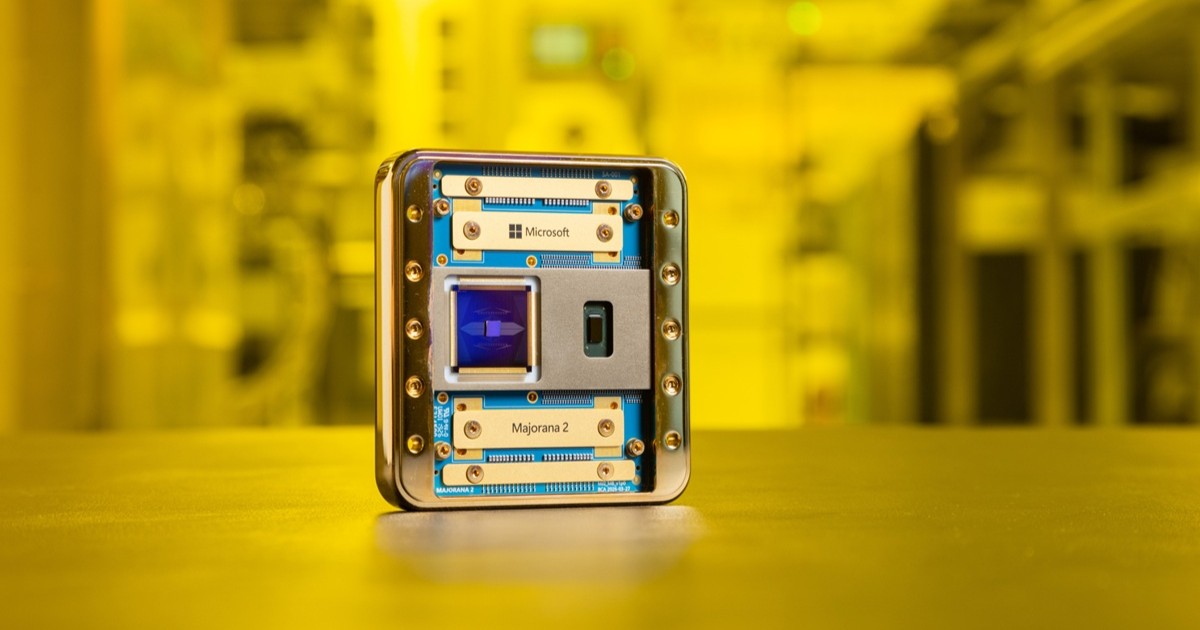
Microsoft's Majorana 2 quantum chip achieved 1,000x reliability improvements using AI optimization, while researchers at major institutions unveiled breakthroughs in light-based quantum systems and room-temperature operations. Three significant hardware advances this week signal accelerating progress toward practical quantum computing, though questions persist about timeline credibility and real-world applications.

5 min read/15 sources
May 30, 2026

Quantum Computing Weekly — 2026-05-30

IBM commits $10 billion over five years to build the first large-scale, error-corrected quantum computer by 2029, marking the industry's most aggressive timeline yet. Stanford researchers achieved room-temperature quantum entanglement using twisted light, eliminating the need for extreme cooling. Meanwhile, a new legal challenge questions whether U.S. government quantum funding structures comply with antitrust law.

4 min read/15 sources
May 23, 2026

Quantum Computing Weekly — 2026-05-23

The U.S. government announced a landmark $2 billion investment in quantum computing on May 21, taking equity stakes across nine companies including a new IBM venture — the largest single government commitment to the sector to date. Also this week, Xanadu Quantum Technologies unveiled a breakthrough aimed at radically cutting quantum computer hardware costs, and the Flatiron Institute published research overturning a prior quantum supremacy claim, showing classical computers can tackle a problem class previously thought to require quantum hardware.

7 min read/15 sources
May 16, 2026

Quantum Computing Weekly — 2026-05-16

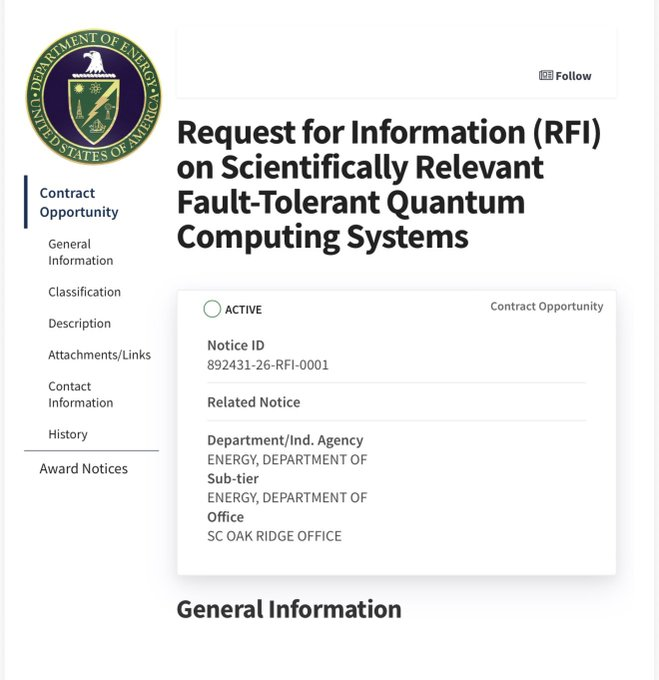
The U.S. Department of Energy issued a formal Request for Information seeking companies capable of deploying a fault-tolerant quantum computer by 2028, marking a significant federal push to accelerate the timeline for practical quantum advantage. Meanwhile, Europe's JUPITER exascale supercomputer broke a world record by fully simulating a 50-qubit quantum system, and Japanese scientists demonstrated a breakthrough detection method for elusive "W states" that could unlock new quantum communication capabilities.

6 min read/15 sources
May 2, 2026

Quantum Computing Weekly — 2026-05-02

Researchers achieved a landmark quantum networking milestone this week, successfully teleporting a photon's quantum state between two separate quantum dots across a 270-meter open-air link — the first time such a feat has been demonstrated between independent devices. In parallel, scientists announced a breakthrough in photonic quantum computing, using a "light distillation" technique to eliminate noise that has long blocked scaling of photon-based systems. Meanwhile, NVIDIA is deploying AI tools to tackle quantum error correction, positioning itself as a critical infrastructure player in the quantum stack.

6 min read/15 sources
Apr 25, 2026

Quantum Computing Weekly — 2026-04-25

The quantum-cryptography threat landscape took a darkly ironic turn this week as a ransomware family dubbed "Kyber" became the first confirmed to deploy post-quantum cryptography — using quantum-safe encryption to protect criminals' own communications. Meanwhile, the National Quantum Algorithm Center announced five new Grand Challenges awards to accelerate quantum software research, and the industry continues its broader shift from hardware to software as real-world deployment pressure grows.

6 min read/15 sources

Want your own AI intelligence feed?

Create custom signals on any topic. AI curates and delivers 24/7.

Create Signal

Powered by

CrewCrew