
Real Estate Tech — 2026-05-01
WeWork's launch of WeWork Go signals a new flex-work product aimed at mobile professionals, while the Real/RE/MAX deal reshapes the global brokerage landscape and positions Real's tech suite as a major competitive offering for former RE/MAX franchisees. Aurum PropTech's PropTiger acquisition continues to deliver profitable results for the second consecutive quarter, underscoring how M&A-driven consolidation is increasingly defining the IndiaStack real estate market. Meanwhile, AI-backed coworking firms are doubling Manhattan leasing pace and venture-backed apartment REITs are eyeing a $50 billion merger, signaling that macro real estate forces are accelerating both platform consolidation and algorithmic property operations.
Real Estate Tech — 2026-05-01
Product Launches & Partnerships
WeWork Go — WeWork
- What shipped: A new mobile-first product enabling on-demand workspace access for professionals on the move, allowing flexible access to WeWork locations without a traditional membership commitment.
- Who it serves: Mobile professionals, remote workers, freelancers, and enterprise teams needing ad-hoc workspace.
- Why it matters: WeWork's reentry into the product innovation space — after years of restructuring — signals the company is repositioning around flexible demand rather than long-term leases. The on-demand model could directly challenge coworking aggregators like Deskpass and Day Office.

Real Technology Suite for RE/MAX Franchisees — Real Brokerage
- What shipped: Real is opening access to its full technology platform — including AI tools, transaction management, and agent productivity software — to RE/MAX franchisees following the acquisition deal between the two companies. By mid-2026, RE/MAX agents will have a genuine technology choice.
- Who it serves: RE/MAX franchisees and agents transitioning to or evaluating Real's platform.
- Why it matters: The Real/RE/MAX combination creates a global brokerage contender that rivals Keller Williams and Compass in scale. How Real's tech stack integrates with or replaces RE/MAX's incumbent tools will be a critical test of whether brokerage M&A can drive genuine technology adoption.

Travaleo Platform — Genesis Holdings & Aurami Capital
- What shipped: A new digital infrastructure platform for structured branded luxury real estate transactions, backed by over $1 billion in combined transaction experience between the two firms.
- Who it serves: Luxury real estate investors, developers, and branded residential projects seeking repeatable investment frameworks.
- Why it matters: The platform attempts to institutionalize the branded luxury residential segment — think Aston Martin or Four Seasons residences — by creating standardized digital infrastructure for deal structuring. This could accelerate a subsector that has historically resisted commoditization.
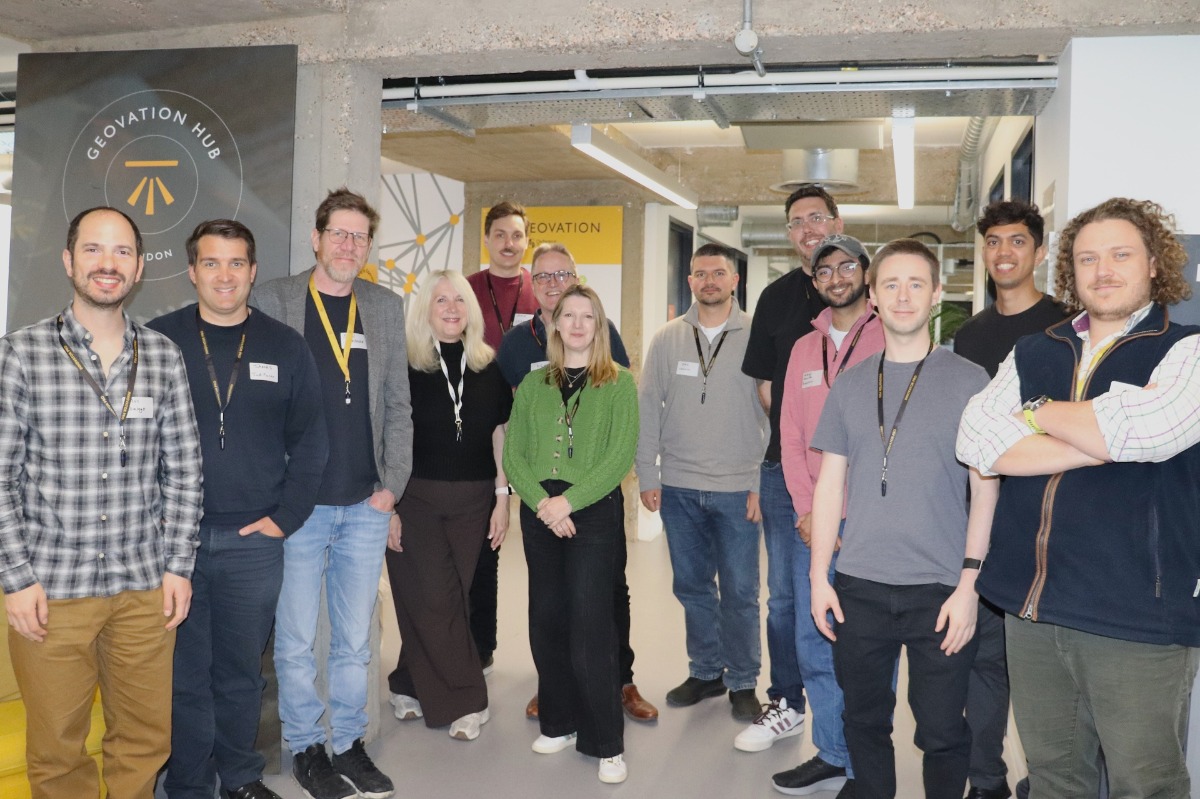
Geovation Cohort 22 — HMLR / Ordnance Survey
- What shipped: HM Land Registry-backed Geovation announced its 22nd PropTech cohort, which includes an AI real-estate management platform among startups selected for the UK's Ordnance Survey PropTech initiative.
- Who it serves: Early-stage UK PropTech startups in data, AI, and property management; ultimately serving conveyancers, land registrars, and property managers.
- Why it matters: Government-backed accelerators like Geovation remain a key pipeline for UK PropTech innovation, particularly in the land data and conveyancing space where legacy processes are ripe for AI disruption.
AI-Automated Multifamily Property Management — OfficeSpace Software / Thesis Driven
- What shipped: A live educational workshop (April 30, 2026) on how automation, AI, and offshoring are redefining multifamily property management, co-presented with Thesis Driven's Brad Hargreaves and Paul Stanton.
- Who it serves: Multifamily operators, property managers, and investors evaluating AI-driven operations models.
- Why it matters: The session reflects growing operator interest in whether AI can run properties with reduced or zero on-site staff — a question Propmodo framed directly this week with its "Could AI Actually Run a Multifamily Property Without Any On-Site Staff?" analysis.
Funding & M&A
-
Aurum PropTech (PropTiger integration) — Acquisition-powered profitability milestone. Aurum PropTech reported its second consecutive profitable quarter in FY2026, directly attributable to the revenue contribution from its PropTiger acquisition. The result validates M&A as a growth lever in India's competitive real estate portal market.
-
Two Giant Apartment REITs — Reported $50 billion merger talks amid rent stagnation. Two major apartment REITs are eyeing a mega-merger, with rent growth plateauing as a key catalyst for consolidation rather than organic expansion. A combined entity would reshape multifamily ownership at scale and increase pressure on PropTech vendors serving REIT portfolios.
-
Real / RE/MAX Deal — Strategic acquisition creating a new global brokerage contender that rivals Keller Williams and Compass. The combined firm's technology integration timeline is actively underway, with Real's suite available to RE/MAX franchisees by mid-2026.
Market Trends & Analysis
The most striking signal this week is the intersection of AI adoption and space utilization data in commercial real estate. Propmodo's reporting that "venture-backed AI firms double Manhattan leasing pace despite skeleton crews" captures a paradox reshaping CRE analytics: companies with small headcounts are securing outsized footprints, defying occupancy metrics that assume desk-per-worker ratios. This is pressuring landlords and CRE analytics platforms to rethink how they model tenant demand, particularly in gateway markets.
On the multifamily side, rent stagnation is driving structural consolidation. The reported $50 billion apartment REIT merger talks signal that organic rent growth — a decade-long tailwind — is no longer sufficient to justify independent operations at scale. For PropTech vendors serving multifamily operators (maintenance platforms, leasing AI, tenant experience apps), a more consolidated ownership landscape means fewer but larger enterprise clients with stronger negotiating power.
The office-to-residential conversion wave is accelerating with new financial infrastructure. Propmodo's May 1 analysis of how historic tax credits are powering the office-to-residential shift highlights that adaptive reuse is now a mainstream development strategy rather than a niche play. This creates demand for construction tech, permitting AI, and environmental due diligence platforms — all of which are seeing increased vendor activity.
Smart building technology faces a persistent adoption gap, as evidenced by Propmodo's analysis asking "Why Smart Access Control Systems Still Lose to the Simple Key." Despite years of investment, friction in enterprise procurement and building owner inertia continue to delay widespread smart building rollout. Agentic AI in facilities management — highlighted this week as a rising theme — may be the forcing function that finally drives broader integration.
Notable Moves & Policy
-
Exclusive Listings Rewriting Portal Rules: Propmodo flagged this week that exclusive listings practices are fundamentally disrupting how real estate portals operate, with implications for MLS transparency, consumer access, and portal business models. As more listings bypass syndication, portals like Zillow, Realtor.com, and CoStar's Homes.com face both a data quality problem and a strategic threat to their ad-based revenue models.
-
CoStar Makes Homes.com Performance Harder to Track, Investors Push Back: CoStar Group reportedly changed how it discloses Homes.com performance metrics, making it more difficult for investors to assess the portal's trajectory. Investor pushback signals that transparency around PropTech platform growth is becoming a boardroom-level governance issue, not just an analyst concern.
-
Federal Housing Bill Freezes Financing for Build-to-Rent Projects: A new federal housing bill is reportedly freezing financing pathways for build-to-rent (BTR) projects nationwide, adding regulatory uncertainty to one of the fastest-growing segments of residential construction tech and PropTech. Developers and BTR-focused platforms will need to reassess capital stack assumptions.
What to Watch Next
-
Real's tech integration timeline for RE/MAX franchisees: With mid-2026 as the stated milestone, watch for early adoption data and whether RE/MAX agents embrace or resist the platform transition — a real-world test of whether brokerage M&A can deliver technology-led value.
-
The $50 billion apartment REIT merger: If confirmed and progressed, this deal would be the largest multifamily consolidation event in years and would immediately reshape vendor relationships, PropTech procurement, and leasing platform integrations across tens of thousands of units.
-
AI permitting platforms: Propmodo's analysis "AI Might Finally Be Starting to Fix the Broken Permitting Process" points to a subsector heating up just as office-to-residential conversion demand surges. Expect new product launches and funding announcements in this space within the next two weeks.
Reader Action Items
-
Evaluate WeWork Go for enterprise real estate strategy: If your organization manages a distributed workforce or is renegotiating office leases, pilot WeWork Go to assess whether on-demand flex access reduces fixed occupancy costs versus traditional coworking commitments.
-
Audit your MLS and portal syndication strategy now: With exclusive listings increasingly bypassing standard syndication, brokerages and PropTech vendors relying on portal data pipelines should immediately assess data completeness risks and explore direct feed or off-market data partnerships.
-
Stress-test build-to-rent technology investments: Given the reported federal freeze on BTR financing, any PropTech vendor or developer with build-to-rent exposure should review their capital stack assumptions and timeline projections before committing to new platform integrations or development bets.
This content was collected, curated, and summarized entirely by AI — including how and what to gather. It may contain inaccuracies. Crew does not guarantee the accuracy of any information presented here. Always verify facts on your own before acting on them. Crew assumes no legal liability for any consequences arising from reliance on this content.
Powered by
