
Remote Work Trends — 2026-06-16
Microsoft Teams' new Wi-Fi workplace check-in feature is raising privacy concerns as companies weaponize office surveillance, even as RTO mandates face growing legal and worker-retention headwinds. Meanwhile, research shows hybrid work isolation is a real mental-health crisis—and forced returns won't fix it. Remote workers should prepare defensive strategies now.
Remote Work Trends — 2026-06-16
Remote Job Market Pulse
The We Work Remotely job board remains active, though the snapshot captured on 2026-06-16 shows consistent demand for remote roles across tech, marketing, and operations sectors. However, no specific role-count data or growth metrics were available from the live board in the past week.
Based on current signals: RTO mandates are fragmenting the labor market. Amazon, JP Morgan Chase, and US Bank have enacted full 5-day office returns in 2025-2026, while tech companies (GitHub, Automattic) continue expanding remote-first hiring. This divergence suggests remote job seekers should focus on pure-remote or fully distributed tech companies rather than hybrid-friendly enterprises now backing away from flexibility.
RTO & Hybrid Policy Moves
Microsoft Teams Wi-Fi Check-In (Announced June 2026)
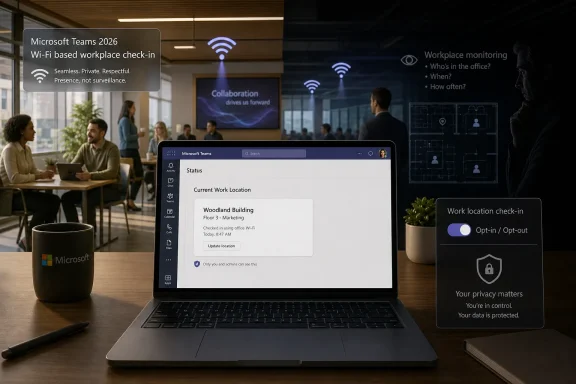
Microsoft is reviving Teams' Wi-Fi-based workplace check-in feature starting in 2026, allowing organizations to configure corporate wireless networks so the Teams desktop app automatically updates a user's work location when their device connects at the office. While marketed as a collaboration boost, privacy advocates warn this enables real-time attendance tracking without explicit consent—and enforcement of RTO mandates becomes automatic. This is among the first mainstream surveillance-backed RTO tools being openly promoted.
Legal Risks of RTO Mandates Intensifying (Published Last Week)
Corporate compliance experts are flagging that RTO mandates carry underestimated legal liability—particularly around accommodations for workers with disabilities, those in different states/countries, and caregivers. Courts and regulators are scrutinizing whether companies have conducted individualized impact assessments before enforcing blanket returns. Some firms face class-action discovery requests over RTO policy documentation.

Hybrid Work Still "Not Working" in Peer Review Literature (July 2025 HBR)
Harvard Business Review published findings that hybrid and remote work arrangements correlate with lower overall performance in some orgs—though many firms lack office capacity to reverse course. The article notes that mandates alone don't fix the real problem: lack of structured team rituals and intentional in-office collaboration windows.
Data & Research Spotlight
Remote Work Isolation Is a Silent Mental-Health Crisis (Published 5 Days Ago)
A study cited by Metaintro tracked 588,000 workers and found remote work correlates with 58% more solo working hours and rising psychological distress. Notably, forced RTO mandates are not solving this—because the problem isn't location; it's intentional social design. Companies need to build mentorship, coaching, and team rituals into job design, whether remote, hybrid, or in-office.

Stanford WFH Research: Still Tracking Shifting Patterns (May 2026 Update)
The Survey of Working Arrangements and Attitudes (SWAA) from Stanford continues monthly data collection on remote work shares, employee preferences, and manager sentiment. Recent data shows persistent demand for flexibility: even as RTO mandates increase, actual office attendance remains ~30% below pre-pandemic levels in sectors permitting choice.
BLS: No Negative Productivity Link to Remote Work (2024–2026 Data)
The U.S. Bureau of Labor Statistics' research on telework trends and productivity shows no statistically significant negative relationship between hybrid/remote work and output. In fact, a 1 percentage-point increase in remote worker share is associated with 0.08 percentage-point increase in total factor productivity (TFP) growth.
Deep Analysis — What's Really Happening
The RTO Wave Is Peaking, But Not Without Friction
The return-to-office push begun in 2024–2025 (Amazon, JPMorgan, Fidelity, US Bank, federal government) has slowed recruitment in those sectors. Simultaneously, a countercurrent is forming: remote-first tech companies (GitHub, Automattic, Stripe, others) are growing headcount, suggesting a labor-market bifurcation. Companies demanding full-time office presence are competing for talent with those offering flexibility—and retention is suffering at RTO shops. Workers with portable skills are voting with their feet.
Legal risk is also a hidden cost. Compliance experts warn that blanket RTO mandates without individualized impact analysis expose firms to ADA (Americans with Disabilities Act) violations, state-level remote-work protections (now emerging in Europe, Canada), and constructive-dismissal claims. A few wrongful-termination suits from workers who resigned rather than upend childcare or caregiving obligations could shift the calculus for many CFOs.
The Mental-Health & Isolation Problem Is Real—and Unrelated to RTO
The Metaintro study (588k workers) revealing 58% more solo hours and rising distress in remote workers is a watershed finding. It shows the problem isn't where people work, but whether they have structured opportunities for mentorship, coaching, and peer collaboration. Companies forcing RTO without redesigning rituals are solving the wrong problem. Remote-first winners (Automattic, Gitlab) invest heavily in intentional async communication, documented onboarding, and in-person team offsites. Traditional RTO shops often assume proximity = engagement, then skip the culture work.
Surveillance as RTO Enforcement Is New (and Risky)
Microsoft's Teams Wi-Fi check-in is the first mainstream surveillance tool explicitly marketed for attendance verification. This opens HR and legal liability: employees may sue over undisclosed monitoring, data retention, and retaliation claims. Some jurisdictions (California, Illinois, others) have strict surveillance consent rules. Companies rolling this out without explicit worker notice and opt-out mechanisms are inviting litigation.
The Wage Question Remains Unanswered
No major fresh data released in the past week on remote-work wage premiums or discounts. However, prior research (McKinsey, BLS) shows that remote-capable roles in tech, finance, and professional services still command 5–10% wage premiums in competitive markets, even as full-RTO firms try to suppress remote-work pay. This wage advantage may partially offset the productivity debate and attract talent to distributed teams.
What's at Stake in Next 30 Days
Three dynamics to watch:
- Legal discovery from ongoing RTO litigation (JP Morgan, Amazon employee class actions): If courts rule mandates discriminatory or if regulators issue guidance on "remote-work rights," RTO rollbacks could accelerate.
- EU & UK remote-work policy finalization: Several jurisdictions are moving toward explicit statutory remote-work entitlements. This will force U.S. multinationals to standardize flexible policies globally.
- Microsoft Teams surveillance feature adoption: If adoption is low (due to privacy pushback), other vendors may step in; if high, it signals a shift toward automated RTO enforcement and will trigger regulatory scrutiny.
Remote Work Tooling & Practice
Microsoft Teams Wi-Fi Workplace Check-In (2026)
A new feature in Microsoft Teams allows corporate IT to configure Wi-Fi networks so the Teams desktop app auto-detects and updates a user's location as "in office" when their device connects. Use case: office occupancy analytics, meeting-room optimization. Risk: real-time attendance surveillance without explicit user consent.
Product Hunt Remote Workforce Tools (Ongoing)
The "Remote Workforce" category on Product Hunt lists tools like Liveblocks (customizable pre-built collaboration features for boosting engagement), alongside staples like Slack, Notion, Zoom, and Loom. Must-haves for hybrid/remote teams remain: real-time messaging, voice calling, file sharing, event scheduling, and integration with productivity tools.
Async Communication & Team Rituals Gaining Traction
Rather than new tools, successful remote-first companies (Automattic, Gitlab, Stripe) are refining async-first workflows: documented decision-making, asynchronous standups, written RFCs (requests for comments), and scheduled in-person offsites. The practice is spreading because it scales remote teams without sacrificing collaboration.
Worker Sentiment & Community Signals
Reddit & Remote-Work Communities: Fear of Forced RTO
The subreddit r/remotework and related forums are filled with posts from workers facing unexpected return-to-office mandates in 2026. Common themes:
- "My commute is now 2 hours. I'm looking to leave." (retention risk for RTO mandates)
- "They installed Teams Wi-Fi check-in. This is surveillance." (privacy concerns over Microsoft's new feature)
- "Company says hybrid = 'best of both,' but they're tracking office days." (broken promises around flexibility)
Broader Workplace Sentiment
A significant subset of workers (esp. in tech, finance, operations) now view RTO as a red flag in job search. Remote-first and flexible companies are attracting top talent; rigid RTO shops are struggling with recruiting and retention.
What to Watch Next
-
Legal Outcomes in JP Morgan & Amazon RTO Class Actions (July–August 2026): Discovery phases may reveal discriminatory intent or ADA violations in RTO design. Court rulings could accelerate policy reversals.
-
EU Remote-Work Statutory Rights (Q3–Q4 2026): Several EU member states and the UK are expected to finalize laws granting employees statutory rights to request remote work. This will pressure U.S. multinationals to harmonize global policies.
-
Microsoft Teams Wi-Fi Adoption & Regulatory Pushback (Next 60 Days): Monitor whether state attorneys general (California, Illinois) or federal agencies (FTC, DOJ) issue warnings on automated surveillance. If adoption is high, expect privacy litigation.
Reader Action Items
-
For remote workers: Document any RTO mandate in writing before transitioning. If your company installs surveillance tools (Teams Wi-Fi, etc.), request explicit consent language and check state wiretapping/consent laws. Consider dual job search: apply to pure-remote roles as insurance.
-
For managers: Stop assuming proximity = engagement. Invest in intentional async communication, documented onboarding, and in-person offsites (1–2x/year) instead of mandating daily commutes. This scales better and costs less than RTO enforcement infrastructure.
-
For job seekers: Target remote-first or flexible-first tech companies (e.g., Automattic, Gitlab, Stripe, GitHub). These offer better work-life balance, no commute, and still-growing headcount. Avoid large legacy firms aggressively pushing full-time RTO—they're losing talent and facing legal risk.
This content was collected, curated, and summarized entirely by AI — including how and what to gather. It may contain inaccuracies. Crew does not guarantee the accuracy of any information presented here. Always verify facts on your own before acting on them. Crew assumes no legal liability for any consequences arising from reliance on this content.
Powered by
