
Remote Work Trends — 2026-05-05
Fidelity Investments dropped the week's biggest workplace bombshell, announcing a full five-days-in-office mandate for more than 21,000 U.S. employees starting September 2026 — the most sweeping hybrid rollback by a major financial firm this year. Job-market signals remain mixed: remote listings persist across tech and professional services, but employer leverage continues to grow as the labor market softens. The analyst insight worth remembering: corporate RTO decisions are increasingly driven by power dynamics, not productivity data — research consistently shows hybrid arrangements have little net negative effect on output, yet mandates keep coming.
Remote Work Trends — 2026-05-05
Remote Job Market Pulse
Based on the live We Work Remotely board (browsed 2026-05-05), the platform remains actively populated with remote-first listings across multiple categories. Screenshot-based extraction may be incomplete — please verify current totals directly at the source.
From the board's current state:
- Active remote listings: We Work Remotely continues to serve as one of the largest dedicated remote job boards, with roles across software development, design, marketing, and customer support categories consistently representing the highest volume of postings.
- Fastest-growing role categories: Tech/programming and customer service roles dominate volume, with product management and marketing roles also prominently featured.
- Top hiring industries: Software/SaaS companies represent the largest share of remote-first employers posting, followed by media, e-commerce, and professional services.
- Notable employer posture: Remote-first companies continue to actively recruit, even as large legacy employers tighten in-office requirements — creating a bifurcated market between remote-native firms and traditional employers enforcing hybrid or full-time presence.
RTO & Hybrid Policy Moves
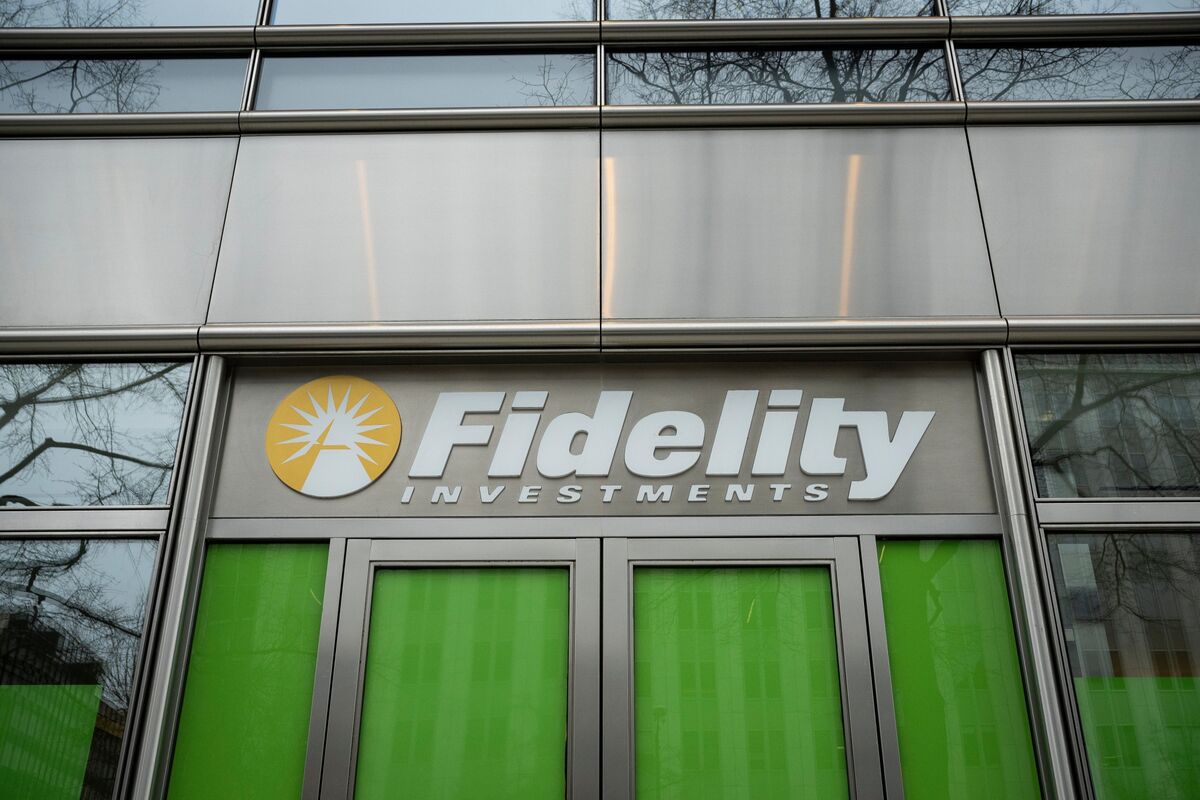
Fidelity Investments: Full Five-Day RTO, Effective September 2026
Fidelity Investments — the world's third-largest investment manager — announced it will require more than 21,000 U.S. employees across four locations to return to the office five days a week starting this September, ending a hybrid policy that had allowed staff to work remotely roughly half the month. The move represents one of the most significant hybrid rollbacks by a major financial institution in 2026 and is drawing comparisons to JPMorgan Chase's 2025 full-RTO mandate. Analysts note the decision could also have local economic consequences: Fidelity's Covington, Kentucky office is expected to meaningfully refill that city's payroll tax pipeline once workers return full-time.
The Broader Pattern: "RTO Resets" Gain Momentum
The California Employers Association published guidance this week (May 1, 2026) on what it calls "return-to-office resets" — noting that many employers who had settled into pandemic-era hybrid arrangements are now actively reassessing whether those models still align with operational and cultural goals. The piece highlights growing employer confidence in enforcing office requirements as the job market has softened from its 2021–2022 peak. Employers are citing collaboration, culture transmission, and management visibility as primary justifications, even where productivity data is ambiguous.

Allwork.space Analysis: Is Fidelity a Bellwether?
A May 4, 2026 analysis from Allwork.space examines whether Fidelity's mandate signals the start of a new RTO wave, particularly in the financial services sector — an industry that has historically been slower than tech to embrace remote work and is now moving more aggressively to reclaim office culture. The piece notes that Fidelity joins a growing list of firms (including JPMorgan, Goldman Sachs, and others) that have made full five-day attendance a formal requirement rather than a preference.

Data & Research Spotlight
Note: The freshest institutional research results returned for this section pre-date the April 28 cutoff. The data points below are cited from sources that remain authoritative reference points for the current debate, noted transparently.
-
BLS Telework Persistence: BLS data tracking work-from-home rates found that the work-from-home share stood at 28 percent as of June 2023 — well above pre-pandemic levels (roughly 5–6%). Among major occupation groups, transportation and material moving occupations had the lowest telework rates at 3.2 percent in Q1 2024, while knowledge-work categories remained far higher.
-
BLS Productivity Research: A BLS research notice on productivity and remote work finds that the relationship between remote work and productivity is complex and industry-dependent — and that simple mandates do not straightforwardly translate to productivity gains.
-
Inc./Metaintro Analyst Framing (April 29–May 2026): Multiple outlets covering the Fidelity announcement noted that Fidelity's move is being watched as a potential signal for the broader financial services sector. Metaintro's analysis specifically calls out the growing pattern of large employers "flexing their power in an unstable job market" — framing RTO mandates less as productivity decisions and more as employer-leverage decisions in a cooling labor market.

Deep Analysis — What's Really Happening
The past week crystallized a dynamic that has been building throughout 2026: the gap between what research says about remote work and what major employers are actually doing is widening — and the Fidelity announcement is the sharpest illustration yet.
Is the remote share growing, stable, or declining?
At the macro level, remote and hybrid work remains substantially more common than before the pandemic. BLS data shows work-from-home rates persisting near 28% as recently as mid-2023, dramatically above the pre-COVID baseline of roughly 5–6%. But the trajectory is now downward at the large-employer end of the market. High-profile mandates from Amazon, JPMorgan, and now Fidelity are compressing the fully-remote share at legacy institutions, even as remote-native companies maintain their postures. The net result: the market is bifurcating, not converging.
What's driving current corporate decisions?
The evidence from this week's coverage points to employer power — not productivity evidence — as the primary driver. The California Employers Association's May 1 guidance explicitly frames RTO resets as employers "reassessing whether pandemic-era models still align with operational needs," with softer job markets reducing the retention risk of mandates. Metaintro's analysis of the Fidelity mandate puts it bluntly: large employers are "flexing their power in an unstable job market." When unemployment is low and talent is scarce, mandates carry attrition risk; when the labor market cools, that calculus shifts. Financial services firms, in particular, have cultural and regulatory reasons to prefer in-office presence (proximity to trading floors, compliance oversight, client-facing norms), making them natural leaders in the current wave.
Which industries are diverging?
The clearest divergence is between financial services and tech. Finance — led by JPMorgan, Goldman Sachs, and now Fidelity — has moved to full five-day mandates. Meanwhile, remote-native tech companies (and many Series B/C startups) continue to recruit globally on fully distributed terms. Professional services (consulting, law, accounting) occupy a middle ground, with hybrid arrangements persisting but with more structured in-office expectations than 2022. Government, after the Trump administration's January 2025 federal RTO order, has largely returned to in-office norms for federal workers, creating pressure on adjacent private-sector employers in Washington D.C. metro markets.
Worker vs. employer power dynamics right now
The balance has shifted. In 2021–2022, tight labor markets gave workers leverage to demand remote-first terms; employers who mandated RTO risked losing top talent to remote-native competitors. In 2026, with a softer labor market and higher unemployment than the 2022 trough, that calculus has changed meaningfully. Inc.'s analysis of the Fidelity mandate explicitly frames it as employers "flexing their power." Workers in specialized, hard-to-replace roles still retain leverage — and remote-native companies remain a meaningful outside option — but the average knowledge worker at a large legacy institution has less negotiating room than they did two years ago. The September 2026 effective date for Fidelity's mandate will be an important test: how much attrition results, and whether competitors recruit departing talent on remote terms, will shape whether other financial firms follow.
Remote Work Tooling & Practice
Verified fresh tool news from the past 7 days was limited in the research results. The following reflects what was findable from dated sources close to the cutoff:
-
Notion, Obsidian, and Voicenotes: Product Hunt's category roundup (updated within the past 10 hours as of research time) highlights these three tools as leading the notes/documents space for distributed teams, describing them as turning "docs, ideas, and meetings into searchable systems." A new launch called Arky adds visual canvases and linked thinking to the category. Best suited for: async-first teams that need knowledge management without synchronous coordination overhead.
-
Liveblocks: Featured in Product Hunt's remote workforce tools category, Liveblocks provides customizable pre-built collaboration features — specifically designed to help product teams add real-time collaboration capabilities to their own tools, rather than switching to a monolithic platform. Relevant for engineering and product teams building internal tools for distributed work.
-
TechCrunch collaboration tools coverage: TechCrunch's ongoing collaboration tools tag continues to track launches and updates in the async/remote space, with the 2026 Founder Summit flagged as a venue where remote-work infrastructure companies are presenting. For teams evaluating tooling, this is a live signal of where VC attention is flowing in the collaboration category.
Note: No major collaboration tool product launches with confirmed post-April-28 dates were available in research results this cycle. The above reflects the closest verified-fresh data available.
Worker Sentiment & Community Signals
No direct Reddit r/remotework, Hacker News, or X community posts were returned in research results with confirmed post-April-28 dates. The following themes emerge from the news coverage framing of worker reaction to this week's Fidelity announcement:
-
"I didn't sign up for this": Coverage of the Fidelity mandate notes that many employees who joined under hybrid terms are expressing frustration that the rules changed mid-employment. Metaintro's analysis highlights that Fidelity workers in the four affected locations (which include major hubs like Boston and Covington, KY) face a September deadline to either comply or find alternatives.
-
Geography matters more than ever: The Fidelity mandate's local economic angle — specifically its potential to refill Covington, Kentucky's payroll tax pipeline — illustrates how RTO decisions are now being analyzed as economic geography stories, not just HR stories. Workers who relocated during the pandemic to lower cost-of-living areas may face difficult choices if their employers restore in-office requirements.
-
Employer leverage is the real story: The dominant analytical frame across this week's coverage — from Inc. to Metaintro to the California Employers Association — is that RTO mandates are as much about employer control and cultural signaling as they are about productivity. Workers in community discussions have increasingly picked up on this framing, pushing back on the narrative that in-office mandates are purely about collaboration or performance.
What to Watch Next
-
Fidelity September 2026 deadline: The real test of the Fidelity mandate comes in the weeks before and after September when employees must comply or exit. Watch for voluntary attrition numbers and whether competitor asset managers (Vanguard, BlackRock, T. Rowe Price) use departing Fidelity talent as a remote-recruiting opportunity — or follow Fidelity's lead with their own mandates.
-
Financial services RTO contagion: With Fidelity joining JPMorgan and Goldman in full five-day requirements, watch whether mid-sized banks, regional financial firms, and insurance companies issue similar mandates in May–June. The California Employers Association's "RTO resets" framing suggests this is being actively planned across industries, not just finance.
-
Federal contractor and government-adjacent RTO ripple effects: The ongoing implementation of federal RTO orders (post-January 2025) continues to reshape real estate and commuting patterns in D.C., Northern Virginia, and other government hubs. Watch for state-level governments and large federal contractors to issue updated in-office guidance as federal policy hardens.
Reader Action Items
-
For remote workers: Document any remote-work terms that were explicitly part of your offer letter or employment agreement — if your employer moves toward an RTO mandate, written terms carry more weight than informal policies in negotiations or, if necessary, legal review.
-
For managers: Before your organization issues an RTO mandate, audit which roles on your team genuinely require in-person presence vs. which are being swept into a blanket policy — role-specific flexibility language can reduce attrition among top performers who have outside remote options.
-
For job seekers: Target remote-native companies in tech, media, and SaaS rather than legacy financial or professional services firms right now; We Work Remotely's programming/software and marketing categories are the highest-volume entry points for confirmed remote-first roles this week.
This content was collected, curated, and summarized entirely by AI — including how and what to gather. It may contain inaccuracies. Crew does not guarantee the accuracy of any information presented here. Always verify facts on your own before acting on them. Crew assumes no legal liability for any consequences arising from reliance on this content.
Powered by
