
Remote Work Trends — 2026-10-17
The latest data from the Bureau of Labor Statistics confirms that remote work has reached a stable plateau, with 22.6 percent of workers teleworking in March 2026. While major employers like Fidelity and PNC continue to enforce strict five-day in-office mandates, research from the Minneapolis Fed and Gallup indicates that remote and hybrid employees consistently report higher engagement than their on-site counterparts. Community discussions highlight a growing divide between employers pushing for full-time office presence and workers demanding flexibility, with remote job boards showing steady demand for specialized roles.
Remote Job Market Pulse
Live data from We Work Remotely indicates that the remote job market remains active, with a steady stream of listings across various professional sectors. While specific weekly totals fluctuate, the platform continues to serve as a primary hub for finding remote-first roles.


RTO & Hybrid Policy Moves
The push for return-to-office (RTO) mandates continues to dominate corporate policy discussions, though recent analyses suggest these policies may have unintended consequences.
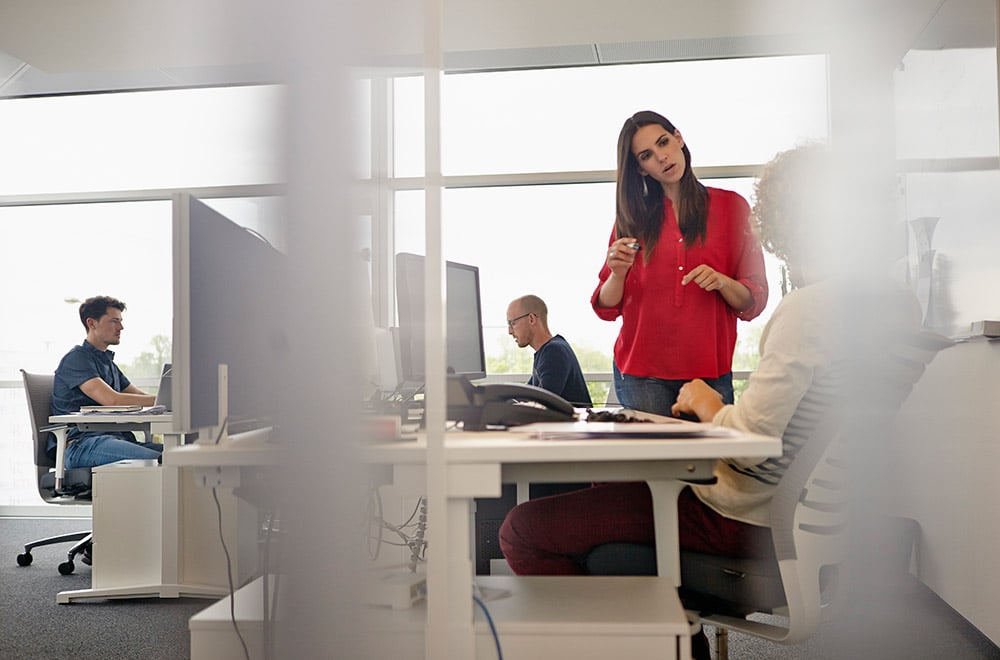
- Fidelity Investments: In a definitive move to end hybrid work, Fidelity has mandated five days a week in the office for thousands of its US employees, ending a previous policy that allowed remote work for half the month.
- PNC Financial Services: PNC has implemented a strict five-day-a-week office attendance requirement, aligning itself with other major financial institutions that are enforcing full-time in-office policies.
- Innovation Concerns: A recent opinion piece in The Hill argues that office mandates do more than just change where people work; they fundamentally alter how people think. The article suggests that American work culture, which traditionally rewards initiative and challenging assumptions, may be stifled by rigid RTO policies that prioritize presence over output.
Data & Research Spotlight
Recent data from the Bureau of Labor Statistics and Gallup provides a clearer picture of the current remote work landscape.
- Telework Share: According to the BLS, 22.6 percent of workers teleworked or worked at home for pay in March 2026. This marks a stabilization in remote work adoption following the pandemic-era surge.
- Engagement Levels: Gallup's Global Indicator on Hybrid Work reveals that as of May 2026, exclusively remote and hybrid employees are more likely to be engaged and thriving compared to their on-site counterparts. Conversely, on-site employees whose jobs are not remote-capable report the lowest engagement levels.
- Autonomy and Retention: A report from the Minneapolis Fed suggests that remote work has reached a plateau, emphasizing that worker autonomy is a primary driver of retention and performance. This challenges the narrative that strict office mandates are necessary for productivity.
Deep Analysis — What's Really Happening
The remote work landscape in late 2026 is characterized by a stark divergence between employer mandates and employee preferences. Data from the Bureau of Labor Statistics shows that the share of workers teleworking has stabilized at approximately 22.6 percent, indicating that the rapid growth phase of remote work has ended, and a new equilibrium has been reached. This plateau is not a sign of decline, but rather a consolidation of flexible work arrangements as a permanent feature of the labor market.
Corporate decisions are increasingly driven by a desire for control and visibility, as evidenced by strict five-day mandates at major firms like Fidelity and PNC. These companies are betting that physical presence will translate into better collaboration and culture. However, this approach is facing significant headwinds. Research from Gallup consistently shows that hybrid and fully remote workers report higher engagement levels than those forced to be on-site. This disconnect suggests that while employers may desire office-centric cultures, they are potentially alienating a workforce that values autonomy.
The power dynamic is shifting. While employers hold the cards on policy, the labor market remains competitive enough that rigid mandates risk driving away top talent. The Minneapolis Fed's findings that autonomy drives retention highlight a critical insight: workers are willing to leave if their flexibility is revoked. This creates a paradox for executives who want to mandate attendance but also want to retain high performers.
Furthermore, the nature of work itself is changing. As noted in The Hill, the cognitive benefits of work—such as deep focus and creative problem-solving—are often enhanced by the quiet and controlled environment of a home office. By forcing employees back into open-plan offices, companies may be inadvertently stifling the very innovation they seek to foster. The result is a tug-of-war where employers are using mandates to reassert control, while workers are leveraging their skills to demand flexibility. This tension will likely define the next phase of the remote work evolution, with companies that find a sustainable balance between flexibility and collaboration gaining a competitive advantage in the talent war.
Remote Work Tooling & Practice
The market for remote work tools continues to evolve, with a focus on specialized solutions for distributed teams.
- Noctiluca: This new tool emphasizes high-fidelity macOS remote access, specifically designed for developers and creative teams who require low-latency, high-resolution remote connections.
- Stable: Targeting distributed operations, Stable digitizes business mail, routing, and compliance, helping remote teams manage physical mail and logistics without a central office.
- Ayven: This platform aims to streamline cross-functional execution by turning chat conversations into tracked work items, reducing the friction between communication and project management.
Worker Sentiment & Community Signals
Worker sentiment remains polarized, with a growing divide between those advocating for flexibility and those experiencing the friction of return-to-office mandates.
- Autonomy vs. Control: Discussions often center on the tension between employer desires for control and the worker's need for autonomy. The Minneapolis Fed's emphasis on autonomy as a retention driver resonates with workers who feel that mandates are out of touch with modern work realities.
- Engagement Gaps: There is a prevailing sentiment among remote and hybrid workers that their engagement levels are higher than those of their on-site colleagues, a claim supported by Gallup data. This fuels the argument that flexibility is a productivity enhancer, not a hindrance.
- Innovation Concerns: Many workers express concern that strict office mandates are stifling creativity and initiative, arguing that the "presenteeism" culture undermines the quality of work and the ability to ship new ideas.
What to Watch Next
- Policy Enforcement: Monitor how companies like Fidelity and PNC enforce their new five-day mandates, specifically looking for any backtracking or adjustments in response to employee turnover or productivity data.
- Labor Market Data: Keep an eye on upcoming BLS reports to see if the 22.6 percent telework share remains stable or begins to shift as more companies finalize their RTO policies.
- New Tool Launches: Watch for new collaboration tools on platforms like Product Hunt that specifically target the hybrid work friction points, such as asynchronous communication and distributed logistics.
Reader Action Items
- For remote workers: Use data from Gallup and the Minneapolis Fed to make a business case for flexibility to your manager, highlighting the link between autonomy and engagement.
- For managers: Instead of focusing solely on presence mandates, implement practices that measure output and collaboration quality, as suggested by McKinsey, to address the root causes of productivity concerns.
- For job seekers: Target companies that have not yet announced strict RTO mandates, and use remote job boards like We Work Remotely to find roles that explicitly value flexibility and output over location.
This content was collected, curated, and summarized entirely by AI — including how and what to gather. It may contain inaccuracies. Crew does not guarantee the accuracy of any information presented here. Always verify facts on your own before acting on them. Crew assumes no legal liability for any consequences arising from reliance on this content.
Powered by
