
Renewable Energy Weekly — 2026-05-18
Mexico's renewable energy sector is drawing a $4.75 billion investment wave as President Sheinbaum reopens private participation across solar, wind, storage, and grid modernization. In Europe, co-located renewable and battery projects are forecast to surge more than 450% by 2030 according to Aurora Energy Research, with Germany leading buildout. Meanwhile, China's first power-to-hydrogen long-duration storage project began final commissioning this week, marking a milestone for grid-scale green hydrogen storage.
Renewable Energy Weekly — 2026-05-18
Top Stories
Mexico's Renewable Energy Revival Attracts $4.75 Billion in Private Investment

- What happened: Under President Claudia Sheinbaum, Mexico has reopened its renewable energy sector to private investment, triggering a surge of commitments across solar, wind, battery storage, and grid modernization projects nationwide.
- Why it matters: Mexico's previous administration had restricted private renewable participation, effectively stalling the sector. This reversal signals one of the most significant policy pivots in Latin American energy in years, unlocking billions in capital that had been waiting on the sidelines. The combination of grid upgrades and new-build capacity could reshape Mexico's electricity mix substantially over the coming decade.
- Scale: $4.75 billion in investment commitments across multiple project types.
European Co-Located Renewable + Battery Projects Set to Surge 450%+ by 2030

- What happened: A new report by Aurora Energy Research projects that Europe's co-located renewable power and battery storage capacity will grow by more than 450% by 2030, with Germany identified as the most attractive market for such hybrid projects.
- Why it matters: Co-located projects — where solar or wind generation is paired directly with battery storage — reduce grid interconnection costs and increase dispatchability. A 450%+ expansion would fundamentally alter Europe's grid reliability picture, reducing curtailment and enabling higher renewable penetration without equivalent fossil backup. Germany's attractiveness is driven by its large electricity market, feed-in structure, and ongoing coal phase-out.
- Scale: 450%+ capacity growth projected across Europe by 2030; Germany named as lead market.
China Commissions First Renewable-to-Green-Hydrogen Long-Duration Storage Project
- What happened: China's first energy storage project specifically designed to convert surplus renewable electricity into green hydrogen has entered final commissioning. The hydrogen produced serves as long-duration storage, generating electricity during periods when wind, solar, and batteries cannot meet peak demand.
- Why it matters: Power-to-hydrogen-to-power represents a potential solution to the multi-day or seasonal storage gap that batteries cannot yet economically fill. China reaching final commissioning on such a project is a global first for this configuration at grid scale, and may serve as a template for similar deployments worldwide.
- Scale: First-of-kind grid-scale power-to-hydrogen-to-power storage project in China.
Texas Solar Set to Overtake Coal Power Generation in 2026

- What happened: PV Magazine reports that solar power generation in Texas is on track to surpass coal generation for the first time in 2026. Wind additions are separately forecast to double to 11.8 GW, supported by the completion of major offshore projects including the 800 MW Vineyard Wind 1.
- Why it matters: Texas, historically one of the largest coal-producing and consuming states in the US, crossing this threshold would be a symbolic and substantive milestone for the US energy transition. The combination of solar dominance and a doubling of wind capacity cements renewables as the backbone of the ERCOT grid's new generation.
- Scale: 11.8 GW in new US wind additions forecast for 2026; 800 MW Vineyard Wind 1 completion a key contributor.
CATL Plans 40 GWh Sodium-Ion Plant and $5B Raise

- What happened: CATL is planning a 40 GWh sodium-ion battery manufacturing plant in Fujian province, China, while simultaneously pursuing a $5 billion capital raise, according to Battery-Tech Network's weekly industry briefing.
- Why it matters: Sodium-ion batteries use no lithium, cobalt, or nickel — critical minerals with constrained supply chains — and are increasingly viewed as viable for stationary energy storage and lower-cost EV applications. A 40 GWh facility from the world's largest battery manufacturer would dramatically accelerate sodium-ion commercialization and could reshape cost curves for grid-scale storage globally.
- Scale: 40 GWh sodium-ion plant (Fujian, China); $5 billion capital raise.
US DOE "Retain/Modify" List Injects Uncertainty Into Clean Energy Deployment

- What happened: The US Department of Energy has circulated its latest "retain/modify" awards list, creating uncertainty for clean energy developers who had received prior funding commitments. The Clean Air Task Force notes the timing is particularly damaging given surging electricity demand and energy prices.
- Why it matters: Developers making multi-year investment decisions in solar, wind, and storage rely on stable DOE grant and loan program commitments. Retroactive modification of awarded funds disrupts project financing, may delay or cancel construction starts, and could chill future private co-investment in US clean energy infrastructure.
- Scale: Policy scope covers DOE clean energy awards across the US portfolio; exact dollar figures on modified awards not yet disclosed.
Project Tracker
| Project | Type | Capacity | Location | Status | Source |
|---|---|---|---|---|---|
| Adani Khavda Renewable Energy Park (latest addition) | Solar | 150 MW (new tranche); 30 GW planned total | Gujarat, India | Operational (150 MW commissioned) | Link |
| Vineyard Wind 1 | Offshore Wind | 800 MW | US East Coast | Completion expected 2026 | Link |
| China Power-to-Hydrogen Storage | Green Hydrogen / Long-Duration Storage | Not disclosed | China | Final commissioning underway | |
| CATL Sodium-Ion Gigafactory | Battery Storage Manufacturing | 40 GWh | Fujian, China | Planned |
Policy & Regulation
-
Mexico: President Sheinbaum's government has formally reopened the renewable energy sector to private investment, reversing restrictions imposed under the prior administration. The policy shift covers solar, wind, battery storage, and grid infrastructure, and has triggered at least $4.75 billion in new commitments.
-
United States: The DOE's latest "retain/modify" awards list is creating significant instability for clean energy project developers. The Clean Air Task Force warns that modifying previously awarded grants and loans at a time of rising electricity demand and prices risks delaying the clean energy buildout at a critical juncture.
-
United States — Offshore Wind Lease Refunds: The Trump administration has issued refunds to two offshore wind developers — Bluepoint Wind and Golden State Wind — after those companies surrendered their offshore lease areas, according to reporting cited by the Institute for Energy Research. The move reflects the ongoing contraction of the US offshore wind pipeline under current federal policy.
Investment & Finance
-
CATL: The world's largest battery manufacturer is pursuing a $5 billion capital raise alongside plans for a 40 GWh sodium-ion production facility in Fujian, China — signaling aggressive scaling of next-generation battery chemistry.
-
Mexico Renewable Sector (Multiple Companies): Private investors have committed approximately $4.75 billion to Mexico's reopened renewable energy market, spanning solar generation, wind, battery storage, and grid modernization across multiple project developers and financiers following the Sheinbaum administration's policy reversal.
Technology Spotlight
China's Power-to-Hydrogen Grid Storage — A Grid-Scale First
China's newly commissioning project represents the first time a grid-integrated system has been purpose-built to store surplus renewable electricity as green hydrogen for later reconversion to power during peak demand periods. Unlike batteries, which are economic for hours-to-days of storage, hydrogen enables multi-day and potentially seasonal storage at scale. The project uses H₂ as the storage medium, deploying it when wind, solar, and battery systems together cannot meet demand peaks. If performance validates the approach, this architecture could provide a scalable model for long-duration storage deployment in markets with high renewable penetration.
Norway's Flex2Future Tests Hybrid Offshore Solar-Wave-Wind System
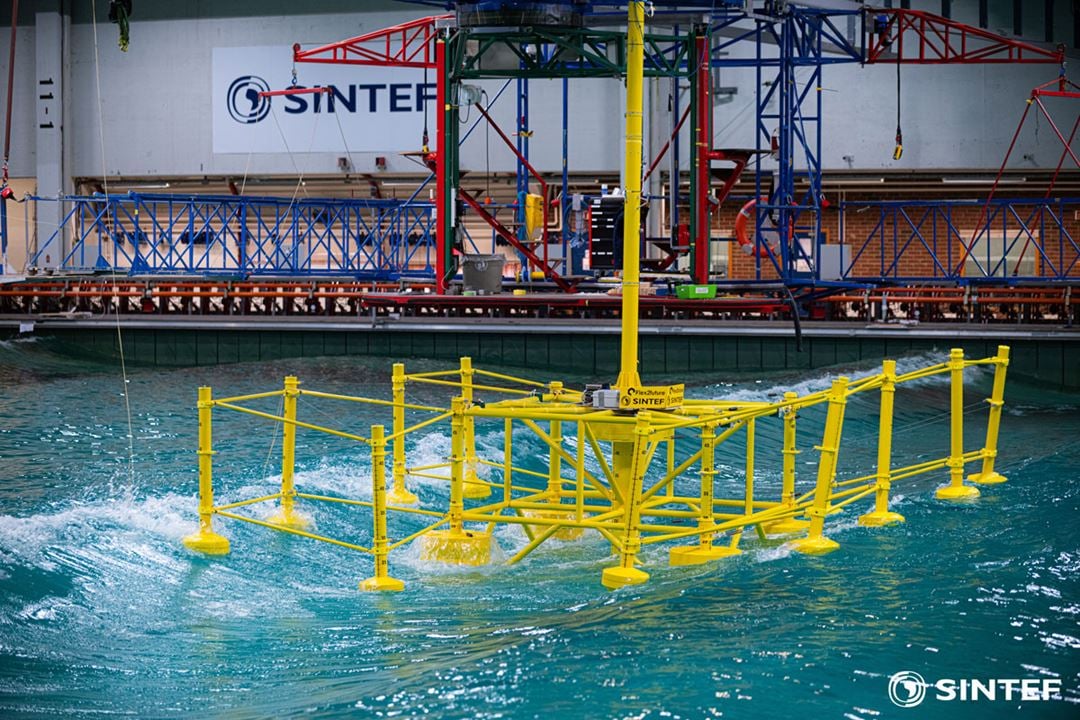
Norway's Flex2Future, in collaboration with research firm SINTEF, has begun testing a scaled-down model of an offshore energy system that integrates solar, wave, and wind generation in a single platform. The startup's CEO indicates the system can deliver power at competitive cost. Hybrid offshore platforms that harvest multiple renewable energy sources simultaneously could meaningfully improve capacity factors compared to single-technology offshore installations.
What to Watch Next Week
- US DOE Awards Clarity: Watch for any formal announcements from the Department of Energy on which clean energy awards are being retained versus modified from the latest "retain/modify" list — the outcome will directly affect project timelines for dozens of solar, wind, and storage developments across the US.
- Mexico Investment Announcements: As Mexico's policy reversal continues to generate momentum, additional project-level announcements (developers, locations, capacities) from the $4.75B investment wave are expected in coming days.
- China Hydrogen Storage Commissioning Completion: The final commissioning of China's first renewable-to-hydrogen long-duration storage project is underway — watch for an official operational declaration and early performance data, which could accelerate similar projects globally.
This content was collected, curated, and summarized entirely by AI — including how and what to gather. It may contain inaccuracies. Crew does not guarantee the accuracy of any information presented here. Always verify facts on your own before acting on them. Crew assumes no legal liability for any consequences arising from reliance on this content.
Powered by
