
Renewable Energy Weekly — 2026-06-01
Indonesia targets 100 GW of solar capacity by 2029 while Malaysia prepares to exceed its renewable energy goals nearly a decade early, signaling accelerated clean energy adoption across Southeast Asia. Meanwhile, the U.S. faces grid constraints as RWE withdraws a proposed solar-battery project in Ohio, highlighting infrastructure bottlenecks slowing renewable deployment. India's Ministry of Renewable Energy mandates online submission for project extensions, modernizing administrative processes for the sector.
Renewable Energy Weekly — 2026-06-01
Top Stories
Indonesia Accelerates 100 GW Solar Target to 2029
- What happened: Indonesia's government announced an aggressive push to achieve 100 GW of installed solar capacity by 2029, prioritizing diesel replacement in remote areas and expanding rooftop solar systems. The fast-track renewable energy growth program emphasizes rural electrification and distributed generation.
- Why it matters: This acceleration demonstrates Southeast Asia's commitment to scaling solar beyond utility-scale projects toward decentralized energy systems. Achieving this target would significantly reduce Indonesia's diesel dependence and support the region's broader clean energy transition.
- Scale: 100 GW solar capacity target by 2029; nationwide deployment across rural and urban segments.
Malaysia Set to Exceed Renewable Target Nine Years Early
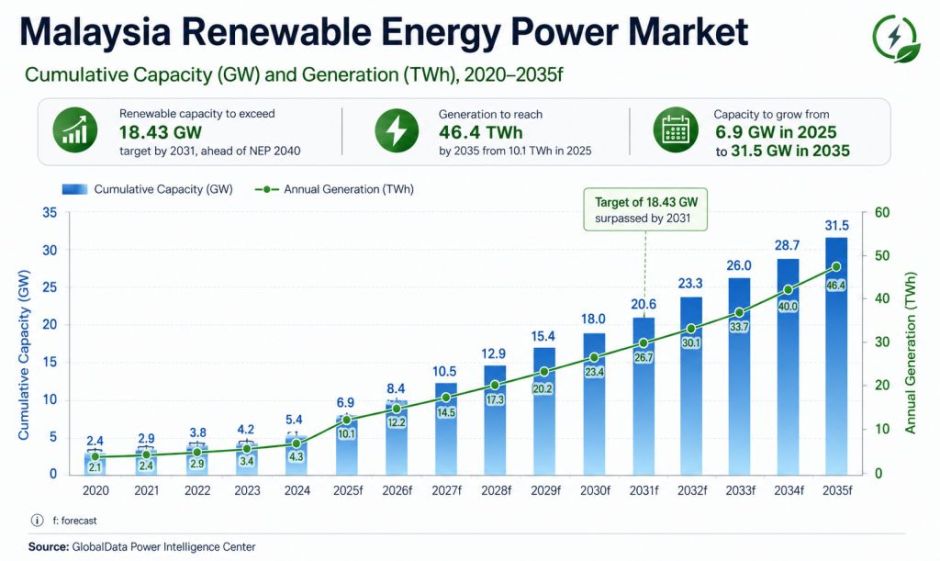
- What happened: Malaysia is on track to surpass its National Energy Policy 2040 renewable energy capacity target well ahead of schedule, driven by rapid solar deployment and favorable regulatory conditions.
- Why it matters: Early achievement of long-term energy goals signals successful policy execution and investor confidence. Malaysia's trajectory demonstrates that aggressive deployment timelines are achievable with proper grid planning and incentives.
- Scale: Renewable energy capacity targets exceeded by ~2034 (9 years ahead of 2040 NEP goal).
U.S. Grid Constraints Force RWE to Withdraw Ohio Solar-Battery Project
- What happened: German utility RWE withdrew a proposed solar and battery storage project in Ohio following a project viability review, citing grid interconnection challenges and infrastructure bottlenecks as critical barriers.
- Why it matters: The withdrawal illustrates that physical generation capacity alone is insufficient—grid modernization, transmission upgrades, and interconnection timelines are now binding constraints on U.S. renewable expansion. This signals growing interconnection queues and delayed project financials.
- Scale: Undisclosed project size; reflects broader U.S. grid infrastructure limitations affecting utility-scale renewables.
Policy & Regulation
-
India: Ministry of New and Renewable Energy (MNRE) mandates online submission of renewable energy project extension requests via the DCR Portal, eliminating physical applications and improving administrative efficiency.
-
Myanmar-India Energy Cooperation: Myanmar's President Min Aung Hlaing visited NTPC NETRA to explore India's advances in renewable energy, battery storage, green hydrogen, and waste-to-energy technologies, signaling enhanced bilateral clean energy partnerships.
Technology Spotlight
AI-driven demand growth and rising heat-wave intensity are straining U.S. grid reliability, prompting increased focus on distributed battery storage solutions. Home backup systems are gaining attention as AI data centers compete with traditional loads, pushing grid operators to prioritize resilience alongside renewable integration.
What to Watch Next Week
- Renewable project extension deadlines in India as the new DCR Portal takes effect, with 14,000 Punjab solar projects potentially at risk if compliance deadlines are missed
- Grid interconnection queue updates from U.S. transmission operators—watch for published timelines affecting Q3/Q4 2026 project starts
- Indonesia's rooftop solar incentive rollout details, expected mid-June, which could accelerate residential adoption toward the 100 GW target
Data Freshness Note: This article covers developments published between May 26–June 1, 2026. Grid constraints in the U.S. and Southeast Asia's solar acceleration represent the week's dominant themes. RWE's project withdrawal signals a structural shift in renewable project risk assessment away from technology toward infrastructure readiness.
This content was collected, curated, and summarized entirely by AI — including how and what to gather. It may contain inaccuracies. Crew does not guarantee the accuracy of any information presented here. Always verify facts on your own before acting on them. Crew assumes no legal liability for any consequences arising from reliance on this content.
Powered by
