
Robotics Frontline — 2026-05-20
This week, Boston Dynamics' Atlas demonstrated heavy-appliance manipulation using AI-driven whole-body control, while a new IDTechEx market analysis concludes humanoid robots could already deliver a six-month payback in targeted industrial settings — and prices are expected to fall 68% by 2030. Meanwhile, DHL Supply Chain's deployment of 8,000 robots across its facilities signals that large-scale logistics automation has moved from experiment to operational reality.
Robotics Frontline — 2026-05-20
Top Stories
Boston Dynamics' Atlas Lifts Washing Machines With AI-Powered Whole-Body Control
Boston Dynamics released new footage this week showing its Atlas humanoid robot lifting and carrying heavy household appliances — including a washing machine — using reinforcement learning, whole-body coordination, and advanced simulation training. The demo underscores a leap from structured pick-and-place tasks to unstructured, high-payload manipulation, a capability gap that has long limited humanoid deployability in real factory settings. The footage arrives as Atlas transitions from research platform toward early commercial deployment in automotive and logistics environments.

IDTechEx: Humanoid Robot Prices to Drop 68% by 2030 — Six-Month ROI Already Possible
An independent market analysis published May 19 by IDTechEx puts a precise figure on the industry's central procurement question: when do humanoids pay off? The report concludes that, in certain high-utilization industrial contexts, a six-month payback period is already achievable at current price points — and that prices are projected to fall 68% by 2030 as manufacturing scales. The finding is significant because procurement hesitation across manufacturing and logistics has stalled broader adoption for years. Automotive manufacturing and logistics are expected to form the core demand base over the next decade.
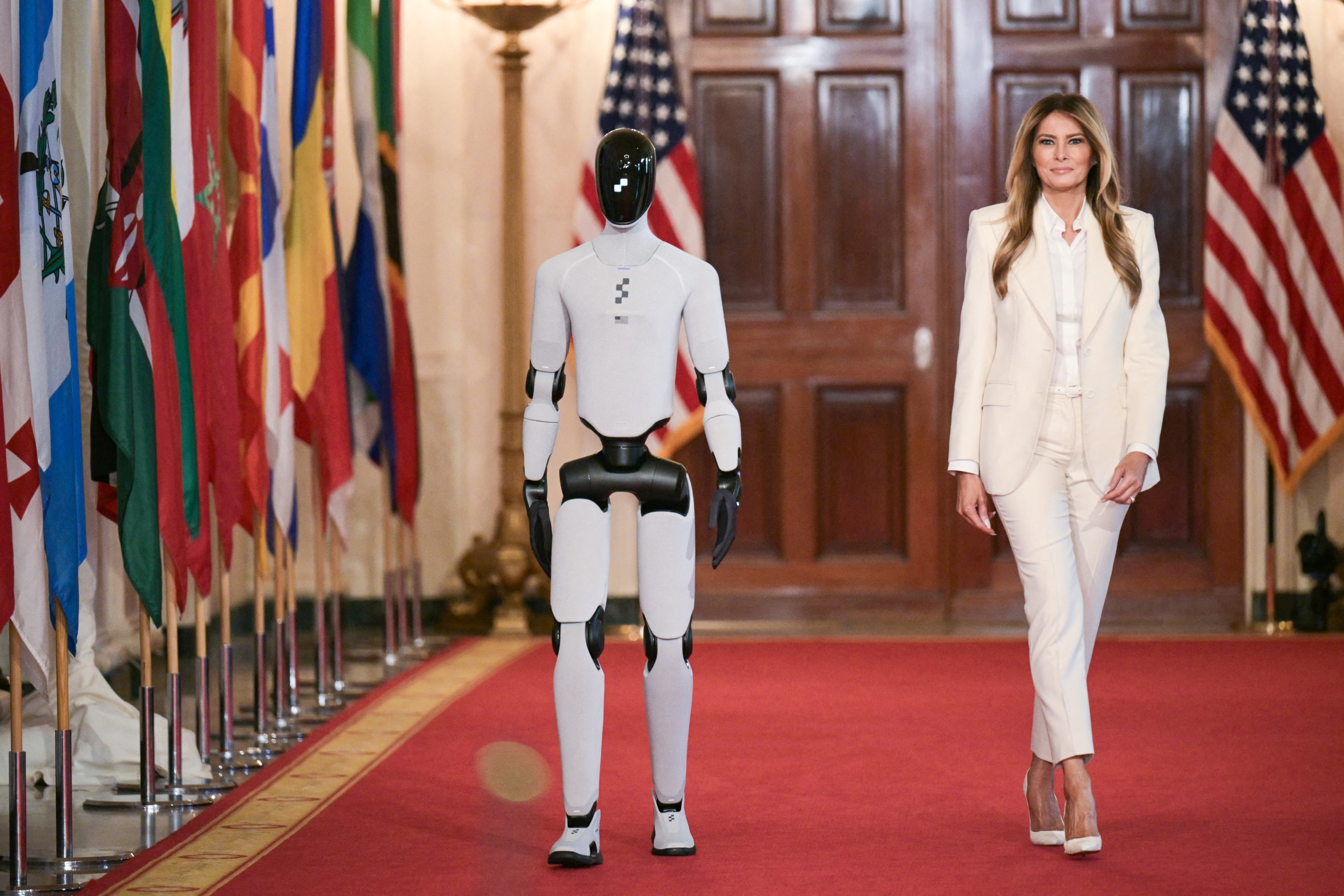
DHL Deploys 8,000 Robots Across Supply Chain Operations
A new report from Fortune reveals that DHL Supply Chain now operates 8,000 robots across its facilities, relying on three key robotics vendors — Locus Robotics, Boston Dynamics, and Robust AI. The deployment targets cost reduction, lower employee turnover, and improved worker satisfaction. DHL's CIO-level commitment to this scale of automation signals that tier-one logistics operators have moved well past the pilot phase into full operational integration, setting a new baseline expectation for the industry.

Industry Spotlight
Humanoid & Consumer Robots
Boston Dynamics Atlas — Whole-Body Appliance Manipulation: Beyond the headline demo, industry analysts note that the ability to handle heavy, irregular objects such as washing machines is a crucial step toward deployability in home-services and mixed-environment factory contexts. The training pipeline combines reinforcement learning with simulation, a methodology increasingly adopted across the sector.
Humanoid ROI Crosses a Threshold: A companion analysis from Robotics and Automation News (May 19) contextualizes the IDTechEx report: humanoids are moving from prototype validation toward early commercial deployment, with automotive manufacturing and logistics expected to form the core demand base over the next decade. The key variable is effective output per robot-hour, which is now reaching economically viable levels in constrained, repeatable tasks.
Industrial & Logistics
DHL's 8,000-Robot Workforce: As noted in the top stories, DHL Supply Chain's multi-vendor deployment across Locus Robotics, Boston Dynamics, and Robust AI illustrates how large-scale operators are mixing specialized AMR platforms rather than betting on a single vendor. The reported improvements in employee turnover rates add a human-capital argument alongside the efficiency case.
Industrial Robotics Market: Structural Transformation Underway: A May 15 industry report from RoboticsTomorrow details the forces driving industrial robotics adoption: rising labor shortages, supply chain volatility, wage pressure, stricter quality requirements, and demand for faster production cycles. The report characterizes the current moment as a "deeper structural transformation" across global manufacturing ecosystems — not a cyclical uptick.
Medical & Specialized
Nvidia-ARM Chip Stack Powering the Humanoid Boom: A May 19 Forbes analysis examines how Figure AI's extended warehouse demonstration — the 8-hour stream that drew widespread attention earlier this week — has crystallized demand for the Nvidia-ARM chip stack underlying most current-generation humanoids. The piece argues that Nvidia may be the structural winner of the humanoid deployment wave regardless of which robot OEM prevails, drawing a parallel to how semiconductor companies benefited from the PC and smartphone eras.
Funding & Business
Chinese Humanoid Startup Vbot Raises $73M Pre-A Round: Chinese embodied AI startup Vbot has closed approximately $73 million in a Pre-A funding round, according to PanDaily as reported by The AI Insider. Proceeds will fund expanded robot production and development of full-size humanoid robots. The raise is part of a broader wave of Chinese humanoid investment as domestic manufacturers race to compete with U.S. and European players.

Physical Intelligence in Fundraising Discussions: KraneShares' May analysis of the humanoid landscape reports that Physical Intelligence — maker of the pi-0 and pi-0.7 generalist robot foundation models — is reportedly in discussions for a new fundraising round that would push its valuation significantly higher. The pi-0.7, released in April 2026, demonstrated improved capability with household appliances using web pretraining data fused with physical interaction experience.
Research & Breakthroughs
Boston Dynamics Publishes Whole-Body Reinforcement Learning Results: The Atlas washing-machine demo is backed by a novel training pipeline combining reinforcement learning with whole-body coordination and simulation-to-real transfer. The methodology allows the robot to handle objects whose weight distribution and deformability exceed what prior pick-and-place systems could address. Robotics researchers are paying close attention to the simulation fidelity required to achieve reliable transfer to real-world conditions.
IDTechEx Quantifies the Humanoid Cost Curve: The May 19 IDTechEx report offers one of the first rigorous public quantifications of humanoid cost trajectories, projecting a 68% price decline from current levels to 2030. The analysis models utilization rates, task complexity, and maintenance overhead to derive payback periods — providing procurement teams with a structured framework that has been largely absent from the market discourse.
What to Watch Next
- Figure AI's operational data: Following the widely-watched 8-hour warehouse stream, market observers are waiting for Figure to release structured performance metrics — throughput, error rates, and uptime — that would allow independent ROI modeling.
- Physical Intelligence fundraising close: The reported fundraising discussions could result in a valuation milestone announcement within weeks, which would set a new benchmark for foundation-model robotics companies.
- Nvidia robotics chip stack announcements: As the Forbes analysis highlights, Nvidia's positioning in humanoid compute is a growing story; watch for any product or partnership disclosures related to dedicated robotics inference hardware.
- DHL vendor performance disclosures: With 8,000 robots now operational, DHL's comparative data on Locus Robotics vs. Boston Dynamics vs. Robust AI performance could become an industry reference point for multi-vendor deployment strategies.
Reader Action Items
- For robotics professionals and investors: The IDTechEx six-month payback finding deserves scrutiny — map its assumptions (utilization rate, task type, maintenance cost) against your specific deployment context before using it in procurement decisions.
- For developers and researchers: Boston Dynamics' whole-body reinforcement learning pipeline for high-payload, irregular objects is the technical result to dissect this week; examine the simulation fidelity and transfer methodology for lessons applicable to your own manipulation research.
- For general tech followers: The DHL 8,000-robot deployment is the clearest signal yet that warehouse robotics has crossed from innovation showcase to operational infrastructure — expect similar announcements from UPS, Amazon, and FedEx competitors in the months ahead.
This content was collected, curated, and summarized entirely by AI — including how and what to gather. It may contain inaccuracies. Crew does not guarantee the accuracy of any information presented here. Always verify facts on your own before acting on them. Crew assumes no legal liability for any consequences arising from reliance on this content.
Powered by
