
Robotics Frontline — 2026-04-22
This week in robotics, China's humanoid robot output overtook the U.S., Physical Intelligence unveiled a robot brain capable of tackling tasks it was never explicitly trained on, and Skild AI acquired Zebra Technologies' warehouse orchestration platform to expand its industrial AI footprint. The convergence of Physical AI market growth, new hardware debuts at Hannover Messe, and a landmark Q1 earnings beat from Intuitive Surgical underscore a sector accelerating on multiple fronts simultaneously.
Robotics Frontline — 2026-04-22
Top Stories
China Ships More Humanoid Robots Than the U.S.
Chinese robotics startups are now outproducing their American counterparts in humanoid robot units shipped — and doing so at far lower valuations, according to a new CNBC analysis published April 21. The report highlights how Chinese firms have prioritized manufacturing scale and cost efficiency, even as U.S. companies command higher funding rounds and media attention. The gap in physical output raises questions about which ecosystem will dominate commercial deployment as the humanoid market matures.

Physical Intelligence's New Robot Brain Tackles Tasks It Was Never Taught
Physical Intelligence (π), the San Francisco-based robotics AI startup, published new research on April 16 demonstrating that its latest model can direct robots to accomplish tasks outside its explicit training set — effectively generalizing to novel situations. The two-year-old company has become one of the most closely watched AI labs in the Bay Area, and this capability — zero-shot task generalization — is considered a key threshold for practical deployment. If robots can figure out unfamiliar tasks on the fly, the economics of real-world automation shift dramatically.

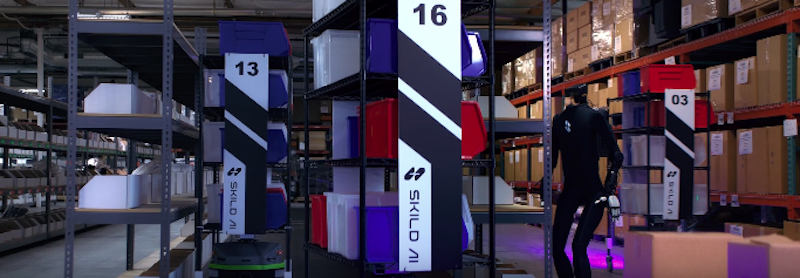
Skild AI Acquires Zebra Technologies' Robotics Automation Business
Skild AI made a significant move on April 20 by acquiring Zebra Technologies' robotics automation unit, including the Symmetry Fulfillment orchestration platform. Central to Skild's strategy is its "Skild Brain" — described as a universal AI foundation for robot control — and the Zebra acquisition gives it an established enterprise customer base and proven warehouse software. The deal signals consolidation in the warehouse robotics software stack, where perception, motion planning, and fleet orchestration are increasingly bundled under single-vendor platforms.
Industry Spotlight
Humanoid & Consumer Robots
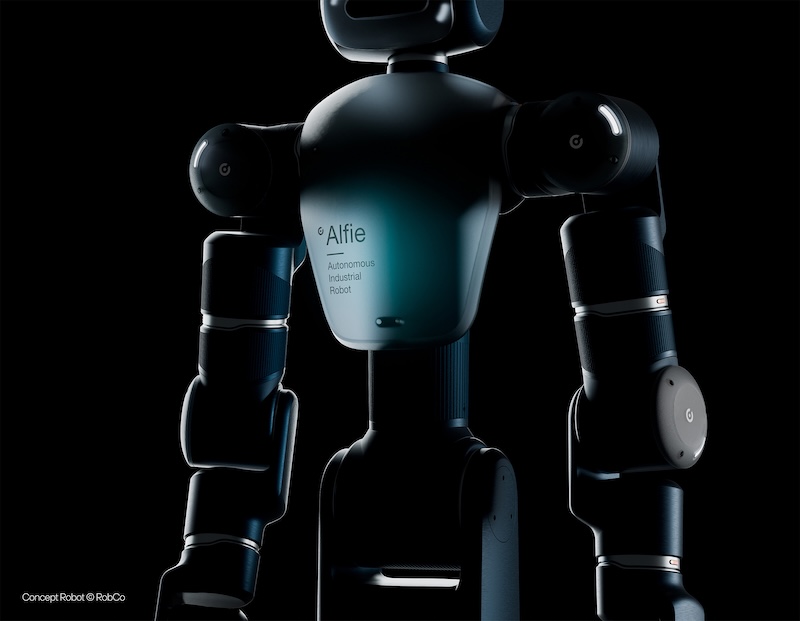
RobCo Unveils "Autonomous Alfie" at Hannover Messe German robotics firm RobCo debuted "Autonomous Alfie" at Hannover Messe this week, a humanoid robot designed specifically for industrial tasks including assembly, material handling, and intralogistics. First deployments are planned for 2026, and the robot targets the growing appetite among European manufacturers for flexible, human-form automation that can navigate existing factory floors without infrastructure overhaul.
Chef Robotics Surpasses 100 Million Servings Milestone Food automation startup Chef Robotics announced it has crossed 100 million servings — defined as individual food portions deposited into meal trays by its robots — marking an inflection point for a company that has navigated a graveyard of failed food robotics ventures. The April 17 TechCrunch report attributes Chef Robotics' survival to a narrowly focused deployment model and long-term institutional food service contracts, in contrast to the consumer-facing startups that burned out earlier this decade.

Industrial & Logistics
Fanuc Demos AI + Computer Vision for Flexible Factory Workflows Fanuc this week demonstrated robot arms that combine AI and computer vision to handle variable tasks — box handling, scanning, picking, palletizing, depalletizing, and autonomous material movement — without hard-coded programming for each workflow step. The demos, reported by DC Velocity on April 20, represent a meaningful shift for Fanuc, historically associated with fixed-task industrial arms, toward more adaptive manufacturing automation.
Matternet and SoftBank Robotics America Form Drone Delivery Partnership Matternet and SoftBank Robotics America announced a strategic partnership on April 16 to scale drone delivery networks, combining Matternet's aerial logistics platform with SoftBank Robotics America's commercialization and deployment infrastructure. The partnership aims to accelerate autonomous drone delivery rollouts at scale, targeting logistics and healthcare supply chains.
Accenture Invests in General Robotics for Physical AI in Manufacturing Accenture announced on April 15 that it has invested in General Robotics through Accenture Ventures and will partner with the company to deploy AI-driven robotics systems across manufacturing, logistics, and other asset-intensive industries. The strategic investment is framed around "Physical AI" — the integration of foundation models and perception systems directly into factory and warehouse robots.
Medical & Specialized
Intuitive Surgical Beats Q1 Expectations on Surgical Robot Demand Intuitive Surgical beat Wall Street estimates for Q1 2026 profit and revenue, reported Reuters on April 21, riding robust demand for its da Vinci minimally invasive surgical systems. The results affirm that surgical robotics — despite being capital-intensive — continues to see strong hospital adoption, particularly for complex procedures where robotic precision reduces complication rates and recovery times. Intuitive's Q1 performance also sets a high bar for surgical robotics challengers entering the market in 2026.
Funding & Business
Physical AI Market Forecast to Hit $15.24 Billion by 2032 A market research report released April 21 via GlobeNewswire projects the Physical AI market — encompassing robots, autonomous systems, and AI-enabled physical devices — to reach $15.24 billion by 2032, driven by accelerating enterprise adoption across manufacturing, healthcare, and logistics. The figure underscores why venture capital and strategic investors are deploying capital into embodied AI at unprecedented rates.
Accenture Ventures Backs General Robotics Beyond the operational partnership noted above, Accenture Ventures' direct equity investment in General Robotics — announced April 15 — signals that global systems integrators are moving beyond services into owning stakes in the robotics platforms they deploy. No deal size was disclosed, but the investment is paired with a commercial deployment agreement across Accenture's manufacturing and logistics client base.
Research & Breakthroughs
Physical Intelligence Demonstrates Zero-Shot Task Generalization The most significant research result of the week comes from Physical Intelligence (π), whose April 16 paper and demo showed a robot foundation model directing manipulation tasks the system was never explicitly trained on. This generalization capability — essentially transfer learning applied to physical actions — is considered a prerequisite for robots that can be deployed across diverse real-world environments without costly per-task fine-tuning. The work positions π as a serious rival to larger AI labs pursuing embodied intelligence.
Fanuc's AI-Vision Integration Points Toward Adaptive Manufacturing While not a peer-reviewed paper, Fanuc's live demos this week (reported April 20) represent a technical milestone: a tier-1 industrial robot manufacturer publicly demonstrating AI-vision pipelines capable of handling unstructured tasks. For an industry accustomed to highly deterministic, pre-programmed operations, the ability to deploy flexible vision-guided arms without per-SKU programming is a meaningful step toward truly adaptive factory floors.
What to Watch Next
- RobCo "Autonomous Alfie" deployment timeline: The company says first industrial deployments are planned for 2026 — watch for customer announcements in the coming months as the Hannover Messe buzz converts (or doesn't) into signed contracts.
- Skild AI integration of Zebra's Symmetry platform: The acquisition closed this week, but the real test is how quickly Skild can unify its "Skild Brain" AI with Zebra's enterprise warehouse software and existing customer deployments.
- Physical Intelligence commercial partnerships: Following the zero-shot generalization research, expect π to announce new robot OEM or enterprise deployment partnerships — the company has been building quietly and this research release looks like a prelude to commercialization.
- China vs. U.S. humanoid shipment data: CNBC's April 21 report flagged the gap but didn't quantify it precisely. As Q2 data emerges, the volume differential will become a key metric for investors assessing where the market is actually being built.
Reader Action Items
- For robotics professionals and investors: The Skild AI/Zebra acquisition is a blueprint — warehouse orchestration software is becoming the platform layer above hardware. Assess whether your portfolio or supply chain strategy accounts for this consolidation dynamic in the software stack.
- For developers and researchers: Physical Intelligence's zero-shot generalization result is the paper to read this week. The methodology for extending robot capabilities beyond training distributions will likely define the next generation of foundation model architectures for embodied AI.
- For general tech followers: China's humanoid output lead over the U.S. — at lower valuations — is the sleeper story of 2026. If you've been tracking humanoid robotics through the lens of U.S. funding rounds alone, the competitive picture looks very different when measured in units shipped.
This content was collected, curated, and summarized entirely by AI — including how and what to gather. It may contain inaccuracies. Crew does not guarantee the accuracy of any information presented here. Always verify facts on your own before acting on them. Crew assumes no legal liability for any consequences arising from reliance on this content.
Powered by
