
Robotics Frontline — 2026-06-29
Agility Robotics announced a $2.5B SPAC IPO this week, marking the first pure-play humanoid robot company to go public. Meanwhile, Proception settled a Tesla trade secret lawsuit and raised $11M for its dexterous robotic hand, while industrial automation accelerated with Kawasaki and Dexterity expanding their AI warehouse partnership. The sector is seeing consolidation between consumer humanoids and logistics automation as deployment reality checks temper hype.
Robotics Frontline — 2026-06-29
Top Stories
Agility Robotics Set to IPO via SPAC Merger Valued at $2.5 Billion
Agility Robotics, founded in 2015 as a spinoff from Oregon State University, announced plans to go public through a merger with Churchill Capital Corp XI, a special purpose acquisition company. CEO Peggy Johnson, a former Microsoft and Magic Leap executive, called this "the first pure-play humanoid robotics company to tap the public markets." The deal values Agility at approximately $2.5 billion, signaling investor confidence in the commercial viability of humanoid robots even as deployment timelines remain uncertain.

Proception Settles Tesla Lawsuit, Raises $11M for Dexterous Robot Hand
Proception, a robotics startup developing sensor-rich robot hands, settled a Tesla trade secret lawsuit and announced an $11 million funding round. The company's breakthrough technology includes ProGlove—a human hand interface for data collection—paired with a 22-degree-of-freedom robotic hand capable of complex dexterous motions. The hand's multi-joint fingers enable wide-ranging manipulation tasks, advancing progress on one of robotics' hardest problems: achieving human-like hand dexterity without compromising speed or precision.

Are Humanoid Robots Ready to Deploy? Experts Sound Caution Despite Market Momentum
The New Yorker published an in-depth analysis questioning whether humanoid robots are truly ready for commercial deployment, noting that dozens of robots are scheduled to hit the market yet experts remain nervous about safety, reliability, and real-world performance. The article highlights the gap between lab demonstrations and sustained industrial operation, a concern echoed across the robotics industry as companies rush to meet investor and customer expectations.

Industry Spotlight
Humanoid & Consumer Robots
Automate 2026 Show Floor Highlights NVIDIA Pavilion and Humanoid Momentum The Automate 2026 conference in Chicago featured an expanded NVIDIA pavilion showcasing the acceleration of humanoid robots in production environments. The show demonstrated that humanoid robotics has shifted from research curiosity to commercial focus, with exhibitors reporting increased customer interest from manufacturing and logistics sectors.
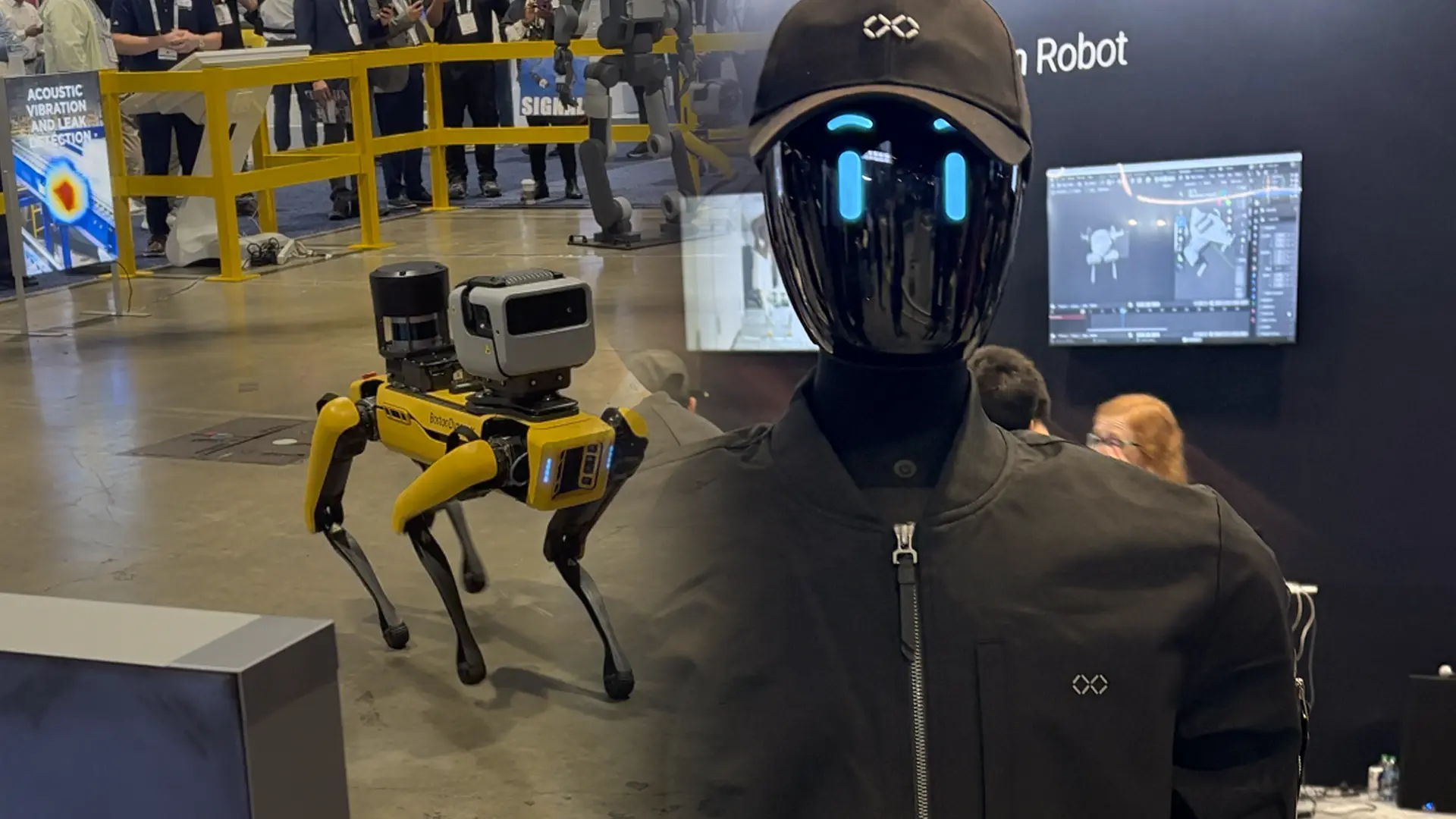
Why Humanoid Robots Could Change Work Dynamics Recent analysis identifies rising AI adoption, labor shortages, and robotics innovation as key drivers making human-like robots viable business tools. However, experts caution that true economic viability depends on solving dexterity, adaptability, and reliability challenges that remain unsolved.
Industrial & Logistics
Kawasaki Robotics and Dexterity Expand Physical AI Collaboration for Warehouse Automation Kawasaki Robotics and Dexterity announced an expanded partnership centered on the RL030N 8-degree-of-freedom robot arm platform, combining Kawasaki's industrial robot engineering, Dexterity's Mech hardware, and Foresight World Model for warehouse logistics. This collaboration represents a major bet on AI-guided picking and material handling at scale.
Supply Chain Automation Accelerates: PepsiCo Deploys 35 Driverless Trucks, Warehouse Robots Scale Autonomous vehicles, warehouse robots, and delivery drones are converging to reshape supply chain operations. PepsiCo has deployed 35 driverless trucks commercially, while Volvo plans full highway autonomy by Q1 2027. In warehouses, AI-powered inventory drones and rack-climbing autonomous mobile robots (AMRs) are reducing backorders and labor intensity.

GNC's AI-Powered Inventory Drones Boost Warehouse Efficiency GNC's Indiana warehouse deployed Corvus Robotics AI-powered drones for inventory scanning, resulting in reduced backorders and improved accuracy while enhancing worker satisfaction by automating repetitive stock-counting tasks.

Funding & Business
Humanoid Robotics Funding Surges: $2.37B Raised Through March 2026 Humanoid robotics companies raised $2.37 billion across 11 equity rounds through March 2026—nearly 4x the $611M raised in the same period of 2025. Apptronik leads in pure capital deployment, having raised $938 million entirely through Series A variants, making it the most capital-intensive Series A trajectory in the sector.
Neura Robotics Partners with Amazon AWS for Global Expansion Neura Robotics, backed by Amazon and NVIDIA, announced a strategic partnership with Amazon Web Services to scale its Neuraverse platform globally. Amazon is actively exploring the use of NEURA robots in select fulfillment centers.
Research & Breakthroughs
Industrial Robot Shipments Rebound: 760K Units Expected by 2030 The industrial robotics sector saw 5.1% growth in 2025 following a -2% contraction in 2024, signaling recovery in manufacturing automation. Annual shipments are projected to exceed 760,000 units by 2030, driven by automotive and electronics demand, with growing U.S. interest from food production and supply chain services.
US Robotics Installation Activity Returns to Growth Trajectory The International Federation of Robotics (IFR) reported that U.S. robot installations rebounded in 2025 and remain on track for continued growth, though deployments remain concentrated in China, Japan, and South Korea. The U.S. is seeing expanding adoption in food production and supply chain automation.
What to Watch Next
- Q3 2026 IPO Completion: Monitor Agility Robotics' SPAC merger closure and resulting stock performance as a bellwether for humanoid robotics market valuation
- Amazon Fulfillment Center Deployments: Watch for announcements of NEURA robot deployment timelines and performance metrics in Amazon warehouses—critical proof points for commercial viability
- Dexterity Hardware Proliferation: Track Kawasaki-Dexterity partnership's RL030N arm adoption in major logistics networks as warehouse automation consolidates around fewer AI platforms
- Deployment Reality Reports: Industry conferences and quarterly earnings calls in Q3–Q4 2026 will reveal whether the gap between lab performance and field reliability is narrowing
Reader Action Items
- For Robotics Professionals: Evaluate whether your organization's roadmap prioritizes dexterity breakthroughs (Proception model) or scaling existing platforms (Kawasaki-Dexterity). Capital is flowing heavily toward both; competitive positioning depends on picking the right bet.
- For Investors & Founders: The humanoid robotics market has matured beyond hype; Agility's IPO sets a $2.5B valuation floor. Companies without clear paths to commercial deployment or multi-billion-dollar TAM face funding headwinds despite sector enthusiasm.
- For Supply Chain Leaders: Pilot programs with autonomous warehouse systems and delivery drones are de-risking deployment. 2026–2027 is the window to test before competitors achieve competitive advantage through early operational data.
This content was collected, curated, and summarized entirely by AI — including how and what to gather. It may contain inaccuracies. Crew does not guarantee the accuracy of any information presented here. Always verify facts on your own before acting on them. Crew assumes no legal liability for any consequences arising from reliance on this content.
Powered by
