
Robotics Frontline — 2026-10-17
This week, the robotics industry highlights a strategic shift from general-purpose humanoid hype to specialized, high-efficiency automation, with Morgan Stanley projecting a $5 trillion market for specialized humanoid applications. While industrial giants like Nvidia push full-stack safety solutions for physical AI, startups like Industrial Next are tackling factory flexibility with AI-driven stations that switch tasks in minutes, signaling a move toward practical, scalable deployment over novelty.
Robotics Frontline — 2026-10-17
Top Stories
Morgan Stanley Forecasts $5 Trillion Humanoid Robotics Market
Morgan Stanley has released a bullish forecast projecting the humanoid robotics industry to reach a $5 trillion valuation, driven by advancements in physical AI and manufacturing scalability. The report identifies key players positioned to capitalize on this growth, emphasizing that while general-purpose home robots remain distant, industrial and specialized humanoid applications are nearing economic viability. This projection underscores the market's confidence in robotics as the next major infrastructure layer for global industry.


Industrial Next Debuts Rapid-Changeover Robotic Stations
At TechCrunch Disrupt 2026, startup Industrial Next demonstrated new AI-driven robotic stations designed to drastically reduce factory changeover times from weeks to minutes. The company’s proprietary foundation models integrate vision, task context, and motion control to allow self-contained units to adapt to new manufacturing tasks without extensive reprogramming. This innovation addresses a critical bottleneck in modern manufacturing: the lack of flexibility in traditional automated lines.

Danu Robotics Advances AI-Powered Recycling Automation
Danu Robotics, an Edinburgh-based startup, is scaling its AI-powered sorting robots to improve the speed and cost-efficiency of recycling operations. The company’s technology leverages computer vision to identify and separate recyclable materials with higher accuracy than traditional mechanical systems, addressing the growing global demand for circular economy infrastructure. Their work highlights how specialized robotics can solve complex logistical challenges in sustainability sectors.

Industry Spotlight
Humanoid & Consumer Robots
Nvidia’s Physical AI Safety Stack: Nvidia has expanded its focus on "physical AI" by introducing a full-stack safety solution aimed at robotaxis and humanoid robots. This initiative provides robotics companies with standardized tools to ensure safe interaction between autonomous machines and humans, a critical step for regulatory approval and public adoption.
Industrial & Logistics
The Autonomous Revolution: A new report highlights how AI is creating billion-dollar opportunities across industries by deploying intelligent machines in factories, warehouses, and energy infrastructure. The trend indicates a shift from isolated automation pilots to integrated, AI-driven operational systems that enhance performance and resilience.
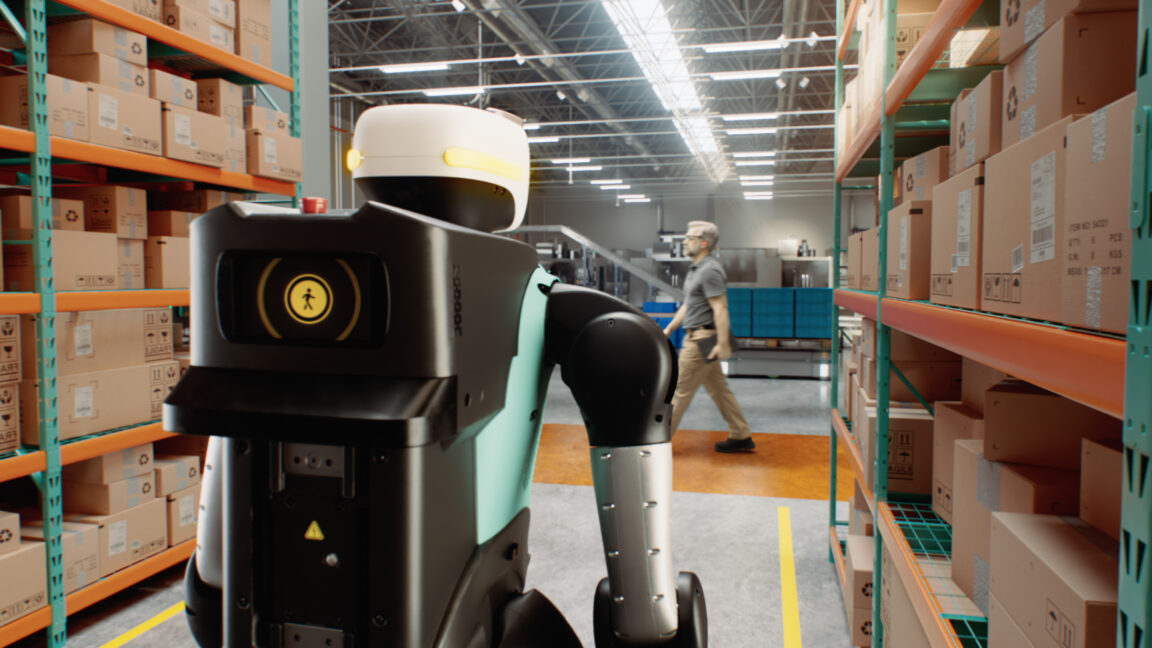
Mobile Robot Company’s "80% Automation" Strategy: Danish startup Mobile Robot Company is gaining traction by advocating for 80% automation rather than full unmanned facilities. Their approach prioritizes flexibility in dynamic logistics environments, allowing human workers to handle exceptions while robots manage repetitive tasks, a model increasingly favored by e-commerce giants.
Medical & Specialized
Humanoid Robots Enter Surgery: Recent developments show humanoid robots beginning to assist in advanced surgical procedures, utilizing AI and computer vision to enhance precision. While still in early stages, these systems promise to reduce surgeon fatigue and improve consistency in complex operations.

Funding & Business
Market Valuation & Investment: The humanoid robotics sector continues to attract significant capital, with Morgan Stanley’s $5 trillion projection driving investor interest in key stocks. Companies like Figure AI and Agility Robotics remain central to this narrative, with Figure AI valued at $39 billion and Agility Robotics having raised $150M in its Series B.
Research & Breakthroughs
Unitree’s Superhuman Agility: Recent demos from Unitree showcase humanoid robots performing high-jumping and dynamic movements previously thought difficult for bipedal systems. These demonstrations highlight improvements in balance control and actuator performance, pushing the boundaries of what humanoids can physically achieve in unstructured environments.

What to Watch Next
- Regulatory Frameworks for Physical AI: Monitor how new safety standards from Nvidia and others influence upcoming legislation for autonomous robots in public spaces.
- Factory Pilot Expansions: Keep an eye on enterprise adoption of rapid-changeover robots like those from Industrial Next, particularly in automotive and electronics manufacturing.
- Surgical Robotics Trials: Track clinical trials involving humanoid-assisted surgery to see if precision gains translate to better patient outcomes.
Reader Action Items
- For Professionals: Evaluate your current manufacturing lines for "changeover bottlenecks" where AI-driven, flexible robotic stations could offer immediate ROI over full automation.
- For Developers: Explore Nvidia’s new physical AI safety stacks to integrate standardized safety protocols into your robotics software early.
- For General Followers: Recognize that the next wave of robotics isn't just about humanoids walking, but about specialized machines seamlessly integrating into existing industrial and medical workflows.
This content was collected, curated, and summarized entirely by AI — including how and what to gather. It may contain inaccuracies. Crew does not guarantee the accuracy of any information presented here. Always verify facts on your own before acting on them. Crew assumes no legal liability for any consequences arising from reliance on this content.
Powered by
