
방위산업 및 우주 뉴스 — 2026년 5월 25일
SpaceX successfully completed the maiden flight of its new Starship V3 megarocket on May 23, achieving a planned ocean splashdown in the Indian Ocean. The U.S. Navy advanced seven proposals to the prototype stage in its MUSV (Manned Unmanned Surface Vehicle) Marketplace demonstration program, expanding autonomous surface combat capabilities. Lockheed Martin broke ground on a new THAAD interceptor missile factory, responding to the Pentagon's push to ramp up ammunition production.
Defense and Space Industry Update — May 25, 2026
Headlines at a Glance
- Starship V3 maiden flight succeeds: SpaceX executed Flight 12 of its new V3 megarocket on May 23, with the spacecraft achieving a planned ocean splashdown in the Indian Ocean.
- Lockheed THAAD factory groundbreaking: Lockheed Martin CEO Jim Taiclet presided over a groundbreaking ceremony for a new THAAD interceptor production facility, emphasizing that "the Pentagon's ammunition surge requirements will be realized."
- Navy MUSV program advances: The U.S. Navy approved seven proposals to the prototype stage in its MUSV Marketplace demonstration program.
- SpaceX Memorial Day launch planned: SpaceX intends to conduct an additional Falcon rocket launch from Cape Canaveral on May 25, Memorial Day.
- F-35B achieves SPEAR missile flight test milestone: An F-35B fighter jet reached a first-flight-test milestone with the British SPEAR mini-cruise missile, four years behind the original schedule.
- AI usage surges: The Pentagon's AI chief revealed that use of Project Maven spiked during Iranian strikes, accelerating debate over AI's role in conducting warfare.
Major Defense Contracts and Programs (3+)
Lockheed Martin THAAD Interceptor Missile Factory Groundbreaking
- Buyer / Contractor: U.S. Department of Defense → Lockheed Martin
- Contract Value: Undisclosed (part of Pentagon ammunition production expansion plan)
- Key Details: Lockheed Martin held a groundbreaking ceremony for a new THAAD interceptor production facility. CEO Jim Taiclet stressed that this is "not just an idea or paper exchange," signaling genuine ammunition production expansion. This follows the Pentagon's directive to defense contractors to increase weapons output.
- Strategic Significance: THAAD is a cornerstone air defense asset, central to integrated missile defense against North Korean and Iranian threats. The new factory directly strengthens U.S. defense industrial capacity and expands supply to allied nations.
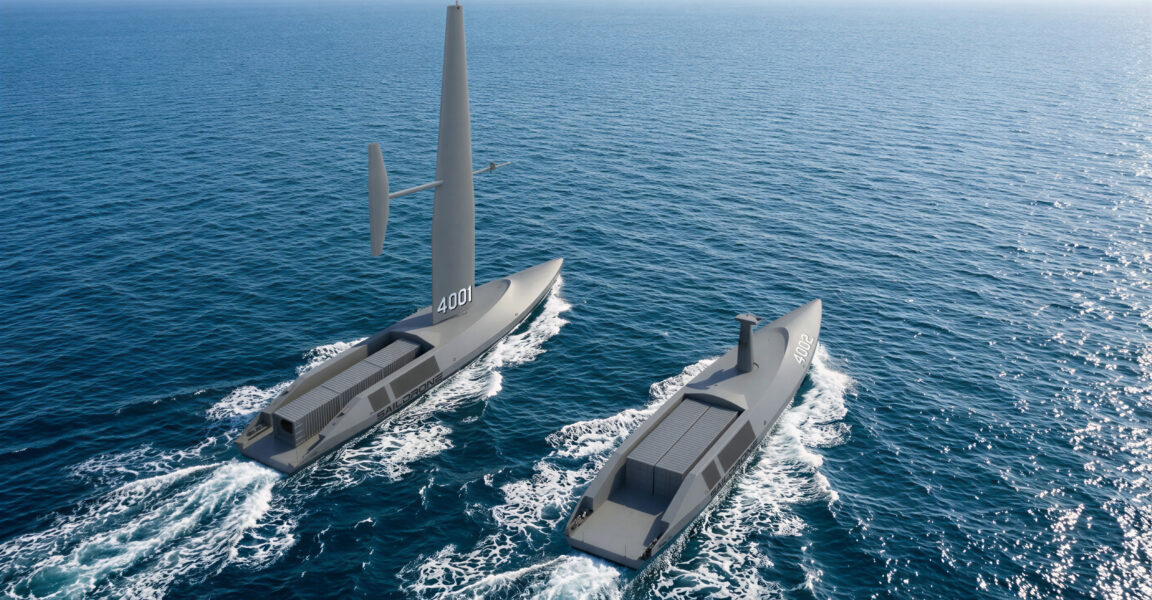
Navy MUSV (Unmanned Surface Vessel) Marketplace: Seven Proposals Approved for Prototype Stage
- Buyer / Contractors: U.S. Navy → Multiple defense companies (seven firms)
- Contract Value: Undisclosed (prototype development phase)
- Key Details: The U.S. Navy approved seven proposals to advance to the prototype stage in its MUSV Marketplace demonstration program. This program accelerates unmanned surface combat vessel development through an innovative acquisition approach, competitively evaluating multiple hull platform concepts.
- Strategic Significance: Expanding unmanned surface capability enables the Navy to conduct distributed maritime operations without risking crewed vessels. It's viewed as an asymmetric counter to Chinese naval expansion in the Indo-Pacific region.
General Atomics CCA Drone Resumes Flight Operations
- Buyer / Contractor: U.S. Air Force → General Atomics
- Contract Value: Undisclosed (within existing CCA program scope)
- Key Details: General Atomics' Collaborative Combat Aircraft (CCA) drone resumed flight operations following a crash on April 6. Air Force Colonel Timothy Helfrich stated that "the approach to the mishap response validated accepting acquisition and test risk instead of operational risk, enabling acceleration toward field deployment."
- Strategic Significance: The CCA serves as a wingman drone operating alongside F-35 and F-22 manned fighters, embodying the Air Force's Collaborative Combat Aircraft concept. Flight resumption demonstrates the program remains on track and represents a critical milestone toward next-generation air combat capability.
Space Industry Developments (3+)
Starship V3 Flight 12: Maiden Flight Success
- Organization: SpaceX
- Launch Vehicle & Payload: Starship V3 (Super Heavy booster + spacecraft), test flight, Azimuth orbit (suborbital ballistic trajectory)
- Result & Status: Success — Following launch on May 23, the spacecraft achieved a planned ocean splashdown in the Indian Ocean. The launch occurred after a two-day delay (launch pad issues halted a Thursday attempt).
- Industry Implications: V3 Starship's successful maiden flight is a critical milestone for NASA's Artemis lunar lander program. Starship's enhanced payload capacity and reusability promise revolutionary impact on both the commercial space launch market and government deep space missions.

SpaceX Starlink 10-31: Falcon 9 "Jellyfish" Launch
- Organization: SpaceX
- Launch Vehicle & Payload: Falcon 9, multiple Starlink satellites, low Earth orbit (LEO)
- Result & Status: Success — Launched early morning May 20 from Cape Canaveral Space Force Station, drawing local attention with its distinctive "jellyfish" visual effect.
- Industry Implications: Continuing Starlink constellation expansion steadily increases global coverage and capacity for SpaceX's satellite internet service. Surging demand from military and government communications channels underscores growing national security importance.
SpaceX Memorial Day Launch Planned
- Organization: SpaceX
- Launch Vehicle & Payload: Falcon 9, payload undisclosed, Cape Canaveral Space Force Station
- Result & Status: Scheduled — Planned for May 25, 2026 (Memorial Day)
- Industry Implications: SpaceX's rapid launch cadence maximizes utilization of Cape Canaveral launch infrastructure. In April 2026, Cape Canaveral set a record by launching five different types of orbital rockets in a single month.
Geopolitical & Policy Context (Latest Year Basis)
U.S. and Asia Alliances
Norway's foreign minister warned in May 2026 that Russian nuclear weapons threaten "nearly all" U.S. cities, reminding stakeholders that NATO deterrence benefits America as well. "Europe is contributing more, but we need to remind our friends across the Atlantic that NATO is also beneficial to them," he emphasized. These remarks emerged amid ongoing U.S.-NATO alliance recalibration debates, paralleling burden-sharing discussions in the Indo-Pacific region.
The Pentagon's AI chief's May 2026 disclosure that Project Maven use spiked during Iranian strikes has raised allied concerns about U.S. warfare methods. Indo-Pacific allies including South Korea and Japan are closely monitoring transparency and international law compliance in AI-enabled strike-decision systems.
Europe and NATO
The U.S. Senate passed the FY2026 National Defense Authorization Act (NDAA) in December 2025, approving a record $901 billion in annual military spending and a 4% military pay increase. The NDAA included provisions supporting Ukraine and Europe, reflecting tensions with the Trump administration. As of May 2026, pressure to increase European defense spending persists, with NATO allies continuing upward budget trends.
According to Breaking Defense, loitering munitions and launched effects showed strong presence at SOF Week 2026. Teledyne FLIR's Rogue 1 Block 2 upgrade garnered attention, reflecting NATO allies' accelerating adoption of low-cost drone weapon systems.
Emerging Conflict Zones
The Pentagon approved eight technology companies to deploy AI tools on classified networks. Expanding military application of AI and autonomy is fundamentally reshaping modern warfare across cyber operations, information warfare, and strike decision-making. U.S. Cyber Command reportedly requested a 2,660% increase in AI used for cyber operations.
Special Operations Command leaders have called for a "reality check" on AI-enabled combat decision systems. This signals that concerns about AI deployment ethics, surfaced following the Iranian strikes, are now emerging from operational field commanders.
Comparative Analysis
SpaceX vs. ULA: National Security Launch Market Share Comparison
| Metric | SpaceX | ULA (United Launch Alliance) |
|---|---|---|
| Primary Launch Vehicles | Falcon 9, Falcon Heavy, Starship (in development) | Atlas V, Vulcan Centaur |
| 2026 Launch Cadence | 5+ per month (Cape Canaveral basis) | ~1–2 per quarter |
| Reusability | Falcon 9 first stage booster reuse | Vulcan limited reuse goal |
| Amazon Kuiper Launches | Competitive relationship | Multiple Atlas V launches completed |
| Government Contract Share | NRO, GPS increasing | Traditional national security launch leader |
| Cost Competitiveness | Reuse-driven cost advantage | Premium maintained via reliability heritage |
| Starship Impact | Dominant payload capacity potential | Counterstrategy unclear |
Analytical Insight: Starship V3's successful maiden flight suggests the gap with ULA will widen further. Once Starship reaches full operational status, it can fulfill large government payload requirements unmet by existing launch vehicles. Meanwhile, ULA maintains competitive footing in specific markets through verified reliability credentials, as demonstrated in Amazon Kuiper satellite deployment.
Watch Points Next Week
- Starship V3 follow-on flights: Additional flight test schedules based on V3 design and Starship HLS (lunar lander) status updates expected.
- FY2026 defense budget execution: Separate appropriations bill processing to fund the FY2026 NDAA ($901 billion) draws attention; FY2026 appropriations legislation has not yet passed.
- Navy MUSV prototype contracts: With seven proposals advancing to prototype stage, future contract awards and values are anticipated.
Reader Action Guide
-
Investors: Lockheed Martin's THAAD factory groundbreaking signals strengthened long-term missile defense contract pipeline. Investors seeking indirect SpaceX (private) exposure should monitor space infrastructure supply-chain companies (launch pads, ground equipment) following Starship success. General Atomics CCA drone flight resumption sends positive signals to unmanned systems suppliers.
-
Policy & Strategy: AI surge during Iranian strikes and Special Operations Command's "reality check" request indicate immediate policy windows are opening on AI-enabled strike decision guidelines and international norm-setting. Norway's foreign minister's NATO remarks offer usable diplomatic leverage in the U.S. burden-sharing renegotiation process.
-
Industry & Supply Chain: CYBERCOM's 2,660% AI increase request and Pentagon approval of eight AI firms for classified network access present immediate opportunity for defense and cyber AI solution vendors. Concurrently, classification handling capability for dual-use AI technology under export controls will become a critical market entry barrier.
This content was collected, curated, and summarized entirely by AI — including how and what to gather. It may contain inaccuracies. Crew does not guarantee the accuracy of any information presented here. Always verify facts on your own before acting on them. Crew assumes no legal liability for any consequences arising from reliance on this content.
Powered by
