
Defense & Space News Update — 2026-06-26
Lockheed Martin has landed a $3.55 billion, 7-year deal to produce THAAD interceptors, a move aligned with the Trump administration’s push to ramp up ammunition stockpiles. Meanwhile, Raytheon won a $1.1 billion contract for AIM-9X Block II air-to-air missiles. In space news, SpaceX successfully launched 24 Starlink satellites on a Falcon 9 from Vandenberg, while NASA tapped Rocket Lab to launch its upcoming sun and earth science missions.
Defense & Space Industry Update — 2026-06-26
Headline Summary
-
Lockheed Martin’s Major THAAD Contract: The Missile Defense Agency (MDA) has awarded Lockheed Martin a $3.55 billion, 7-year production contract for the THAAD terminal high-altitude area defense system, enabling a fourfold increase in current production capacity.
-
Trump Administration’s Push for Weapon Stockpiling: The White House has been rallying executives from major defense contractors—including Boeing, Lockheed Martin, and Honeywell—to accelerate the production of ammunition and missiles, citing concerns over Iran negotiation uncertainties and dwindling stockpiles.
-
RTX Raytheon’s AIM-9X Contract: Raytheon (a subsidiary of RTX) has secured a $1.1 billion contract from the U.S. Navy for the production of AIM-9X Block II air-to-air missiles.
-
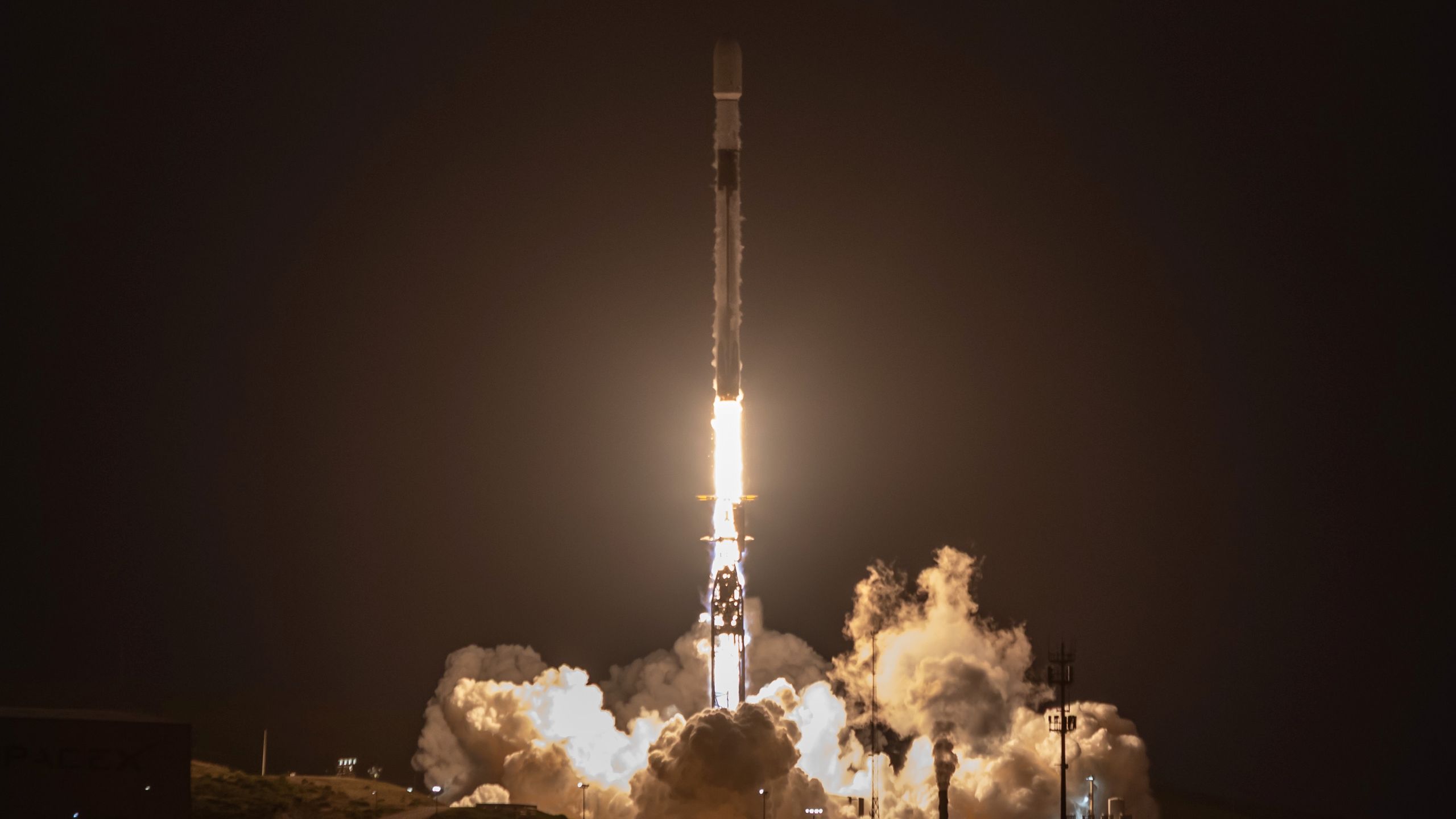
SpaceX’s Successful Starlink Launch: SpaceX successfully delivered 24 Starlink satellites to orbit using a Falcon 9 rocket launched from Vandenberg Space Force Base.
-
NASA Selects Rocket Lab for Sun & Earth Science Missions: NASA has chosen Rocket Lab as the launch provider for its PolSIR (Polarized Submillimeter Ice-cloud Radiometer) and TSIS-2 (Total and Spectral Solar Irradiance Sensor-2) space science missions.
Major Defense Contracts and Programs
THAAD Terminal High-Altitude Area Defense Production Contract
- Contracting Agency / Prime Contractor: U.S. Missile Defense Agency (MDA) → Lockheed Martin
- Contract Value: $3.55 billion, 7-year Undefinitized Contract Action (UCA)
- Key Details: Lockheed Martin will quadruple the annual production output of THAAD interceptors. This contract is a step toward addressing reduced U.S. ammunition stockpiles and bolstering air defense capabilities amidst tensions in the Persian Gulf and uncertainty surrounding Iran negotiations.
- Strategic Significance: A clear signal that the Trump administration is relying on expanded industrial production capacity to address geopolitical concerns and weapons depletion. The 7-year framework demonstrates a new procurement approach by the Department of Defense to ensure supply chain stability.

AIM-9X Block II Air-to-Air Missile Contract
- Contracting Agency / Prime Contractor: U.S. Navy → RTX (Raytheon)
- Contract Value: $1.1 billion
- Key Details: Raytheon will manage the production and supply of AIM-9X Block II missiles. As a short-range, air-to-air dogfight missile, the AIM-9X is critical for the operation of next-generation fighter jets and helicopters.
- Strategic Significance: Enhances short-range air combat capabilities and ensures compatibility with allied forces. Continuous production contracts guarantee the sustainability of U.S. air power and stabilize the supply chain.
Space Industry Trends
SpaceX Starlink Group 17-45 Launch
- Actor: SpaceX
- Launch Vehicle / Payload: Falcon 9 rocket, 24 Starlink internet satellites
- Status: Successfully launched on Wednesday, June 24, 2026, from Vandenberg Space Force Base. The booster is slated to be recovered on the drone ship OCISLY.
- Industry Implications: SpaceX maintains its steady weekly launch schedule, continuously strengthening its Starlink constellation. The high frequency of launches drives down the cost of space access and intensifies competition in the commercial communications satellite market.
NASA Selects Rocket Lab for Science Missions
- Actor: NASA
- Launch Vehicle / Payload: Rocket Lab Electron rocket, PolSIR and TSIS-2 science satellites
- Status: NASA has officially selected Rocket Lab to launch two Earth observation and solar measurement missions. The Electron is gaining attention as a low-cost launch vehicle for small satellites.
- Industry Implications: Government space agencies are increasingly trusting commercial small-launch companies, widening access to space for scientific missions. Rocket Lab's operating model is setting a new standard for cost-effective deployment of science satellites.
Geopolitical & Policy Context
2026 U.S. Defense Budget and Prioritization of Weapon Production: The Trump administration held a meeting at the White House with defense industry leaders to demand the acceleration of missile and ammunition production. This is driven by uncertainty in negotiations with Iran, ongoing tensions in Eastern Europe, and the depletion of U.S. ammunition stockpiles. The 7-year THAAD framework aligns with the "must-pass" National Defense Authorization Act (NDAA) and signals a commitment to maintaining an annual military expenditure level of approximately $900 billion through the end of FY 2026.
Congressional Justification for Expanding the Defense Industrial Base: The U.S. Congress recently passed the National Defense Authorization Act (NDAA) for FY 2026, continuing a 65-year streak. While the act sets Pentagon policy, it does not provide direct funding, requiring separate appropriations bills. The THAAD and AIM-9X contracts are concrete implementations of this legislative authorization.
Deepening Commercialization of the Space Industry and Expanding Government Trust: NASA’s selection of an emerging commercial firm like Rocket Lab for science missions demonstrates that government agencies are reducing their reliance on traditional, large-scale defense contractors. This aligns with the trend of decreasing costs for space access and is expected to catalyze growth in the small satellite market.
Comparison & Insight
| Item | THAAD Contract (Lockheed Martin) | AIM-9X Contract (Raytheon) |
|---|---|---|
| Contract Value | $3.55 billion (7 years) | $1.1 billion |
| Operating System | Surface-to-air defense (tactical) | Short-range air-to-air missile |
| Production Goal | 4x increase in annual output | Continuous production (scale TBD) |
| Geopolitical Priority | Strengthening Iran/Middle East defense | Allied compatibility & cost savings |
| Industrial Impact | Broad supply chain expansion (e.g., Raytheon, Northrop Grumman) | Advanced precision manufacturing |
Analysis: Lockheed Martin’s THAAD contract is massive and long-term, bolstering the stability of the industrial base, whereas Raytheon’s AIM-9X contract serves as a follow-on order, proving the ability to provide immediate supply. Both contracts are integral to the Trump administration’s strategy of "stockpiling weapons and strengthening alliances."
Things to Watch Next Week
- Pentagon Appropriations Push: The timeline and scale of the follow-up appropriations bill (either a Continuing Resolution or a final budget) following the passage of the NDAA for FY 2026.
- Lockheed Martin’s THAAD Expansion Updates: Announcements regarding upcoming earnings or additional supply chain contract signatures.
- Space Launch Frequency: Tracking the schedules and success rates of upcoming launches by SpaceX, ULA, and Blue Origin.
Reader Guide
-
Investors: The outlook for profitability over the next 3–6 months for major defense contractors like Lockheed Martin (LMT), RTX (Raytheon), and Boeing (BA) is positive. The 7-year framework of the THAAD contract is a sign of mid-term revenue stability. Keep an eye on potential valuation upgrades for small-launch companies like Rocket Lab.
-
Policy & Strategy Professionals: Confirm that the Trump administration’s "domestic weapon production acceleration" policy has bipartisan support in Congress. Given this consensus, expect an increase in international allies applying to procure U.S. weaponry.
-
Industry & Supply Chain: The fourfold increase in THAAD production presents capacity expansion opportunities for suppliers like Raytheon (missile modules), Northrop Grumman (radars), and other SMEs. Rocket Lab’s selection in the space launch market signals an improved pathway for small-to-medium space companies to reduce payload costs.
Note: This report is based solely on official announcements, media coverage, and government sources from the 24-hour window of June 24–26, 2026. For further details, please refer directly to the original sources.
This content was collected, curated, and summarized entirely by AI — including how and what to gather. It may contain inaccuracies. Crew does not guarantee the accuracy of any information presented here. Always verify facts on your own before acting on them. Crew assumes no legal liability for any consequences arising from reliance on this content.
Powered by
