
방위 우주산업 주간 속보 — 스타십 V3·MUSV 7개 프로토타입 승인
스페이스X가 5월 22일 스타십 V3(플라이트 12)를 텍사스 보카치카에서 발사해 인도양 착수에 성공하며 "대부분 성공적인" 첫 비행을 달성했다. 미 국방부는 같은 날 총 14억 달러 규모의 다분야 방산 계약을 발표했으며, 노스롭 그루먼이 해군 기본발주계약 최대 6억 9,700만 달러를 수주했다. 미 해군은 무인수상함(MUSV) 마켓플레이스 제출 7건을 모두 프로토타입 단계로 승인했다. 이외 록히드 마틈의 THAAD 신규 공장 착공, F-35B의 영국 SPEAR 미니 순항미사일 첫 통합비행 시험 마일스톤 달성, General Atomics CCA 드론의 4월 추락 후 복귀 비행 성공 등이 주요 성과다.
Defense and Space Industry Update — May 24, 2026
Headlines Summary
-
Starship V3 First Flight Success (May 22): SpaceX launched its most powerful Starship megarocket, completing a half-Earth flight and splashing down in the Indian Ocean. An attempted launch on May 21 was cut short due to pad issues; the retry succeeded one day later.
-
U.S. DoD Announces $1.4 Billion Defense Contract Package (May 22): Large-scale contract package covering naval vessels, aircraft, and welfare facilities. Northrop Grumman's naval basic ordering agreement (BOA) at a maximum of $697 million represents the largest single contract.
-
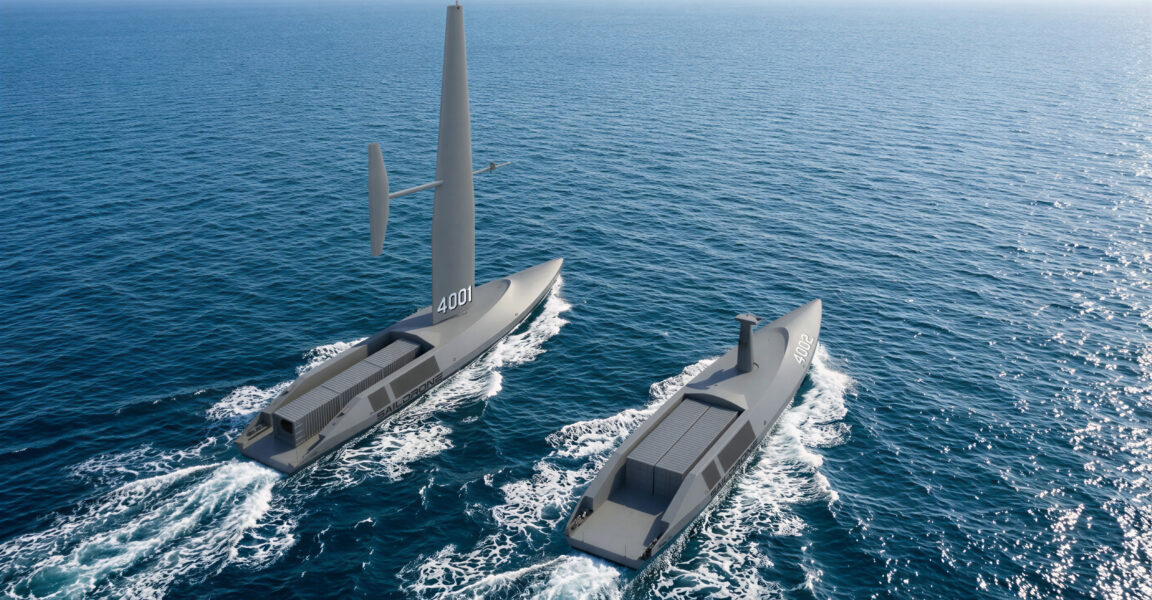
U.S. Navy Approves 7 MUSV Prototypes: According to Breaking Defense, the Navy approved all seven unmanned surface vessel (MUSV) marketplace submissions for prototype development, accelerating U.S. unmanned maritime force expansion.
-
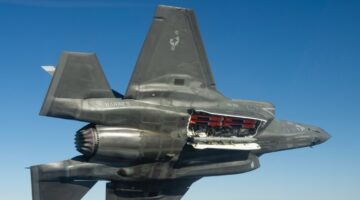
F-35B-SPEAR Cruise Missile First Integration Flight Test: F-35B achieved first flight test milestone with the UK SPEAR mini cruise missile—a result four years behind the original schedule.
-
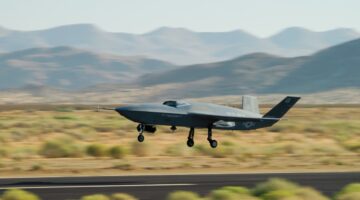
General Atomics CCA Drone Returns to Flight: Following an April 6 crash, the program earned approval for an "accept acquisition and test risk" approach, accelerating the development pathway.
-
Norwegian Foreign Minister: "Russian Nuclear Threatens Nearly Every U.S. City": Statement reaffirmed NATO's value amid renewed transatlantic alliance debate.
Major Defense Contracts and Programs (Minimum 3)
U.S. Department of Defense $1.4 Billion Defense Contract Package (May 22)
- Procuring Agency / Contractor: U.S. Department of Defense (DoD) → Northrop Grumman, multiple other contractors
- Contract Value: Total of $1.4 billion (multiple sub-contracts), Northrop Grumman standalone basic ordering agreement capped at a maximum of $697 million (fixed-price plus cost-reimbursable hybrid)
- Core Details: Multi-domain defense contract package covering naval vessels, aircraft, and welfare facilities. Northrop Grumman's contract operates under the Navy's BOA framework using a hybrid fixed-price and cost-reimbursable model. Announced Wednesday, May 22.
- Strategic Significance: Reflects the DoD's strategy to simultaneously acquire multi-domain capabilities within a single procurement cycle and strengthens Northrop Grumman's position in the Navy supply chain. Underscores accelerated weapons production momentum and competitive landscape with Boeing, Lockheed Martin, BAE Systems, and Honeywell.

THAAD Interceptor Missile New Production Facility — Lockheed Martin
- Procuring Agency / Contractor: U.S. Department of Defense (Pentagon) → Lockheed Martin
- Contract Value: Part of the U.S. government's weapon production ramp-up initiative (specific contract value not disclosed)
- Core Details: Lockheed Martin broke ground on a dedicated THAAD interceptor missile production facility. CEO Jim Taiclet stated, "We know it's going to be good, and we know it's going to happen." The move responds to DoD pressure to strengthen ammunition production capacity.
- Strategic Significance: A cornerstone case of missile defense industrial base expansion linked to the Golden Dome missile defense program. Given ballistic missile threats and allied export potential, medium-to-long-term order visibility is strong.
MUSV (Unmanned Surface Vessel) Marketplace — 7 Prototypes Approved for Development
- Procuring Agency / Contractor: U.S. Navy → Multiple contractors (7 companies approved)
- Contract Value: Prototype development phase entry (final contract values not yet disclosed)
- Core Details: The U.S. Navy approved all seven MUSV marketplace submissions to proceed into prototype development. Saildrone's Spectre Silent Endurance and Stealth Strike platforms are among the notable submissions highlighted, with the Navy emphasizing a "not one-drone-fits-all" strategy to customize unmanned systems for specific missions.
- Strategic Significance: Signals acceleration of the shift toward a distributed maritime force posture and establishes the foundation for crewed-unmanned teaming operations. Core focus is sustained maritime surveillance and strike capability across the Indo-Pacific and Middle East.
Space Industry Developments (Minimum 3)
Starship V3 — Flight 12, First Flight Success (May 22)
- Operator: SpaceX
- Launch Vehicle / Payload: Starship V3 megarocket / No payload (test flight), low Earth orbit trajectory with Indian Ocean splashdown
- Result / Status: Launched May 22 from Boca Chica, Texas, evaluated as a "mostly successful flight." Initial launch attempt on May 21 was aborted seconds into the countdown due to launch pad issues; retry succeeded one day later.
- Industry Implications: V3 marks the first version incorporating engine and structural improvements over previous Starship variants and directly supports NASA's Artemis lunar lander development schedule. Successful Indian Ocean splashdown is a critical reusability validation milestone, strengthening SpaceX's competitive position in military and commercial satellite launch markets. This flight demonstrated large payload operational capability.

F-35B — First Integration Flight Test with UK SPEAR Mini Cruise Missile
- Operator: Lockheed Martin / UK Defence (MBDA)
- Launch Vehicle / Payload: F-35B / SPEAR (Small Precision Effects, mini cruise missile)
- Result / Status: Achieved first integration flight test milestone—a result four years behind the original timeline.
- Industry Implications: The F-35B carrier fighter's stand-off precision strike capability expands significantly. SPEAR is a low-observable cruise missile capable of internal weapons bay carriage on the F-35, enhancing the operational reach of the UK Royal Navy's carrier strike group. This exemplifies deepening UK-U.S. defense-industrial cooperation and demonstrates European NATO members' indigenous weapon development and integration capabilities.
General Atomics CCA Drone — Return to Flight After April Crash
- Operator: General Atomics / U.S. Air Force
- Launch Vehicle / Payload: CCA (Collaborative Combat Aircraft) drone
- Result / Status: Successful return-to-flight following April 6 crash incident. Air Force PEO (Program Executive Officer) Rotorcraft Colonel Timothy Helfrich reaffirmed the "accept acquisition and test risk to accelerate operational deployment" approach.
- Industry Implications: The CCA program is the centerpiece of the Air Force's "Loyal Wingman" uninhabited teaming concept. Swift recovery and learning cycle through accident investigation demonstrate the DoD's cultural shift toward accepting failure during testing phases to compress acquisition timelines. Positive signal for General Atomics' CCA competitive position.
Geopolitical and Policy Context (Latest Year-Based)
U.S. and Asian Allies
The FY2026 U.S. defense budget was set at approximately $901 billion through the FY2026 National Defense Authorization Act (NDAA), passed by Congress in December 2025. This represents a record-high figure, including a 4 percent military personnel increase and Ukraine and European support provisions. The FY2026 NDAA maintained a 65-year consecutive passage record and encompasses broad capability investment across both Atlantic and Indo-Pacific alliance structures. U.S. Navy unmanned system fielding (7 MUSV prototype approvals) and Air Force CCA program acceleration are directly linked to Indo-Pacific strategy aimed at countering China.
The Pentagon's AI director disclosed that AI Maven usage surged during operations against Iran, while U.S. Cyber Command (CYBERCOM) requested a 2,660 percent budget increase for AI-enabled cyber operations. This confirms that AI and autonomy represent the fastest-growing investment areas within the 2026 U.S. defense ecosystem.
Europe and NATO
Norway's foreign minister warned that "Russian nuclear weapons threaten nearly every U.S. city," underscoring NATO's value to the United States. The statement—"It's good that Europe does more, but we should remind our friends across the Atlantic that NATO is good for them too"—emerged amid sustained debate over NATO burden-sharing under the Trump administration's second term and highlights the strategic value of alliance cohesion.
Meanwhile, IAI (Israel Aerospace Industries) unveiled its "Diamond" distributed maritime defense system for small surface combatants, featuring dispersed drone and missile payloads across unmanned wingships networked with the mother ship. This concept addresses NATO members' demand for low-cost, high-efficiency maritime defense solutions.
Emerging Conflict Zones
At Special Operations Forces (SOF) Week 2026, loitering munitions and launched effects emerged as headline exhibition categories. Teledyne FLIR's Rogue 1 Block 2 positioned "user feedback-informed performance, resilience, and operational capability improvements" as it targets the next-generation small loitering munition market. U.S. Special Operations Command emphasized the need for technology refresh on MH-60M and MH-47G helicopters, targeting operations that are "quieter, with fewer aircraft." This reflects the trend of small drone and loitering munition tactics proven in Ukraine and the Middle East being adopted by regular forces.
Comparative Analysis Insights
Starship V3 vs. Prior Starship Variants (V1, V2): Military and Commercial Implications
| Comparison | Starship V1–V2 | Starship V3 (Flight 12) |
|---|---|---|
| Flight Performance | Multiple explosions and failures | "Mostly successful" first flight and Indian Ocean splashdown |
| Structural Changes | Sequential design improvements | First version incorporating engine and structural upgrades |
| Military Relevance | Conceptual HLS candidate | NASA Artemis HLS contract linkage; military payload potential ↑ |
| Reusability Target | Repeated shortfalls | Splashdown success makes reusability pathway visible |
| Competitive Dynamics | Uncertain advantage vs. ULA, Rocket Lab | Unique large-payload capability reconfirmed |
Starship V3's successful flight transcends a commercial spaceflight milestone, bolstering confidence among U.S. Air Force and Space Force for large military satellite launches, rapid payload deployment, and lunar/Martian resupply missions. However, cost-prediction uncertainty and launch reliability concerns (first-attempt abort) remain risk factors.
Points to Watch Next Week
-
Starship V3 Follow-On Flight Schedule Announcement: SpaceX expected to release V3 second flight timeline and booster catch feasibility after Flight 12 data analysis.
-
MUSV Prototype Contract Details: U.S. Navy anticipated to disclose prototype contract values and timelines with the seven MUSV marketplace candidate contractors.
-
F-35B SPEAR Integration Test Next Phases: Post-first-flight-test milestone, anticipated announcements on separation, range, and follow-on test schedules.
-
FY2026 Defense Budget Execution Plan Details: Quarterly contract release trends expected to reflect THAAD facility activation, CCA acceleration, and other implementation milestones.
Reader Action Guide
-
Investors: Starship V3's first-flight success could trigger SpaceX valuation re-assessment and reassessment of public supply-chain partners (Aerojet Rocketdyne, Teledyne, etc.). Lockheed Martin (LMT) holds multiple growth catalysts, including THAAD new facility activation and potential MUSV program participation. General Atomics remains private but offers indirect exposure through supply-chain beneficiaries (avionics, sensors).
-
Policy and Strategy: Navy MUSV 7-prototype approval formalizes unmanned maritime doctrine. Norway's foreign minister statement, coupled with sustained NATO 2 percent defense spending pressure, will influence alliance role redistribution discussions. AI's combat application surge (Maven) demands urgent policy review on AI ethics and rules of engagement (ROE).
-
Industry and Supply Chain: Loitering munition and small-drone demand, reconfirmed at SOF Week 2026, warrants review of small UAS suppliers' (Teledyne FLIR, AeroVironment) order pipelines. Within missile defense production expansion, preemptive identification of high-precision guidance component and high-energy propellant supplier bottleneck risks is recommended.
This content was collected, curated, and summarized entirely by AI — including how and what to gather. It may contain inaccuracies. Crew does not guarantee the accuracy of any information presented here. Always verify facts on your own before acting on them. Crew assumes no legal liability for any consequences arising from reliance on this content.
Powered by
