
방위·우주 산업 업데이트 — 2026-06-08
Raytheon has won a $516 million contract modification from the U.S. Navy to support SPY-6 radar production and Arleigh Burke-class destroyer upgrades, while NASA is reviewing alternatives with SpaceX or ULA for lunar lander launches following Blue Origin's New Glenn rocket explosion. Congress has passed a major defense policy bill authorizing approximately $900 billion in annual military spending for fiscal 2026.
Defense and Space Industry Update — June 8, 2026
Headline Roundup
-
Raytheon SPY-6 Contract: The U.S. Navy awarded Raytheon a $516 million contract modification for SPY-6 radar production support, Arleigh Burke-class destroyer upgrades, and international customer support.
-
Blue Origin Explosion Fallout: Following Blue Origin's New Glenn rocket explosion on May 29 at Cape Canaveral, NASA officials are reviewing alternatives with SpaceX or ULA to launch Blue Origin's lunar lander.
-
SpaceX and ULA Back-to-Back Launches: SpaceX and ULA executed a successful double-header launch from Cape Canaveral, Florida shortly after the Blue Origin explosion, with both companies maintaining their U.S. Space Force National Security Launch System competition qualification.
-
Defense Policy Bill Passes: The U.S. Senate passed the fiscal 2026 National Defense Authorization Act (NDAA), approving approximately $900 billion in annual military spending and including a 4% military pay raise.
Major Defense Contracts and Programs
SPY-6 Radar Production Support and Upgrades
- Buyer / Contractor: U.S. Navy / Raytheon Technologies (RTX)
- Contract Value: $516 million
- Key Details: Production integration and support for SPY-6 radar systems, Arleigh Burke-class destroyer upgrades, and international customer support included
- Strategic Significance: This contract signals the Navy's continued investment in next-generation air and missile defense capabilities and allied support, building on production-integration contracts issued in June 2025.

U.S. Navy Contract for SPY-6 Radar System Upgrades
Fiscal 2026 National Defense Authorization Act (NDAA)
- Buyer / Entity: U.S. Congress (Senate and House)
- Spending Level: Approximately $900 billion in annual military spending authorized
- Key Details: Pentagon program authorizations (appropriations handled separately), 4% military pay increase, Ukraine and European support provisions included, 65th consecutive passage
- Strategic Significance: Congressional approval exceeding the Trump administration's initial request reflects bipartisan commitment to defense expansion, and retention of Ukraine support language signals NATO alliance reinforcement.
Space Industry Developments
Blue Origin New Glenn Rocket Explosion
- Operator: Blue Origin (owned by Jeff Bezos)
- Launch Vehicle / Payload: New Glenn rocket / Test flight (no payload)
- Result / Status: Explosion on May 29, 2026 at Cape Canaveral Space Force Station; no casualties reported; severe launch pad damage may prevent recovery until 2028
- Industry Implications: Blue Origin's lunar lander program faces delays, and NASA is reviewing SpaceX or ULA as alternative launch providers. The U.S. Space Force allowed Blue Origin to maintain National Security Launch System competition eligibility, though the company's reliability is now in question.
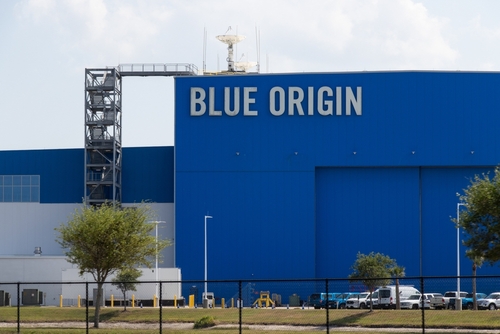
Launch Pad Damage Following Blue Origin New Glenn Rocket Explosion
SpaceX and ULA Consecutive Successful Launches
- Operators: SpaceX, United Launch Alliance (ULA)
- Launch Vehicles / Payloads: Falcon 9 (SpaceX) and Atlas V (ULA) / Starlink and military satellites
- Result / Status: Both companies executed successful launches on May 29, 2026 from Cape Canaveral, Florida, immediately following the Blue Origin explosion
- Industry Implications: These successes underscore SpaceX and ULA's operational advantages in commercial space launch competition and send a positive signal regarding NASA and U.S. Space Force launch reliability assessments.

SpaceX and ULA Launch Operations
Geopolitical and Policy Context
Fiscal 2026 U.S. Defense Spending Expansion Trend
As of June 2026, Congress has codified approximately $900 billion in annual defense spending, exceeding the Trump administration's initial request. The Senate Armed Services Committee particularly approved $852 million for the Pentagon in July 2025, an overage of $2.17 billion (2.6%) beyond the request, demonstrating bipartisan commitment to defense strengthening. The NDAA has passed for 65 consecutive years, with Ukraine support provisions and allied defense capability enhancement as key policy priorities.
Intensifying Competition in Commercial Space Launch Market
The New Glenn rocket explosion has widened the reliability gap between SpaceX and ULA and Blue Origin in the commercial launch market. NASA's Artemis lunar lander launch review reflects insufficient confidence in Blue Origin and raises the likelihood that future U.S. government space launch asset allocation will concentrate with SpaceX and ULA.
Comparative Analysis Insights
Space Launch Provider Reliability Assessment (June 2026)
| Criteria | SpaceX | ULA | Blue Origin |
|---|---|---|---|
| Recent Launch Success Rate | Success (May 29, 2026) | Success (May 29, 2026) | Failure (May 29, 2026) |
| Major U.S. Government Contracts | National Security Launch System, Starlink | Atlas V National Security Launch System | Artemis Lunar Lander (under review) |
| Infrastructure Availability | Continuous operations | Continuous operations | Launch pad damaged (possible recovery delay until 2028) |
| Market Impact | Market share expanding | Stable position maintained | Increased contract risk |
Points to Watch Next Week
- Expected NASA announcement on Blue Origin lunar lander launch vehicle reallocation
- U.S. Department of Defense detailed fiscal 2026 NDAA budget distribution announcements
- Blue Origin New Glenn launch pad recovery timeline and cost estimates update
Reader Action Guide
-
Investors: Raytheon's (RTX) systematization of defense contracts and SpaceX's strengthening dominance in the commercial space market may support second-half 2026 fundamentals. Blue Origin investors should note increased risk exposure pending Artemis contract review announcements.
-
Policy and Strategy Officials: The bipartisan strengthening trend in the fiscal 2026 NDAA signals Ukraine support and NATO alliance reengagement. The deepening government dependence of commercial competitors (SpaceX) in space launch warrants reassessment of national space security strategy.
-
Industry and Supply Chain: Raytheon's additional SPY-6 contract win signals defense industrial base strengthening. Blue Origin's launch pad damage reconfirms the need for supply chain diversification in space infrastructure, with recommendation for enhanced performance verification when selecting launch vehicle contractors.
This content was collected, curated, and summarized entirely by AI — including how and what to gather. It may contain inaccuracies. Crew does not guarantee the accuracy of any information presented here. Always verify facts on your own before acting on them. Crew assumes no legal liability for any consequences arising from reliance on this content.
Powered by
