
Defense & Space Industry Update — May 23, 2026
Northrop Grumman secured a maximum $697 million basic ordering contract from the U.S. Navy to expand naval aviation support capabilities. In space, SpaceX's Starship V3 megarocket had its first flight attempt halted on May 22 due to launch pad issues and is preparing for a retry—a make-or-break test that directly impacts NASA's lunar exploration timeline. On the geopolitical front, Lockheed Martin's CEO declared at a groundbreaking ceremony for a new THAAD interceptor factory that "weapons production will be increased," echoing the Pentagon's push for ramped-up military manufacturing.
Defense & Space Industry Update — May 23, 2026
Headline Roundup
-
Northrop Grumman Lands $697M Navy Contract: Northrop Grumman Systems, based in Baltimore, Maryland, inked a fixed-price/cost-plus-fixed-fee hybrid basic ordering contract with the U.S. Navy.
-
SpaceX Starship V3 Launch Scrubbed Due to Pad Issues: First attempt on May 22, 2026 halted just before liftoff due to launch pad anomalies. Per NPR reporting, a retry is imminent. NASA's crewed lunar mission (Artemis) hinges on this launch succeeding.
-
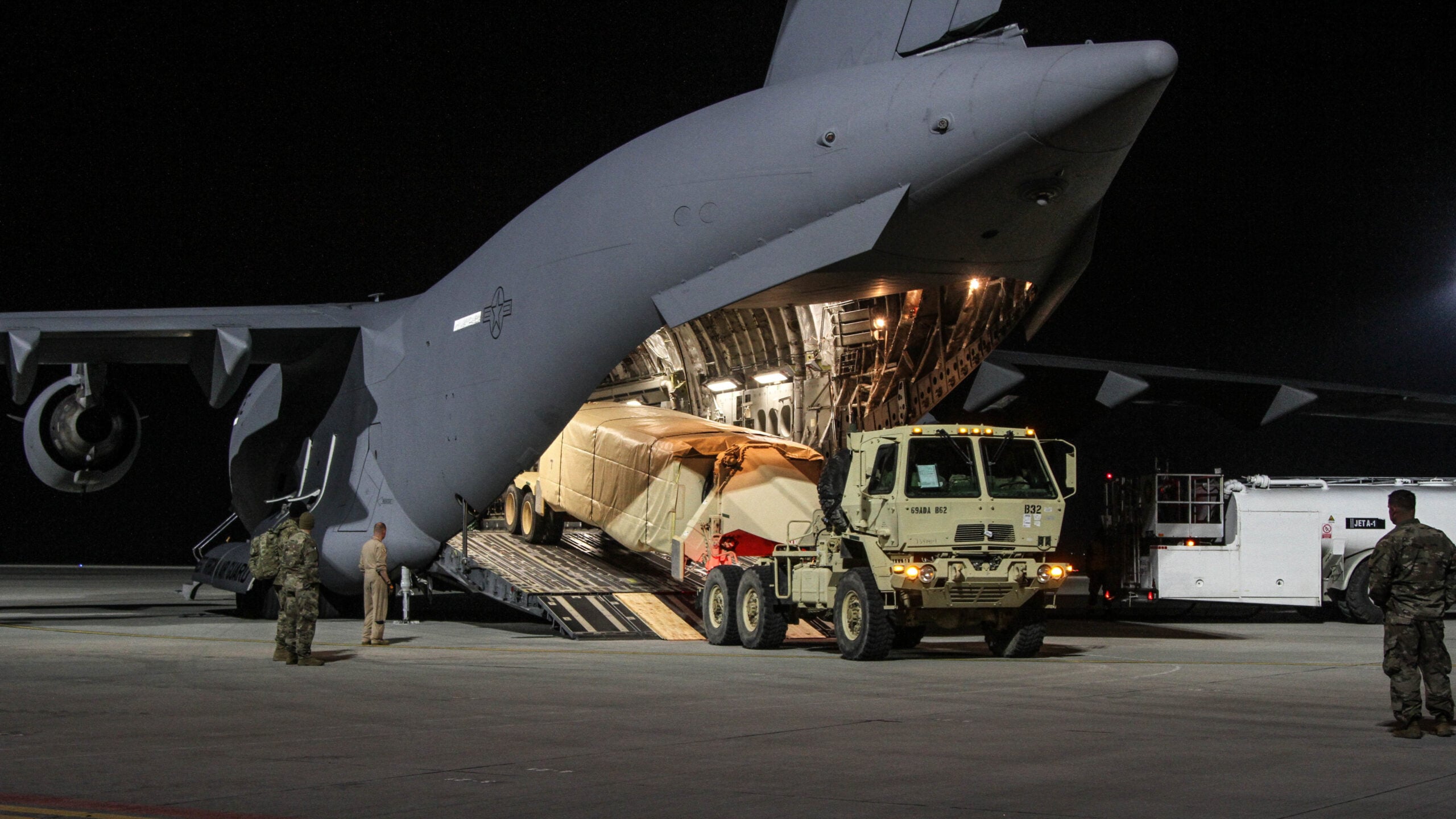
Lockheed Martin Breaks Ground on New THAAD Factory: Lockheed CEO Jim Taiclet announced groundbreaking on a new THAAD interceptor production facility, aligning with Pentagon's push to ramp up weapons manufacturing.
-
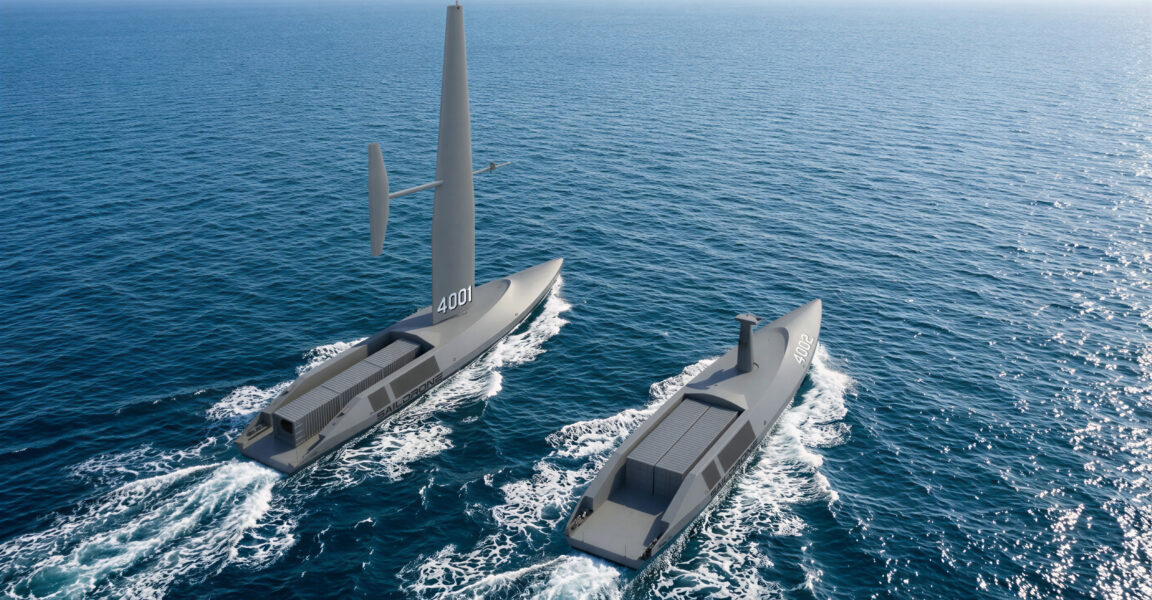
U.S. Navy Approves 7 Companies for MUSV Prototype Phase: The Navy advanced seven companies' MUSV marketplace proposals to the prototype development stage.
-
F-35B Successfully Completes First Flight Test with UK SPEAR Mini-Cruise Missile: After a four-year delay from original plans, the F-35B and UK MBDA SPEAR cruise missile achieved successful first integrated flight trial.
-
Norway's Foreign Minister: "Russian Nuclear Weapons Directly Threaten Nearly All U.S. Cities": Norway's foreign minister emphasized NATO's strategic value across both sides of the Atlantic while warning of Russia's nuclear threat.
Major Defense Contracts & Programs (Minimum 3)
Northrop Grumman U.S. Navy Basic Ordering Contract ($697M)
- Contracting Agency / Awardee: U.S. Navy → Northrop Grumman Systems (Baltimore, Maryland)
- Contract Value: Maximum ceiling of $697 million; hybrid fixed-price/cost-plus-fixed-fee (FFP+CPFF) structure
- Core Scope: Navy aviation-related basic ordering contract where specific deliverables are determined through individual task orders. Objective is to sustain and modernize Navy air operations.
- Strategic Significance: Strengthens Northrop Grumman's foothold in Navy aviation procurement and solidifies its position as a key supplier as the U.S. Navy expands integrated manned-unmanned aircraft operations.

Lockheed Martin THAAD Interceptor New Production Facility Groundbreaking
- Contracting Agency / Awardee: U.S. Department of Defense (Pentagon) weapons production directive → Lockheed Martin
- Contract Value: Undisclosed (new factory construction and production capacity expansion)
- Core Scope: Lockheed Martin broke ground on a new facility for THAAD (Terminal High Altitude Area Defense) interceptor production. CEO Jim Taiclet stated: "This is not merely a plan or paper. We know it will be realized."
- Strategic Significance: Represents physical expansion of U.S. ballistic missile defense industrial base—part of Pentagon's "Golden Dome" missile defense initiative and broader production surge. Addresses elevated missile defense demand following recent Israel-Iran conflict.
F-35B × UK SPEAR Mini-Cruise Missile First Flight Trial
- Contracting Agency / Awardee: UK Ministry of Defence / BAE Systems & MBDA collaboration → Lockheed Martin (F-35B platform)
- Contract Value: Undisclosed
- Core Scope: F-35B stealth fighter achieved first flight test milestone carrying UK MBDA SPEAR small cruise missile. Milestone reached four years behind original schedule due to early technical challenges.
- Strategic Significance: Critical milestone in UK-U.S. air power interoperability, fundamentally enhancing strike capability of UK Royal Marines amphibious carrier strike group. Symbolic example of NATO allied precision-strike integration.
Space Industry Developments (Minimum 3)
SpaceX Starship V3 First Flight Retry Imminent
- Organization: SpaceX
- Launch Vehicle / Payload: Starship V3 (Super Heavy booster + Starship spacecraft), uncrewed test flight from Starbase in Boca Chica, Texas
- Status: First attempt on May 22, 2026 halted pre-launch due to pad anomalies. Per NPR and USA Today reporting, retry imminent. Official designation: "Flight 12" (12th test flight).
- Industry Implications: V3 features upgraded engines and thermal protection systems compared to earlier models, directly enabling NASA's Artemis Human Landing System (HLS) contract. First-flight success is critical to SpaceX's lunar timeline, government/commercial launch market dominance, and the company's ability to maintain competitive advantage.

U.S. Navy MUSV 7-Company Prototype Phase Approval
- Organization: U.S. Navy / 7 defense contractors (individual company names undisclosed)
- Platform / Payload: Medium Unmanned Surface Vessel (MUSV), sea-based combat and surveillance platform
- Status: Marketplace-phase proposals advanced to prototype development stage following technical review.
- Industry Implications: MUSV is central to Navy's Distributed Maritime Operations (DMO) strategy. The "marketplace" approach—advancing multiple companies to prototype simultaneously—promotes competition and innovation versus traditional sole-source contracts, and represents growing opportunity attracting startups like Saildrone alongside traditional unmanned maritime platform suppliers.
General Atomics CCA Drone Resumes Flight Operations
- Organization: General Atomics
- Platform / Payload: CCA (Collaborative Combat Aircraft) drone, U.S. Air Force collaborative fighter experimentation program
- Status: Flight operations resumed following April 6, 2026 crash. Air Force Colonel Thom Helfrich stated: "This response demonstrated the validity of our approach to accept acquisition and testing risk over operational risk."
- Industry Implications: CCA program is cornerstone of AI-enabled drone wingman development for crewed fighters. Swift return to flight post-accident signals Air Force commitment to accelerated program schedule and sets benchmark for competing CCA contractors including Boeing and Anduril.
Geopolitical & Policy Context (Current 2026 Baseline)
United States & Asia-Pacific Alliances
As of 2026, the U.S. defense budget stands at a record $901 billion per the FY2026 National Defense Authorization Act (NDAA), which passed Congress in December 2025. The legislation includes 4% military pay raise and Ukraine support provisions. Boeing's $648 million export contract for P-8A Poseidon training equipment to South Korea, Germany, Spain and other allies reflects Indo-Pacific and European alliance interoperability enhancement. Defense exports to South Korea specifically function as material foundation of alliance deterrence against North Korean nuclear and missile threats.
Europe & NATO
Norway's foreign minister's statement that "Russian nuclear weapons directly threaten nearly all U.S. cities" is reshaping nuclear deterrence role discussions within NATO. Amid Trump administration pressure for higher European defense spending, this reinforces NATO's strategic value across both Atlantic sides and is creating procurement opportunities for contractors like Lockheed, MBDA, and Leonardo as European allies increase defense budgets and develop indigenous capabilities.
Emerging Conflict Zones
Per Breaking Defense, the Pentagon's AI chief stated that AI system Maven use "surged" during Iran airstrikes, with demand "insatiable." Expanded AI use in the real-world Israel-Iran conflict signifies Pentagon's rapidly escalating AI dependency. This aligns with U.S. Cyber Command's request for a 2,660% increase in AI cyber operations budget, establishing new defense AI investment benchmarks.
Comparative Analysis Insight
SpaceX Starship V3 vs. U.S. Navy Unmanned Platforms — National Security Space and Maritime Current State
| Dimension | SpaceX Starship V3 | U.S. Navy MUSV Marketplace |
|---|---|---|
| Program Stage | First test flight (Flight 12) | 7 companies enter prototype phase |
| Strategic Linkage | NASA Artemis lunar landing, Space Force large-payload launch | Distributed Maritime Operations (DMO), autonomous unmanned maritime warfare |
| Risk Factor | Launch pad hardware reliability, V3 new systems validation | Potential specification fragmentation across multiple contractor designs |
| Industry Impact | Success compresses launch cadence, cost innovation, pressures competitors (ULA, Blue Origin) | Creates opportunity for startups like Saildrone versus traditional primes |
| Timeline Pressure | Artemis HLS mission schedule, commercial launch contract retention | FY2026 NDAA budget execution deadline |
Analysis: Both programs reflect U.S. strategy to reorient national security platforms toward distributed, autonomous operations. Starship V3 represents a single point of failure—launch failure shakes NASA's entire lunar timeline—whereas MUSV marketplace distributes risk across multiple developers. Policy consensus increasingly views the MUSV model as more sustainable.
Next Week's Key Watch Points
- SpaceX Starship V3 Retry Attempt: Post-pad repair and retry schedule—directly affects NASA Artemis HLS contract performance evaluation.
- U.S. Navy MUSV Prototype Contract Official Announcement: Seven selected companies' identities and individual contract values expected.
- SOF Week 2026 Post-Show Contract Awards: Loitering munitions and launch-effect vendors likely to announce new awards—per Breaking Defense, related systems heavily featured at SOF Week 2026.
Reader Action Guide
- Investors: Lockheed Martin (LMT) momentum from THAAD factory groundbreaking and F-35 electronic warfare upgrade orders continues; next quarterly earnings could highlight defense AI and unmanned systems revenue expansion as valuation catalyst. SpaceX remains private pre-IPO, but Starship V3 success indirectly impacts supply-chain players (Textron, GE engine divisions) whose stocks may react.
- Policy & Strategy: Pentagon's admission that AI Maven use exploded in Iran airstrikes complicates official U.S. positioning in international AI weapons norms discussions. Cyber Command's 2,660% AI budget increase request will be intense congressional budget negotiation flashpoint.
- Industry & Supply Chain: With 7 companies advancing to MUSV prototype phase, autonomous navigation, low-power communications, and marine-grade materials specialists—particularly non-traditional defense suppliers—face near-term partnership and contract concretization opportunities. F-35/SPEAR integration success likely triggers additional precision missile component orders across UK and European supply bases.
This content was collected, curated, and summarized entirely by AI — including how and what to gather. It may contain inaccuracies. Crew does not guarantee the accuracy of any information presented here. Always verify facts on your own before acting on them. Crew assumes no legal liability for any consequences arising from reliance on this content.
Powered by
