
국방·우주 산업 주간 동향 — 2026-05-18
미국 공군이 F-35 핵심 업그레이드 지연으로 F-15EX 이글 II 구매를 2배 이상 확대하기로 결정했으며, SpaceX는 5월 19일 텍사스에서 역사상 최대 규모 Starship의 12차 비행시험을 앞두고 있다. Pentagon은 저비용 소형 순항미사일(LCCM) 1만 발 조달을 추진 중이고, 영국은 BAE Systems, Anduril, Tekever, Thales와 함께 아파치 헬기용 드론 윙맨 개념실증 사업을 착수했다. 미 사이버사령부는 AI 예산을 2,660% 증액 요청했으며, 육군은 자율화 전략을 플랫폼 단위에서 임무 기반 역량 패키지로 전환 중이다.
Defense and Space Industry Update — May 18, 2026
Top Stories
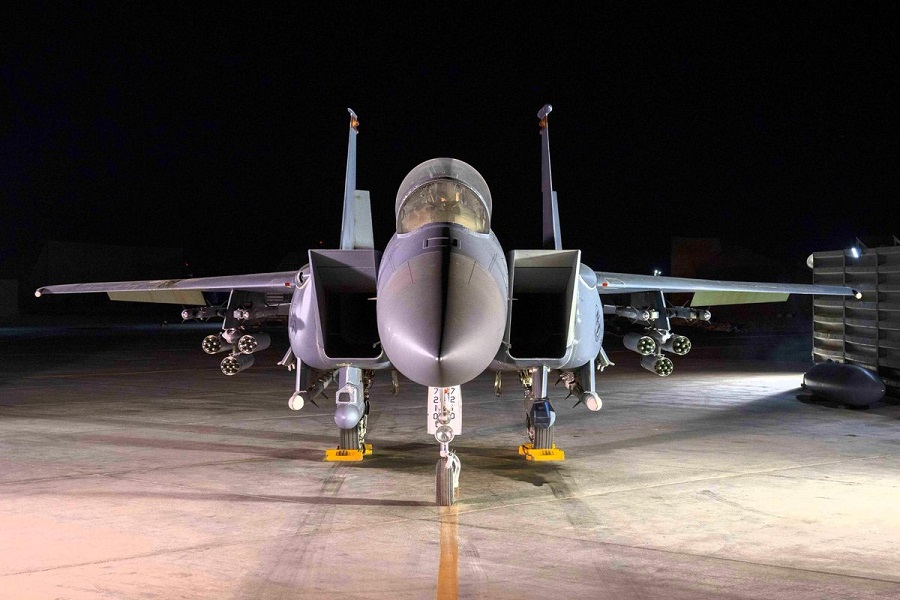
- F-15EX Purchases to More Than Double: The U.S. Air Force officially notified Congress on May 12 that it would more than double its F-15EX Eagle II fighter purchases due to delays in critical F-35 modernization upgrades.
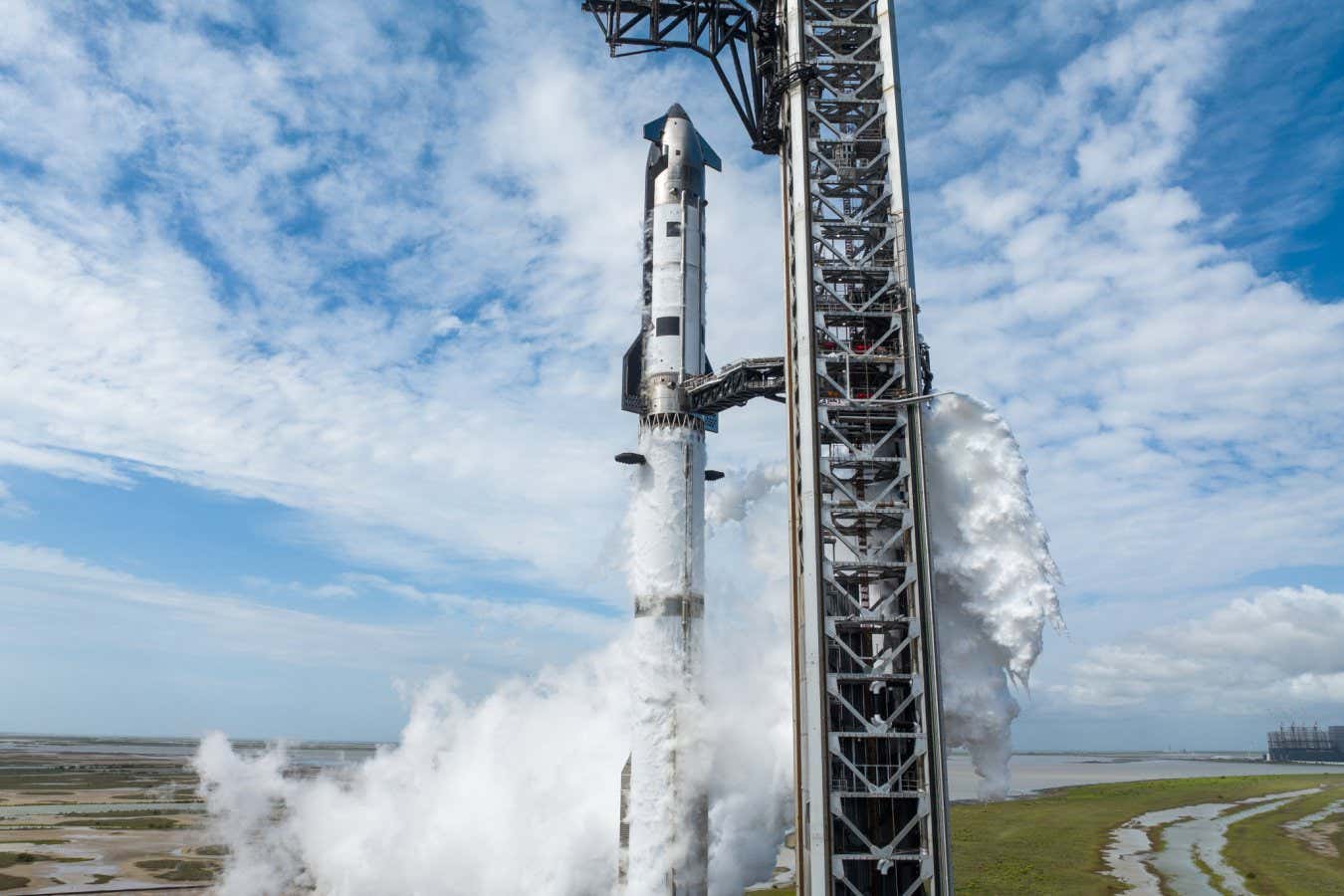
- SpaceX Starship 12th Test Flight Imminent: The company's 12th integrated flight test of Starship—the largest and most powerful rocket ever built—is scheduled for May 19 from Starbase in Boca Chica, Texas. It's slated to be a critical asset for NASA's Artemis program.
- Pentagon Pursues 10,000 Small Cruise Missiles: The Department of Defense is moving forward with procurement of 10,000 Low-Cost Cruise Missiles (LCCM) from multiple contractors, according to reporting by Breaking Defense.
- UK Selects Teams for Apache Drone Wingman Project: Britain has chosen BAE Systems, Anduril Industries, Tekever, and Thales for the Project NYX concept demonstration, which will develop unmanned wingmen for AH-64 Apache helicopters.
- CYBERCOM Requests 2,660% AI Budget Increase: U.S. Cyber Command has requested a massive increase in AI spending for cyber operations in the FY27 budget.
- Army Autonomy Office Shifts to Capability-Based Approach: The Army's Mission Autonomy Office is transitioning from platform-focused to mission-focused autonomy strategy, covering combat engineer, fires, and logistics domains.
Major Defense Contracts and Programs (3+ Examples)
F-15EX Eagle II Purchase Expansion — U.S. Air Force and Boeing
- Buyer / Contractor: U.S. Air Force → Boeing (F-15EX manufacturer)
- Contract Value: Specific amount undisclosed; more than double previous plan
- Key Details: Air Force leadership informed Congress on May 12 that delays in F-35 critical technology upgrades—including Technology Refresh-3—have prompted a substantial increase in F-15EX orders. The F-15EX is a modernized variant of the F-15E featuring an internal weapons bay, upgraded radar, and significantly improved electronic warfare systems.
- Strategic Significance: The F-35 program's software and hardware delays have created a near-term capability gap. The Air Force is pivoting to use F-15EX as a bridge capability. Boeing's F-15EX production line now has secured stable demand.
Pentagon Low-Cost Cruise Missile (LCCM) Procurement — 10,000-Unit Program
- Buyer / Contractors: Department of Defense → Multiple contractors (including Leidos, per Breaking Defense reporting)
- Contract Value: Undisclosed; 10,000-unit target
- Key Details: Breaking Defense's editorial series has highlighted Pentagon's massive LCCM demand and current manufacturer landscape. The program reflects a strategy to sustain attrition in A2/AD environments by procuring affordable, long-range precision strike capability at scale.
- Strategic Significance: Lessons learned from Ukraine and Middle East conflicts have shifted U.S. strategy away from high-cost precision weapons toward larger inventories of low-cost cruise missiles. Major procurement opportunities are expected across the defense supply chain.
UK Project NYX — Apache Drone Wingman Concept Demonstration
- Buyer / Contractors: UK Ministry of Defence → BAE Systems (UK), Anduril Industries (US UK entity), Tekever (Portugal), Thales (France UK entity)
- Contract Value: Concept demonstration phase; specific funding not disclosed
- Key Details: The UK Ministry of Defence has selected four companies for Project NYX, a concept demonstration of unmanned wingman aircraft to operate with AH-64 Apache helicopters. The program aims for dual-use design and addresses logistical gaps between rear hubs and forward units.
- Strategic Significance: As manned-unmanned teaming (MUM-T) becomes the future of global air power, the UK is building drone capability through multinational consortium approach with U.S. and European partners. This effort represents a test case for collaborative defense industry models.
Space Industry Developments (3+ Examples)
SpaceX Starship 12th Flight Test — The Largest and Most Powerful Rocket Ever Built
- Organization: SpaceX
- Launch Vehicle / Payload: Starship Block 2 variant / Payload details undisclosed / Target: Low Earth Orbit (LEO)
- Status / Timeline: Flight test scheduled for May 19, 2026, from Starbase (Boca Chica), Texas; subject to weather delays
- Industry Implications: According to New Scientist, this Starship will be the tallest and most powerful rocket ever launched. It serves as the foundation for NASA's lunar lander (HLS) under the Artemis program. Success directly impacts NASA's crewed lunar landing target (2028). Commercially, Starship's enormous payload capacity could dramatically reduce satellite constellation deployment costs.
Blue Origin New Glenn — Satellite Mishap Under Investigation
- Organization: Blue Origin
- Launch Vehicle / Payload: New Glenn rocket / Satellite payload (details undisclosed) / LEO
- Status / Timeline: Recent launch experienced a satellite mishap; investigation ongoing; no relaunch date set
- Industry Implications: Blue Origin's challenge to SpaceX's dominance in large launch vehicles faces further setbacks due to reliability concerns. Uncertainty is mounting regarding defense and national security satellite customers' diversification strategies for launch providers.
NASA SpaceX CRS-32 Resupply Mission — ISS Docking Success
- Organizations: NASA / SpaceX
- Launch Vehicle / Payload: Falcon 9 / Dragon cargo spacecraft / ISS resupply
- Status / Results: Launched May 15 from Kennedy Space Center, Florida; ISS docking successful
- Industry Implications: Commercial resupply services (CRS) operations are entering a stable phase, reinforcing confidence in SpaceX's national security and science mission capabilities. The program serves as a bridgehead for NASA's commercial partnership model to expand into deep space exploration.
Geopolitical and Policy Context (Latest 2026 Assessment)
U.S. and Asia-Pacific Alliances
As of May 2026, the U.S. Air Force's F-15EX expansion goes beyond filling a domestic capability gap and directly supports alliance confidence in the Indo-Pacific. South Korea and Japan, both F-15 operators, view continued U.S. investment in the platform as a positive signal. Upgraded radar and EW packages may also become available through FMS (Foreign Military Sales). Additionally, Pentagon AI leadership noted that the "Maven" AI system saw surge usage in anti-Iran strike operations, signaling that U.S. AI-enabled warfare is already operationally deployed. This creates momentum for AI technology transfer and joint development discussions with Asian allies.
European and NATO Developments
According to Breaking Defense, European-led naval forces under UK and French leadership are formulating operational plans to keep the Strait of Hormuz open, with up to 40 countries potentially participating. HMS Dragon, a UK destroyer, is identified as a key asset, pending ceasefire declarations before operations commence. Meanwhile, the UK's Project NYX drone wingman program is part of broader European defense cooperation to establish interoperability for manned-unmanned teaming systems across NATO. With the FY27 U.S. Defense budget request reaching $1.5 trillion, NATO allies face continued pressure to meet the 2% GDP defense spending commitment.
Emerging Conflict Zones
The cancellation of U.S. troop reinforcements to Poland—communicated to the Army just "days before" the decision—has heightened allied concerns about U.S. commitment to Eastern Europe security, per Breaking Defense reporting. This decision came shortly after NDAA FY26 passed Congress with Ukraine and Europe support provisions, highlighting ongoing administration-Congress tensions over foreign policy. Meanwhile, the Army is allocating approximately $994 million in FY27 budget for counter-small UAS (C-UAS) capabilities, reflecting combat lessons from Ukraine and Middle East conflicts directly translating into budget priorities.
Comparative Analysis
F-35 vs. F-15EX: Air Force Fighter Portfolio Realignment
| Factor | F-35A Lightning II | F-15EX Eagle II |
|---|---|---|
| Stealth | 5th-gen low-observable (core strength) | None (non-stealth) |
| Max Speed | Mach 1.6 | Mach 2.5+ |
| Weapons Payload | Medium (internal) | Maximum (13.6 metric tons internal/external combined) |
| Unit Cost (FY26) | ~$80M+ | ~$87M |
| Supply Risk | High (TR-3 delays) | Low (stable production line) |
| Operational Role | High-threat environment penetration/strike | Air defense suppression, capacity supplementation |
Analysis: The Air Force's F-15EX expansion represents a modern revival of "Hi-Lo Mix" strategy, combining stealth and non-stealth platforms to cover both high- and medium-threat environments. Given F-35 delays creating near-term capability shortfalls, this approach pragmatically addresses both cost efficiency and combat availability. However, once F-35 modernization completes, F-15EX procurement rationale may weaken, creating long-term uncertainty for Boeing's sustained orders.
Watch Points for Next Week
- SpaceX Starship 12th Flight Test (May 19): Launch success, Super Heavy booster recovery, and spacecraft Atlantic splashdown success directly impact NASA's Artemis HLS schedule.
- Pentagon AI and Classified Network Access Company Announcements: Breaking Defense reports 8 companies have been approved for classified network AI deployment, with full list expected to be released.
- Blue Origin Mishap Investigation Results and Relaunch Timeline: Expect disclosure on New Glenn satellite mishap root cause and next launch date.
Action Guide for Readers
- Investors: Boeing (F-15EX beneficiary) and Leidos (diversified Pentagon AI and weapons system contracts) show near-term order momentum. SpaceX pre-IPO investors should note Starship's 12th test as a valuation trigger.
- Policy and Strategy Officials: The U.S. decision to suspend Poland troop reinforcements prompts NATO allies to reassess American "strategic reliability." Korean and Japanese security officials should closely analyze how F-35 delays impact Indo-Pacific force availability.
- Industry and Supply Chain: Pentagon's 10,000-unit LCCM procurement and the Army's ~$994 million C-UAS budget create concrete opportunities for mid-tier defense firms with low-cost, high-volume production capacity. Companies with classified network AI access will position key subcontractors and suppliers as major beneficiaries.
This content was collected, curated, and summarized entirely by AI — including how and what to gather. It may contain inaccuracies. Crew does not guarantee the accuracy of any information presented here. Always verify facts on your own before acting on them. Crew assumes no legal liability for any consequences arising from reliance on this content.
Powered by
