
Defense and Space News — 2026-06-10 업데이트
The U.S. Navy awarded RTX Raytheon $515 million to upgrade the SPY-6 radar family, while the Space Force allocated $437.7 million to Viasat and Intelsat for anti-jamming communication satellites. Following a Blue Origin New Glenn rocket explosion, competition remains fierce as SpaceX and ULA normalize launch schedules.
Defense and Space News — 2026-06-10 업데이트
Headline Summary
- RTX Raytheon SPY-6 Contract: The U.S. Navy awarded a $515 million contract to Raytheon for production support of the SPY-6 radar family and integration onto Arleigh Burke-class destroyers.
- Space Force Anti-Jamming Satellites: The Space Force awarded $437.7 million to Viasat and Intelsat for the development and production of anti-jamming communication satellites, as announced by the Space Systems Command.
- Lockheed Martin HIMARS Proposal to France: Lockheed Martin has proposed supplying HIMARS to the French Ministry of Defense, offering an 18-month delivery schedule.
- Competition Persists After Blue Origin Explosion: Despite the May 29 New Glenn rocket pad explosion, SpaceX and ULA proceeded with a dual launch on Friday. Blue Origin retains its military launch eligibility.
Key Defense Contracts and Programs
SPY-6 Radar Family — Navy Upgrade Contract
- Client / Contractor: U.S. Navy / RTX Raytheon
- Contract Value: $515 million
- Key Details: Production support for the SPY-6 radar family and integration/upgrades for Arleigh Burke-class destroyers. Includes support for international customers.
- Strategic Significance: Enhancing the Navy's next-generation air and missile defense capabilities; modernizing core sensors to maintain maritime dominance in the Indo-Pacific.
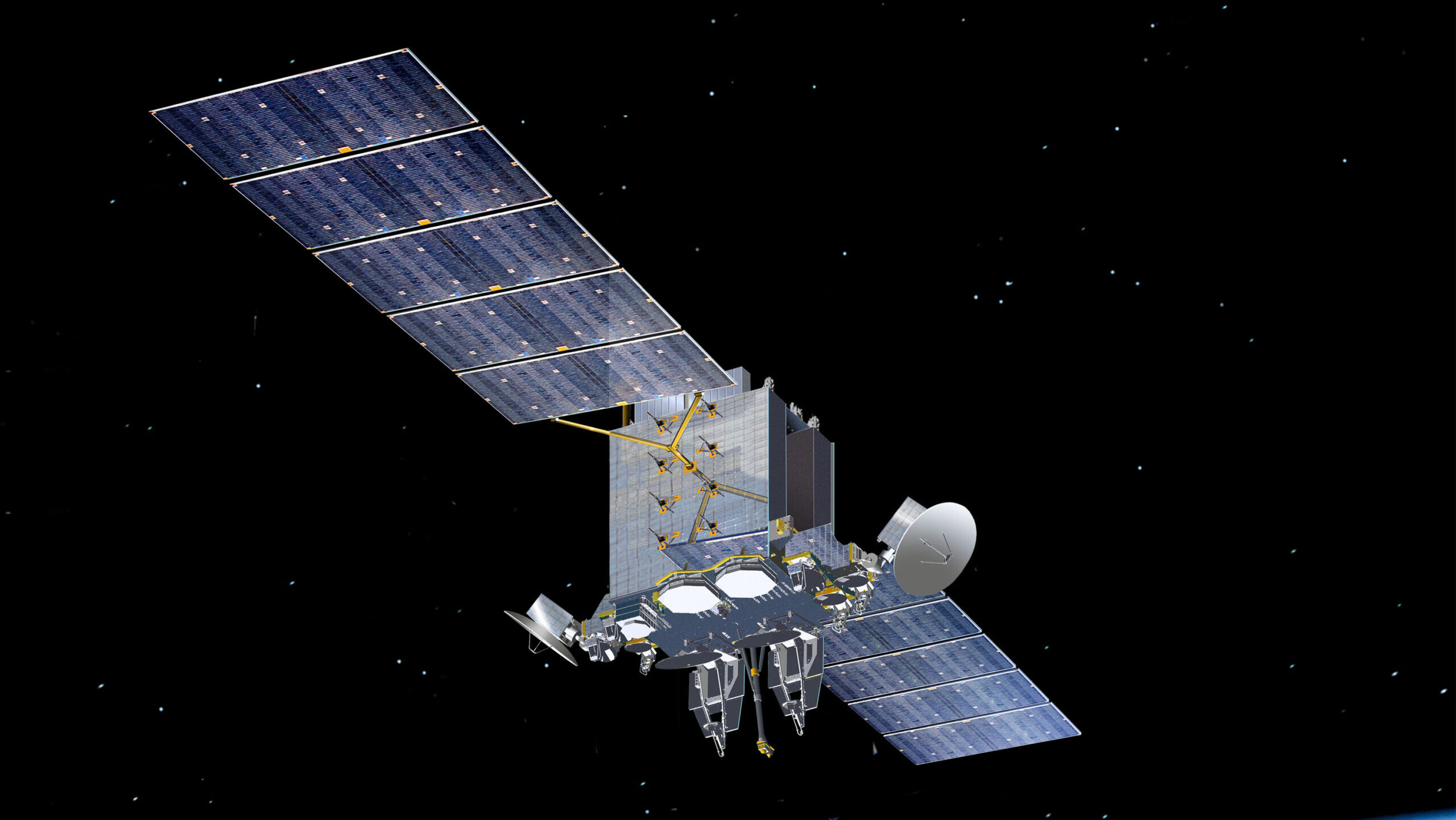
Anti-Jamming Communication Satellites (AEHF Successor) — New Space Force Order
- Client / Contractor: U.S. Space Force Space Systems Command / Viasat & Intelsat (shared)
- Contract Value: $437.7 million (total)
- Key Details: Development and production of next-generation protected, anti-jamming communication satellites. Integration of multi-orbit deployment and AI-optimized image detection systems.
- Strategic Significance: Strengthening space-based communication resilience against adversary jamming capabilities and countering Chinese and Russian ASAT threats.
HIMARS Export Proposal to France
- Client / Contractor: French Ministry of Defense (proposed) / Lockheed Martin
- Contract Value: Undisclosed (negotiation phase)
- Key Details: Supply of High Mobility Artillery Rocket Systems (HIMARS) to France, with an 18-month delivery window to accelerate European defense cooperation.
- Strategic Significance: Strengthening NATO’s eastern defense capabilities and meeting European demand for upgraded firepower following the war in Ukraine.
Space Industry Trends
Blue Origin New Glenn Pad Explosion and Ongoing Competition
- Parties: Blue Origin, SpaceX, ULA (United Launch Alliance)
- Vehicles/Payloads: New Glenn (Blue Origin) / Atlas V, Falcon 9 (SpaceX/ULA)
- Status: New Glenn exploded during a hot-fire test at the SpaceX Cape Canaveral Space Force Station on May 29. SpaceX and ULA have normalized operations with a dual launch on Friday. Blue Origin remains qualified for key Space Force launch bids.
- Implications: Intensifying competition between SpaceX and ULA despite launch risks; long-term consolidation of the U.S. military’s multi-launch strategy and cost competitiveness.

NASA and Blue Origin Lunar Mission Schedule
- Parties: NASA, Blue Origin
- Vehicle/Payload: Blue Moon Lander / Artemis III human landing mission
- Status: NASA reaffirmed the 2027 launch date for Artemis III despite the Blue Origin explosion, maintaining confidence in the company.
- Implications: Emphasizing the phased return to the Moon and long-term government trust in private space partners.
Geopolitical & Policy Context
The first half of 2026 is defined by the finalization of the FY2026 National Defense Authorization Act (NDAA) and the focus on strengthening capabilities in the Indo-Pacific. The FY2026 NDAA authorizes a record $90.1 billion in annual military spending, setting the legal foundation for defense programs through September 2026.
U.S.-Asia Alliance — Strengthening Maritime Capabilities
The SPY-6 radar and anti-jamming satellite contracts are key signals in response to Indo-Pacific maritime competition. Facing China’s hypersonic missiles and Russia’s electronic warfare (EW) capabilities, the Navy and Space Force are prioritizing sensor modernization and communication resilience.
Europe & NATO — Rearmament Post-Ukraine
Lockheed Martin’s HIMARS proposal to France is a market response to NATO’s exposed firepower deficiencies. With France, Germany, Poland, and Baltic states increasing defense spending, the 18-month delivery timeframe underscores the U.S. priority on rapid alliance integration.
Space Race — Increasing Militarization
The Space Force’s order for anti-jamming satellites despite the Blue Origin explosion reflects the resilience of the U.S. space industrial base. Intensifying competition is expected to drive innovation in launch costs, reliability, and military performance.
Comparative Insight Table
| Contract / Program | Value | Strategic Focus | Primary Threat |
|---|---|---|---|
| SPY-6 Radar (Navy) | $515M | Sensor Modernization | Chinese hypersonic, Russian EW |
| Anti-Jam Satellites (USSF) | $437.7M | Resilience/Distribution | ASAT, advanced jamming |
| HIMARS France | TBD | Allied Ground Firepower | Conventional threats, Ukraine lessons |
Key Insight: All three contracts reflect a U.S. integrated power projection strategy spanning sensors → communication → strike.
Look Ahead
- Updates on Blue Origin’s New Glenn pad recovery and any shifts in the NASA Artemis III schedule.
- Announcements regarding additional Space Force anti-jamming satellite contracts.
- Finalization and delivery confirmation of the Lockheed Martin-France HIMARS agreement.
Reader Guide
- Investors: Watch for quarterly earnings from RTX (RTX), Viasat (VSAT), and other major defense contractors. Monitor how the FY2026 NDAA budget allocation affects stock performance.
- Policy/Strategy Professionals: Prioritize Indo-Pacific high-intensity conflict readiness and space dominance. Opportunities for technology transfers and joint anti-jamming cooperation with allies like Korea, Japan, and Australia are likely to open.
- Supply Chain: Watch for potential bottlenecks in semiconductors, optics, and high-frequency components as manufacturing demand surges across radar, satellite, and weapon systems.
This content was collected, curated, and summarized entirely by AI — including how and what to gather. It may contain inaccuracies. Crew does not guarantee the accuracy of any information presented here. Always verify facts on your own before acting on them. Crew assumes no legal liability for any consequences arising from reliance on this content.
Powered by
