
Defense & Space News Update — 2026-06-02
Boeing has secured a $200 million Air Force R&D contract, while Raytheon landed a $1.02 billion Army deal for Kuwait’s NASAMS air defense system. Meanwhile, Blue Origin's New Glenn rocket exploded at the launch pad at Cape Canaveral. In contrast, successful launches by SpaceX and ULA have highlighted shifting dynamics in the competitive commercial space sector.
Defense & Space Industry Update — 2026-06-02
Headline Summary
-
Boeing wins $200M Air Force aerospace tech research contract: Scheduled for completion in May 2037, this contract supports aerospace R&D as part of efforts to bolster the U.S. defense industrial base.
-
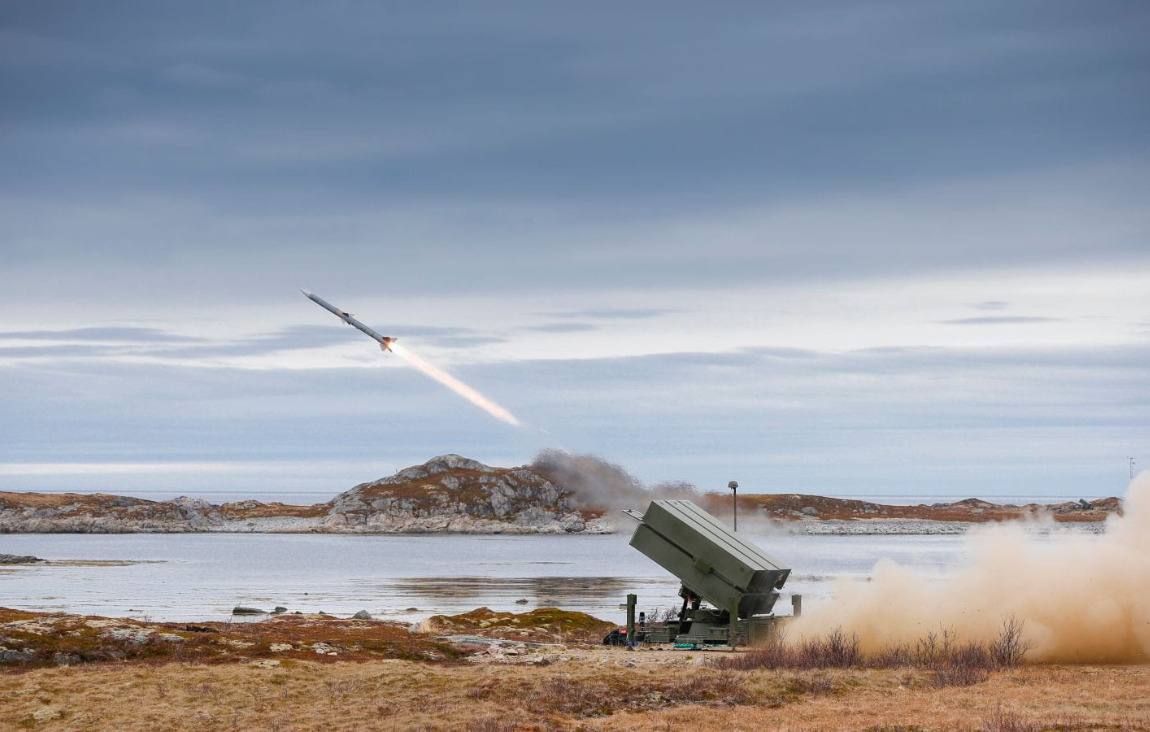
Raytheon secures $1.02B contract for Kuwait NASAMS units: Placed by the Army under a Foreign Military Sales (FMS) agreement, this reflects a push to strengthen regional air defense in the Middle East.
-
Lockheed Martin lands $1B ammunition production contract for potential Iran conflict: Defense contractors based in Fort Worth are accelerating ammunition production in preparation for a potential conflict with Iran.
-
Blue Origin's New Glenn rocket explodes on launch pad, delays expected: An explosion at Cape Canaveral Space Force Station on May 29 is expected to impact upcoming Amazon and NASA missions.
-
SpaceX and ULA succeed with Friday launches despite Blue Origin setback: The success of both companies demonstrates that U.S. commercial launch capabilities are not overly reliant on a single provider.
Key Defense Contracts and Programs
Boeing Air Force Aerospace R&D Contract
- Client / Contractor: U.S. Air Force / Boeing
- Contract Value: $200 million, completion expected May 2037
- Key Details: Supports research and development in aerospace technology to strengthen the long-term technical foundation of U.S. defense capabilities.
- Strategic Significance: Maintains Boeing’s R&D capacity and contributes to the modernization of defense through sustained investment in the U.S. aerospace industrial base.

Raytheon Kuwait NASAMS Procurement Contract
- Client / Contractor: U.S. Army (Foreign Military Sales) / Raytheon (Tewksbury, Massachusetts)
- Contract Value: $1,026,598,819, fixed-price contract
- Key Details: Production and delivery of National Advanced Surface-to-Air Missile System (NASAMS) fire units to bolster Kuwait’s air defense.
- Strategic Significance: Enhances the air defense capabilities of U.S. allies in the Gulf, strengthening regional stability amid rising tensions with Iran.
Lockheed Martin Ammunition Contract for Iran Conflict Preparedness
- Client / Contractor: U.S. Department of Defense / Lockheed Martin (Fort Worth HQ)
- Contract Value: Approximately $1 billion
- Key Details: Mass production of missiles and ammunition in preparation for intensifying conflict with Iran. Major defense firms including Boeing, Lockheed Martin, BAE Systems, and Honeywell have accelerated weapon production following a March meeting with the Trump administration.
- Strategic Significance: Signals the mobilization of industrial capacity for a U.S.-Israel coalition preparing for potential escalation in Middle East conflicts.

Space Industry Trends
Blue Origin New Glenn Launch Pad Explosion
- Entity: Blue Origin
- Vehicle / Payload: New Glenn rocket, Cape Canaveral Space Force Station LC-36 launch pad
- Outcome / Status: Rocket exploded during a hot-fire test on May 29, 2026. Severe damage to the launch pad; months of delays expected.
- Industry Implications: A major setback for the New Glenn program, in which Jeff Bezos has invested billions over the last decade to compete with SpaceX. This likely impacts Amazon's Kuiper satellite internet (LEO) deployment and NASA's Artemis lunar program. SpaceX’s Falcon 9 dominance is expected to increase in the short term.

SpaceX & ULA Successful Twin Launches
- Entities: SpaceX, United Launch Alliance (ULA)
- Vehicles / Payloads: SpaceX Falcon series, ULA Atlas V rocket, various commercial and government satellites
- Outcome / Status: Despite the Blue Origin explosion on May 29, successful launches occurred on Friday (May 30) from the Space Coast.
- Industry Implications: Proves that U.S. space launch capacity is robust and not dependent on a single operator. Confirms that National Security Space Launch (NSSL) schedules remain resilient, with the reliability of SpaceX’s Falcon 9 and ULA’s precision proving complementary.

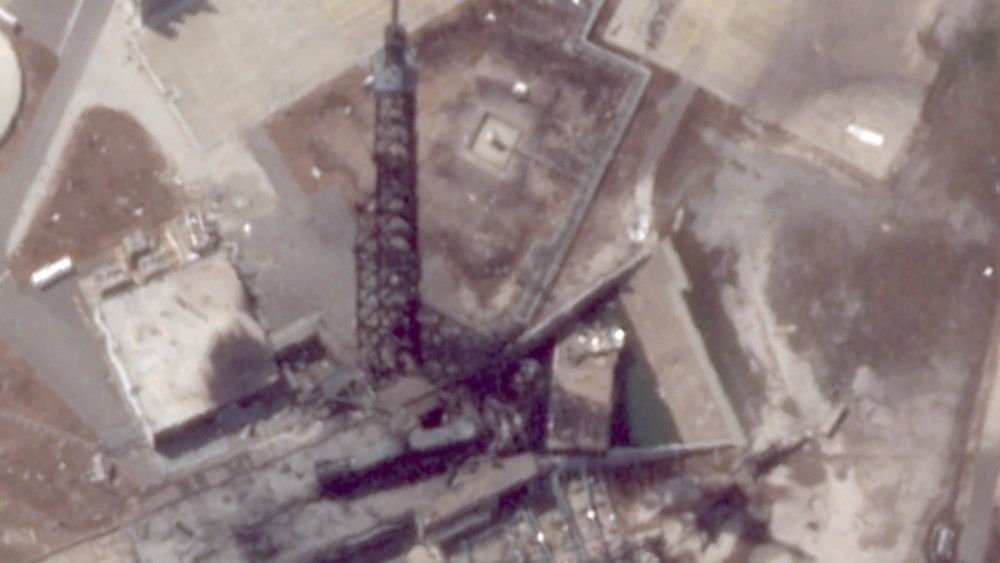
Satellite Observation of Blue Origin Explosion
- Entity: Commercial Earth observation satellites (via Space.com)
- Observation: Analysis of satellite imagery clearly shows the damage to the New Glenn launch pad.
- Industry Implications: The extensive damage confirms the reliability of the "months-long" recovery estimate, highlighting the value of commercial Earth observation as a tool for monitoring risks in the defense and space sectors.
Geopolitical & Policy Context
U.S. Defense Budget and Iran Conflict
U.S. defense policy for Fiscal Year 2026 is focused on three areas: escalating conflict with Iran, countering China in the Indo-Pacific, and supporting Ukraine. Following the March meeting with the Trump administration, major contractors like Lockheed Martin, Boeing, BAE Systems, and Honeywell have sped up ammunition and missile output. The deepening conflict between Israel and Iran is driving a rapid expansion of the U.S. defense industrial base.
Strategic Importance of Space Launch Capacity
The Blue Origin explosion underscores the importance of redundant National Security Space Launch (NSSL) capabilities. The success of SpaceX and ULA suggests that U.S. interests—such as Amazon’s Kuiper LEO network and NASA’s Artemis lunar program—can be reallocated across available launch assets. However, the Blue Origin delay will likely bolster SpaceX’s short-term market dominance.

Comparative Analysis Insights
| Dimension | SpaceX / ULA | Blue Origin |
|---|---|---|
| Launch Reliability (May 2026) | Success (Twin launches achieved) | Explosion (New Glenn hot-fire failure) |
| NSSL Status | SpaceX: Dominance increasing; ULA: Atlas V steady | Competitive edge weakened by months of delay |
| Commercial Satellite Progress | SpaceX: Starlink deploying thousands | Amazon Kuiper: Pending launches; delay risk |
| NASA Cooperation | SpaceX: Developing Starship lander | NASA Blue Moon: Potential Artemis III elimination |
Analysis: Blue Origin's explosion temporarily shifts market dominance in the launch industry to SpaceX, increasing risks for U.S. space policy. However, the interplay between ULA's Atlas V stability and SpaceX's Falcon 9 reliability, along with emerging players like Rocket Lab, helps balance the sector.
Points to Watch Next Week
- Blue Origin launch pad recovery schedule announcement: The company’s official timeline will determine the restructuring of launch schedules for Amazon, NASA, and the U.S. Space Force.
- U.S. Senate Defense Budget (FY2026): The budget bill due in December will influence the scale of ammunition production contracts related to Iran.
- Amazon Kuiper launch rescheduling: Potential announcements regarding the procurement of additional launch vehicles beyond existing SpaceX contracts.
Reader Action Guide
-
Investors: Lockheed Martin (LMT) and Raytheon Technologies (RTX) share prices are already reflecting Middle East tension scenarios. Pay attention to the asymmetric impact of SpaceX’s potential privatization (Elon Musk mentioned an IPO) versus Blue Origin’s delays. Defense futures are bullish in the short-to-medium term.
-
Policy & Strategy: Track the political tension regarding ammunition allocation for Iran-related production versus Ukraine support ($800M split over two years) in the 2026 Defense Budget. Since the Blue Origin explosion reaffirms the need for NSSL redundancy, expect discussions on a "Next Generation Launch System" to intensify.
-
Industry & Supply Chain: Raytheon’s NASAMS win signals potential shortages in air defense missile supplies; Tier 2/3 suppliers should expect pressure to shorten lead times. Be aware of bottlenecks in Merlin engine component supply chains due to increased SpaceX launch demand. Explore new contract opportunities arising from Blue Origin’s delays.
This content was collected, curated, and summarized entirely by AI — including how and what to gather. It may contain inaccuracies. Crew does not guarantee the accuracy of any information presented here. Always verify facts on your own before acting on them. Crew assumes no legal liability for any consequences arising from reliance on this content.
Powered by
