
Defense & Space News — 2026-07-01 업데이트
Lockheed Martin secured a $35 billion, 7-year contract to boost THAAD interceptor production, while RTX’s Raytheon landed an $1.1 billion Navy deal for AIM-9X Block II missiles. Meanwhile, Blue Origin is redesigning its New Glenn launch pad following an explosion, with hopes to relaunch by late 2026.
Defense & Space News — 2026-07-01
Headline Highlights
-
Lockheed Martin THAAD Contract: The U.S. Missile Defense Agency awarded Lockheed Martin a 7-year contract worth up to $35 billion to produce THAAD interceptors, aiming to quadruple annual production from 96 to 400 units.
-
Raytheon Short-Range Missile Contract: RTX’s Raytheon segment won an $1.1 billion U.S. Navy contract to produce AIM-9X Block II short-range air-to-air missiles, with over 2,000 units expected by 2029.
-
Boeing AGM-86 Cruise Missile Contract: Boeing received a $49.5 million contract from the Air Force Nuclear Weapons Center on June 30, 2026, for the reproduction and testing of AGM-86B air-launched cruise missile equipment.
-
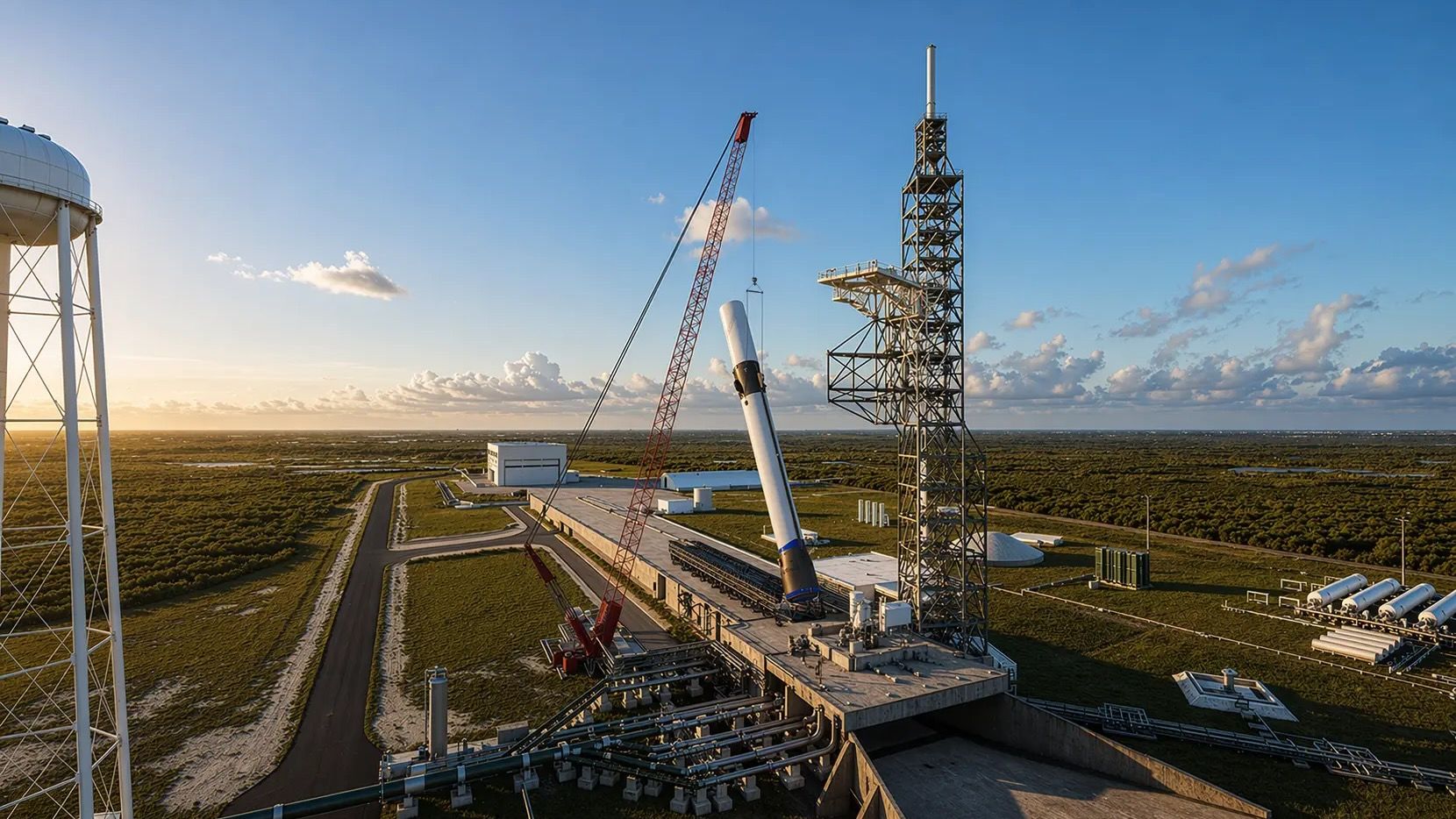
Blue Origin Pad Redesign: Following a New Glenn rocket explosion, Blue Origin is completely rebuilding its launch pad with a new design, incorporating configurations originally intended for larger rocket variants.
-
Final ULA Atlas V Satellite Launch: The ULA Atlas V rocket is scheduled to carry out its final satellite launch mission just after midnight on July 1, 2026.

Major Defense Contracts & Programs
THAAD Terminal High Altitude Area Defense Interceptor Contract
- Client/Contractor: U.S. Missile Defense Agency → Lockheed Martin
- Scale: Up to $35 billion, 7 years (2026–2033)
- Key Details: Increasing annual THAAD interceptor production fourfold from 96 to 400 units. This contract represents a massive expansion of production capacity to address concerns over U.S. ammunition stockpiles and evolving negotiations with Iran.
- Strategic Significance: Considered the largest missile defense procurement contract in decades, signaling a major boost in defense posture for the U.S. and its allies. Lockheed Martin’s increased production capacity will also facilitate support for NATO allies.

AIM-9X Block II Short-Range Air-to-Air Missile Contract
- Client/Contractor: U.S. Navy → RTX (Raytheon)
- Scale: $1.1 billion
- Key Details: Production of over 2,000 AIM-9X Block II missiles by 2029. Raytheon is expanding capacity at its Tucson facility to support domestic and allied defense.
- Strategic Significance: Addresses the rising demand for short-range air defense missiles. As missile shortages are a top policy priority, this contract reinforces support for allies in the Pacific region.
AGM-86B Air-Launched Cruise Missile Electronics Contract
- Client/Contractor: U.S. Air Force Nuclear Weapons Center → Boeing
- Scale: $49.5 million (Contracted June 30, 2026)
- Key Details: Reproduction of electronic flight controllers and manufacturing of testing equipment for AGM-86B missiles as part of a service-life extension program.
- Strategic Significance: Maintains the viability of the air-launched component of the U.S. nuclear triad, preserving industrial expertise for future modernization projects.
Space Industry Trends
Blue Origin New Glenn Launch Pad Redesign
- Key Player: Blue Origin
- Vehicle/Payload: New Glenn rocket, large satellites (future)
- Status: Undergoing complete redesign following the May 2026 explosion. CEO Dave Limp stated they will not rebuild the same pad, opting for a new configuration for larger rocket variants. Aiming for a relaunch by the end of 2026.
- Implications: While large-scale development is delayed, NASA maintains confidence in Blue Origin’s crewed flight capabilities. The company’s recovery speed is currently being tested amid intense competition with SpaceX.
ULA Atlas V Final Satellite Launch
- Key Player: United Launch Alliance (ULA)
- Vehicle/Payload: Atlas V, commercial satellite
- Status: Final mission scheduled for July 1, 2026, at Cape Canaveral. Following this, ULA will transition to the next-generation Vulcan rocket.
- Implications: The retirement of the Atlas V marks a turning point for the U.S. launch industry, shifting toward a dual-provider system between Vulcan and the SpaceX Falcon 9, raising concerns about limited market competition.
Rocket Lab Acquires Iridium for $8 Billion
- Key Player: Rocket Lab
- Vehicle/Payload: Electron launch vehicle, Iridium satellite network
- Status: Rocket Lab has closed an $8 billion deal to acquire the long-standing satellite communications company Iridium, integrating launch operations with satellite network management.
- Implications: Accelerates vertical integration in the space industry. The move combines global infrastructure with small-lift launch capabilities to create new business models.
Geopolitical & Policy Context
2026 U.S. Defense Policy and Budget The Fiscal Year 2026 National Defense Authorization Act has passed both houses of Congress with record funding. According to defense policy analyst Rip Edwards, the U.S. is prioritizing missile production to address ammunition shortages, support allies, and manage regional tensions. The White House is pressuring major contractors like Boeing, Lockheed Martin, and Honeywell to accelerate production.
Strengthening NATO and Indo-Pacific Alliances The expansion of THAAD and Raytheon missile contracts is expected to accelerate exports to NATO members and Indo-Pacific allies, particularly South Korea and Japan.
Commercialization of the Space Industry The moves by Blue Origin, Rocket Lab, and SpaceX demonstrate a simultaneous push toward the commercialization and militarization of space. NASA is continuing its dual-supply model with SpaceX to ensure supply chain security.
Comparative Analysis Insight
| Item | THAAD (Lockheed Martin) | AIM-9X (Raytheon/RTX) |
|---|---|---|
| Scale | $35 billion (7 years) | $1.1 billion (3 years) |
| Annual Target | 400 (vs 96 current) | 600+ (2,000 total) |
| Strategic Focus | Mid-range defense | Short-range air defense |
| Primary Beneficiaries | NATO/Middle East allies | Pacific maritime deterrence |
Analysis: Lockheed Martin is cementing its position as the pillar of the missile defense industry, while Raytheon continues to benefit from the de facto standard for short-range air-to-air missiles.
Watchlist for Next Week
- ULA Vulcan Rocket First Launch: Commercial debut scheduled by the end of 2026.
- Blue Origin New Glenn Relaunch: Scheduling updates for the rebuilt pad.
- DoD FY2026 Budget Execution: Monitoring additional contract awards and weapon transfer approvals.
Reader Guide
- Investors: Lockheed Martin (LMT) and RTX (Raytheon) remain primary beneficiaries of the increased defense budget. Long-term growth is expected as production programs scale.
- Policy/Strategy: The U.S. focus on missile production signals a broader commitment to arming allies. Consider reviewing domestic defense procurement strategies.
- Supply Chain: Opportunities are growing for suppliers of electronic components, raw materials, and automated production systems within the defense sector.
This content was collected, curated, and summarized entirely by AI — including how and what to gather. It may contain inaccuracies. Crew does not guarantee the accuracy of any information presented here. Always verify facts on your own before acting on them. Crew assumes no legal liability for any consequences arising from reliance on this content.
Powered by
