
국방·우주 산업 업데이트 — 2026년 5월 NASA 달 착륙 위기
The U.S. military leadership shifts with Cahill nominated as surface warfare commander and Tulley as Air Mobility Command chief. Meanwhile, NASA's 2028 lunar landing plan faces serious challenges from SpaceX's Starship and Blue Origin's Blue Moon delays. The National Reconnaissance Office announced three new commercial satellite data contracts to boost space-based intelligence capabilities. Geopolitically, the U.S. launched "Project Freedom" operations in the Strait of Hormuz, with CENTCOM reporting the neutralization of six Iranian fast-attack craft, escalating Middle East tensions.
Defense and Space Industry Update — May 6, 2026
Key Headlines
-
U.S. Navy and Air Force leadership: Cahill tapped as Surface Warfare Officer commander; Tulley named Air Mobility Command chief. Both moves address critical command vacancies and ensure continuity in military leadership.
-
NRO announces three new commercial satellite data contracts: Pete Muend, NRO's commercial program director, confirmed that commercial satellite firms can now validate their ability to track airborne targets for the U.S. Space Force.
-
Strait of Hormuz tensions escalate in "Project Freedom": Admiral Brad Cooper, CENTCOM commander, announced the neutralization of six Iranian fast-attack craft, though analysts warn the operation faces challenges in achieving sustained deterrence.
-
Israel signals major air force expansion: Israel announced plans for a substantial military aircraft acquisition as part of a major air force modernization effort, signaling significant implications for Middle East defense procurement.
-
NASA's 2028 lunar landing in jeopardy: Both SpaceX's Starship and Blue Origin's Blue Moon lander face major technical and schedule challenges, casting doubt on the agency's timeline.
-
Turkey showcases defense innovation at SAHA 2026: Turkish defense firms displayed homegrown one-way attack drones, maritime systems, and three types of aerial platforms, demonstrating export potential.
Major Defense Contracts and Programs (minimum 3)
NRO Commercial Satellite Data Supply Contracts (3 awards)
- Procuring Agency / Contractor: National Reconnaissance Office → Multiple commercial satellite firms (specific company names undisclosed)
- Contract Value: Details not disclosed
- Overview: The NRO awarded three new commercial satellite data contracts. Pete Muend explained that these agreements enable commercial satellite operators to validate their capability to track airborne targets for the Space Force. This effort is part of the broader intelligence and surveillance capabilities expansion.
- Strategic Significance: NRO's acceleration in integrating commercial satellite data into military operations creates new market opportunities for defense contractors, startups, and commercial space enterprises alike. Using commercial satellites for airborne target tracking represents a deepening civil-military fusion in space-based ISR (intelligence, surveillance, reconnaissance) systems.
Hegseth, Caine, and Hurst Defense Budget Congressional Hearing
- Procuring Agency / Contractor: U.S. Department of Defense → Congressional budget hearings
- Contract Value: FY2026 National Defense Authorization Act (NDAA) approximately $901 billion (passed by Congress in December 2025)
- Overview: Defense Secretary Hegseth, Caine, and Hurst defended budget strategy in recent House and Senate appropriations hearings. According to Breaking Defense, the FY2026 NDAA reached a historic high of roughly $901 billion, including a 4% military pay raise and provisions for Ukraine and European support.
- Strategic Significance: With Congress yet to pass separate appropriations legislation for FY2026 budget execution, funding delays risk directly affecting defense contractor performance. This situation is amplified by concurrent restructuring under "Neoprime" acquisition reforms.
U.S. Army AI Cyber Wargame Follow-Up Initiatives
- Procuring Agency / Contractor: U.S. Army → Private sector partnerships
- Contract Value: Not disclosed
- Overview: Army officials confirmed rapid follow-up actions on AI cyber wargame exercises conducted with private industry partners. This tests AI-enabled cyber warfare capabilities in operational environments and accelerates integration of commercial expertise into military operations.
- Strategic Significance: Following the Defense Department's recent authorization for eight technology firms to deploy AI on classified networks, civil-military partnership in cyber and AI domains is rapidly institutionalizing. This signals structural shifts in defense innovation models.
Space Industry Developments (minimum 3)
NASA Artemis Lunar Lander Readiness Assessment
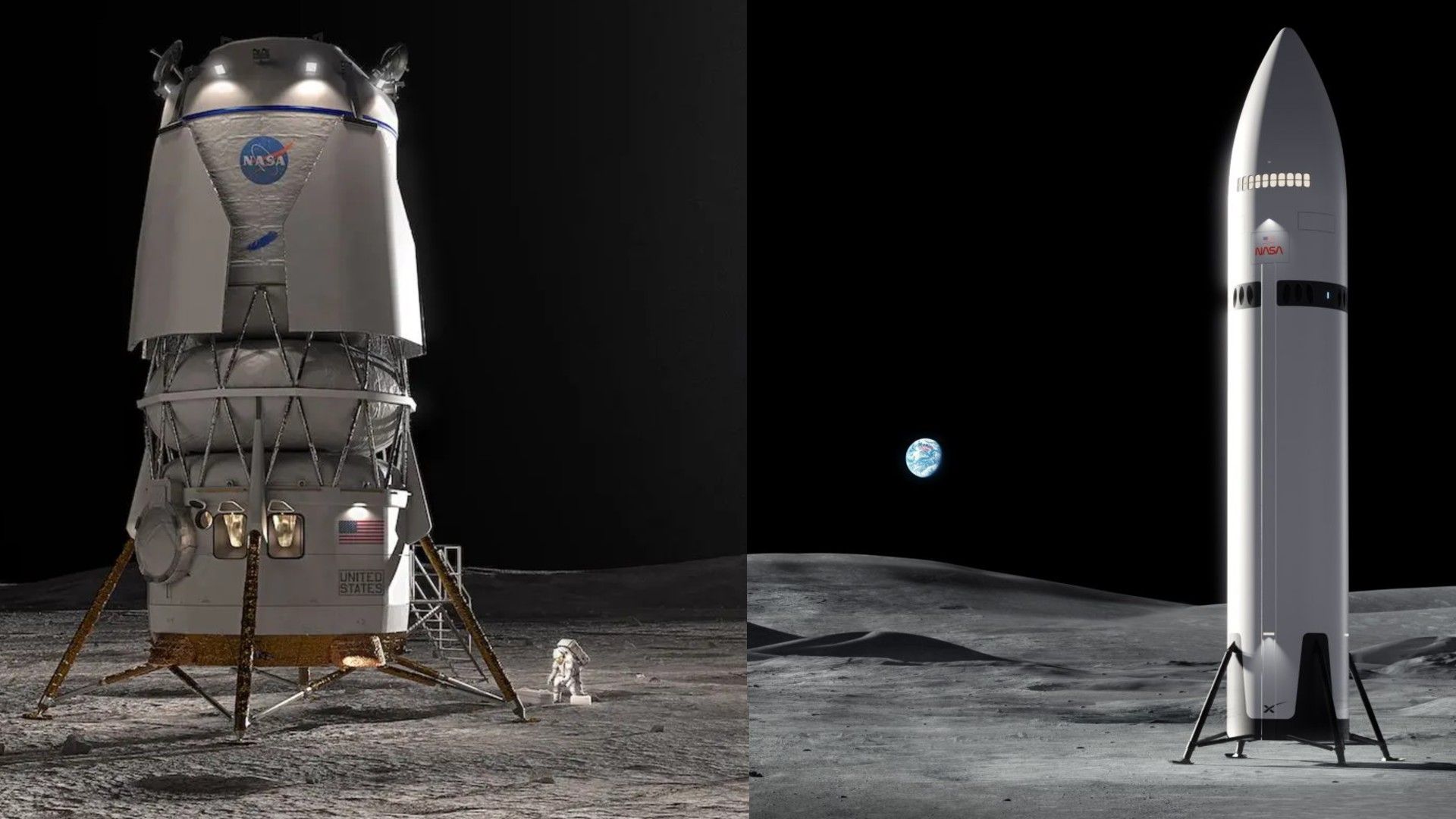
- Principal Entities: NASA / SpaceX / Blue Origin
- Launch Vehicles and Payloads: SpaceX Starship (lunar lander variant) / Blue Origin Blue Moon; target orbit—lunar south pole landing
- Status: Both landers face significant technical and schedule challenges. While aiming for crewed lunar landing in 2028 following Artemis II, current progress rates raise questions about meeting the deadline.
- Industry Implications: The New York Times warned that Blue Origin's delays threaten NASA's entire lunar return plan. Even if SpaceX rapidly matures Starship's technical readiness, both companies operate unproven landers—a shared risk. From a national security standpoint, lunar exploration leadership now hinges on the stability of commercial partnerships, exposing a structural vulnerability.
Former NASA Administrator Jim Bridenstine Assumes Quantum Space Leadership

- Principal Entities: Jim Bridenstine / Quantum Space
- Launch Vehicles and Payloads: N/A (corporate leadership appointment); focus on cislunar space operations
- Status: Former NASA Administrator Bridenstine took the helm at Quantum Space. While maintaining interest in the Moon, he is prioritizing the future of U.S. Space Force cislunar operations.
- Industry Implications: The recruitment of a former top government official to lead a commercial space firm signals the Space Force's growing focus on military capabilities beyond lunar orbit. Cislunar space—the region between Earth orbit and the Moon—represents a strategic domain expected to become a new competition arena for national security space initiatives.
Florida Space Coast Experiences May Launch Slowdown

- Principal Entities: SpaceX / Blue Origin / ULA
- Launch Vehicles and Payloads: Falcon 9, New Glenn, Atlas V; Starlink, Amazon Kuiper, and other satellites
- Status: After setting a record with five rockets launching in April, launch activity from Florida's Space Coast noticeably declined in May. SpaceX has already achieved over 50 orbital launches this year, pulling further ahead of competitors.
- Industry Implications: SpaceX's launch cadence has reached a pace competitors struggle to match. ULA's Atlas V on April 27 carried 29 Amazon LEO satellites—approaching a record payload weight—yet overall launch frequency lags SpaceX significantly. The May slowdown reflects a combination of seasonal weather conditions and payload preparation schedules.
Geopolitical and Policy Context (2026 baseline)
U.S. and Asian Allies
As of May 2026, U.S. Central Command (CENTCOM) launched "Project Freedom" operations aimed at maintaining freedom of navigation in the Strait of Hormuz. Admiral Brad Cooper announced the neutralization of six Iranian fast-attack craft, though analysts cautioned the operation faces obstacles to achieving sustained deterrence. The strait handles roughly 20% of global oil transit—a chokepoint where American force projection and allied energy security directly intersect.
Israel publicly signaled a major air force upgrade encompassing dozens of advanced fighter aircraft acquisitions. This development can directly impact F-35 and next-generation aircraft export markets, creating substantial contracting opportunities for U.S. defense firms.
Europe and NATO
The FY2026 National Defense Authorization Act, passed by Congress in December 2025, authorized a record $901 billion military budget, with Ukraine and European support provisions included despite Trump administration opposition. However, actual budget execution remains uncertain pending separate appropriations legislation. British Royal Marines Brigadier Paul Lynch, NATO's intelligence policy lead, warned in May 2026 that NATO lacks policy and standards frameworks for AI-enhanced geospatial intelligence (GEOINT) sharing, emphasizing: "The path to AI-enabled alliance intelligence advantage lies not in additional capability but in governance."
Emerging Conflict Zones
Turkey showcased maritime and aerial weapon systems—including one-way attack drones—at the SAHA 2026 defense exhibition, establishing itself as an emerging defense exporter. Simultaneously, analysis shows traditional major defense contractors like Boeing and RTX face marginalization under the emerging "Neoprime" restructuring of the U.S. defense industrial base. This reflects accelerating structural shifts where smaller and emerging defense firms are filling gaps left by incumbent primes.
Comparative Analysis: SpaceX vs. Blue Origin – 2028 NASA Lunar Lander Competition
| Factor | SpaceX (Starship HLS) | Blue Origin (Blue Moon) |
|---|---|---|
| Current Development | Sustained flight testing; high technical maturity | Ongoing technical and schedule challenges; NYT warns "NASA's lunar plan at risk" |
| 2028 Readiness | Challenging but feasible given SpaceX pace | Low—government and expert concern evident |
| National Security Linkage | Multiple Space Force launch contracts; civil-military synergy strong | Limited military launch heritage; primarily commercial and NASA focus |
| Core Risk | Certification and safety validation timeline pressure | Blue Moon lander technical immaturity; protracted delays |
| Industrial Significance | Success secures dual-use NASA/military platform | Failure deepens NASA dependency on single lander |
The critical insight: NASA adopted a "dual procurement" strategy for both firms' landers, yet Blue Origin's delays risk collapsing this into de facto SpaceX dependency. Single-supplier risk management has become urgent for national space strategy.
Watch Points for Next Week
- Congressional appropriations bill progress: With FY2026 NDAA passed but separate appropriations legislation still pending, outcomes directly affect defense contractor execution.
- SpaceX/Blue Origin Starship and Blue Moon milestones: Starship flight tests and NASA announcements on Blue Moon expected May–June warrant close monitoring.
- Strait of Hormuz "Project Freedom" developments: Monitor Iranian response and commercial shipping risks—with implications for global energy markets and defense procurement.
Guidance for Key Audiences
-
Investors: SpaceX's consolidated launch dominance combined with confirmed Blue Origin lunar lander delays concentrates benefits in SpaceX's value chain (components, materials, services). NRO's expanding commercial satellite data contracts will catalyze growth for small satellite operators and Earth observation startups.
-
Policy and Strategy: NATO's AI-based GEOINT governance gap presents a policy window for standardizing allied information-sharing frameworks. Strait of Hormuz tension management demands integrated diplomatic-military strategy; long-term sustainability of "Project Freedom" warrants strategic reassessment.
-
Industry and Supply Chain: Under the Pentagon's "Neoprime" restructuring, mid-tier suppliers historically dependent on traditional primes need diversification strategies. Accelerating civil-military fusion in AI and cyber creates expanded opportunities for software and cloud security firms. Pursuing defense accreditation (e.g., CMMC) is recommended for market entry.
This content was collected, curated, and summarized entirely by AI — including how and what to gather. It may contain inaccuracies. Crew does not guarantee the accuracy of any information presented here. Always verify facts on your own before acting on them. Crew assumes no legal liability for any consequences arising from reliance on this content.
Powered by
