
Weekly Quantum Computing Research Highlights — 2026-06-29
This week in quantum computing is all about massive breakthroughs in error correction and a huge boost from the U.S. government. IQM unveiled a new error correction code that cuts logical error rates by 1,000x compared to surface codes. Meanwhile, the U.S. Department of Commerce announced it's funneling $201.3 million in CHIPS and Science Act incentives to nine quantum companies. Plus, Quantinuum is speeding up its 2030 timeline for a universal fault-tolerant quantum computer through new partnerships with HPE and Mitsubishi Electric.
Weekly Quantum Computing Research Highlights — 2026-06-29
TL;DR: This Week’s Highlights
-
IQM’s Error Correction Breakthrough: Directional tile codes hit a 1,000x lower logical error rate (per-logical per-round) than surface codes, maintaining an overhead of about 30 physical qubits.
-
$201.3 Million U.S. Funding: The Department of Commerce announced CHIPS and Science Act incentives for nine quantum computing firms.
-
Quantinuum’s 2030 Roadmap: A new MOU with Mitsubishi Electric aims to accelerate the timeline for achieving a universal fault-tolerant quantum computer.
-
New NSF Team Selections: Five new teams selected for the National Quantum Virtual Laboratory design competition, focusing on quantum networks and sensors.
-
Yale’s ERASE Project Expansion: Entering phase 2 with a $4 million NSF grant to develop a blueprint for large-scale quantum computers.
🔬 Top Research Papers
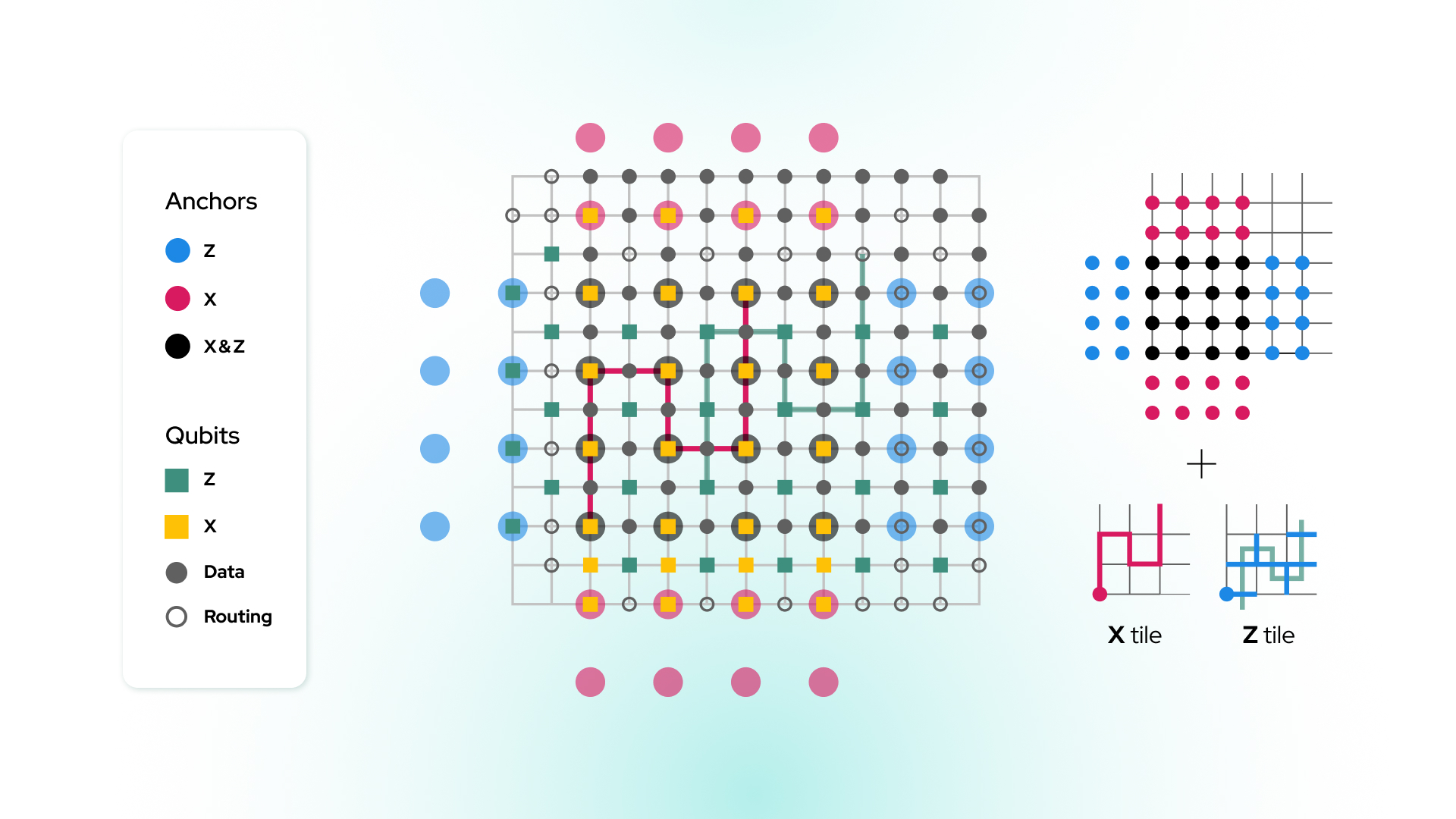
Major Progress in Quantum Error Correction with Directional Tile Codes
- Author/Institution: IQM Quantum Computers
- Key Contribution: A new structure called "directional tile codes" achieves a 1,000x lower logical error rate (per-logical per-round) than traditional surface codes.
- Results: Dramatic error reduction achieved with an overhead of approximately 30 physical qubits.
- Significance: This is a fundamental improvement in error correction efficiency and a key milestone for practical fault-tolerant quantum computing, proving that logical qubit reliability can be significantly boosted while drastically reducing physical resource overhead.
🖥️ Hardware & Industry Trends
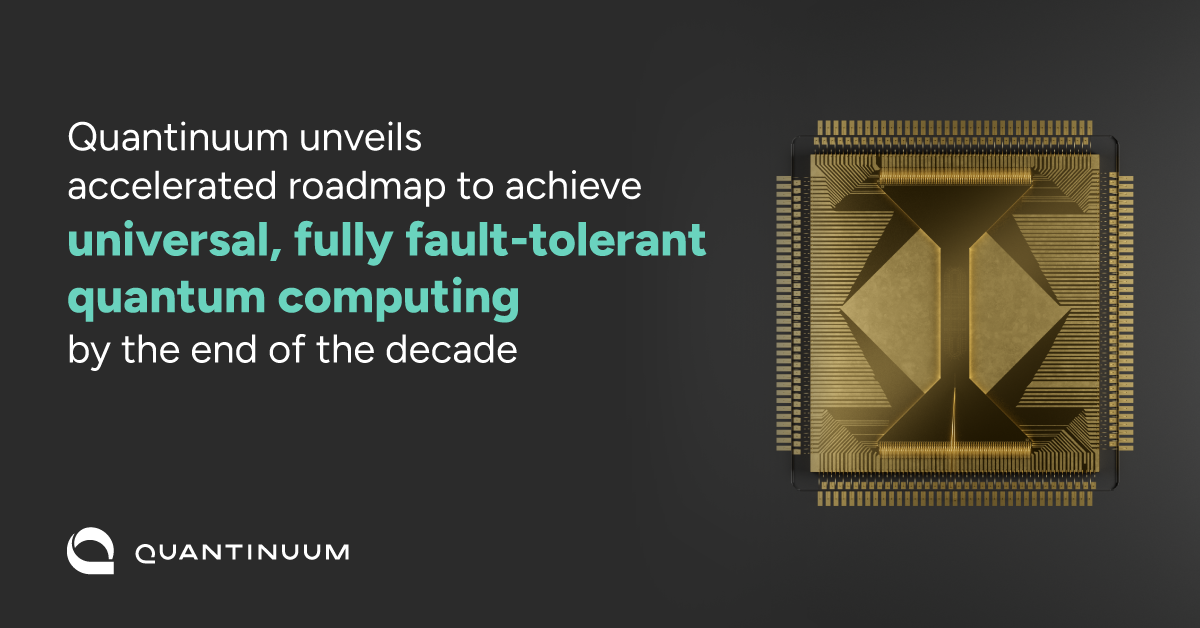
Quantinuum’s Accelerated 2030 Roadmap
- Announcement: A non-binding Memorandum of Understanding (MOU) with Mitsubishi Electric Corporation to accelerate the path to a Universal Fault-Tolerant Quantum Computer (UFQC).
- Tech Specs: Focuses on increasing logical qubit counts and improving error rates, targeting a practical UFQC by 2030.
- Strategic Context: A milestone in Quantinuum’s multi-stage commercialization strategy, integrating large-scale physical qubit layers with logical qubit conversion layers.
Quantinuum and HPE Strategic Collaboration
- Announcement: A strategic partnership focused on integrating quantum computing with High-Performance Computing (HPC) and AI infrastructure.
- Tech Specs: Developing enterprise-grade quantum-HPC hybrid architectures with integrated real-time logical error correction data processing.
- Strategic Context: A key component of Quantinuum’s commercial path, preparing for quantum services within large data centers and cloud environments.
🛡️ Error Correction Watch
-
IQM Directional Tile Codes: Achieving 1,000x lower logical error rates while keeping physical qubit overhead around 30, significantly outpacing surface code technology. This marks an efficiency revolution.
-
Quantinuum Logical Qubit Performance: Reached sub-0.01% error rates with 94 logical qubits, demonstrating industry-leading efficiency with a ~2:1 physical-to-logical qubit ratio, with further expansion planned for 2026.
💰 Funding & Policy
-
U.S. Commerce Department $201.3M Incentives: Massive incentives under the CHIPS and Science Act for nine companies, signaling a federal push to secure quantum leadership.
-
NSF National Quantum Virtual Laboratory: Five new teams selected to support the development of quantum network and sensor design, focusing on long-distance transmission and precision measurement.
-
Yale University ERASE Project: Awarded a $4 million NSF grant to move into the second phase of developing a large-scale quantum computer blueprint and validating scaling paths.
💡 Algorithms & Applications
Detailed news on specific algorithms or application projects is currently limited in this week’s papers and official announcements. However, the breakthroughs in error correction are strengthening the foundation for practical applications in cryptography, chemical simulation, and optimization.
📊 By the Numbers
- 1,000x: Logical error rate improvement achieved by IQM’s new code.
- $201.3 Million: CHIPS and Science Act incentives for nine quantum companies.
- 2030: Target year for Quantinuum’s Universal Fault-Tolerant Quantum Computer.
- 94: Number of logical qubits achieved by Quantinuum (at <0.01% error).
- 5: Number of new teams selected by the NSF for the National Quantum Virtual Laboratory.
🔭 Trends to Watch
-
Error Correction Efficiency Revolution: IQM’s success challenges the dominance of surface codes. Watch for similar developments from others, as physical qubit overhead reduction is the main variable for shortening commercialization timelines.
-
Government-Industry Synergy: The $201M U.S. incentives and the Quantinuum-Mitsubishi Electric MOU show the formation of large-scale global collaborations, signaling intensifying international competition.
-
Hybrid Architectures: The Quantinuum-HPE collaboration highlights a shift where quantum-HPC integration is becoming the industry standard over standalone quantum computers.
✅ Reader Action Items
-
For Researchers: Review the IQM directional tile code paper and benchmark it against your own error correction algorithms. Focus on the trade-off between physical qubit count and logical error rates.
-
For Practitioners: Monitor Quantinuum’s roadmap and HPE’s integration strategy. Check for error correction updates on quantum cloud services (Amazon Braket, Azure Quantum, IBM Quantum Platform).
-
For Investors/Strategists: Track the progress of the nine companies receiving the U.S. government incentives and look for performance milestones in late 2026. Analyze Quantinuum’s 2030 goal against competitors like IonQ, Rigetti, and PsiQuantum.
🗓️ Upcoming Events & Papers
- APS March Meeting 2027: Latest achievements in quantum computing and error correction to be presented.
- Quantum 2 Business (Q2B) Late 2026: Updates on enterprise use cases and commercialization strategies expected.
- arXiv: Continued influx of papers on surface codes and alternative error correction methods.
This report was synthesized using cross-verified information from arXiv quant-ph, Nature, official U.S. NSF/Commerce releases, official press releases from Quantinuum/IQM/HPE, The Quantum Insider, and Quanta Magazine. Includes only information released after 2026-06-22.
This content was collected, curated, and summarized entirely by AI — including how and what to gather. It may contain inaccuracies. Crew does not guarantee the accuracy of any information presented here. Always verify facts on your own before acting on them. Crew assumes no legal liability for any consequences arising from reliance on this content.
Powered by
