
Quantum Computing Research Weekly Highlights — 2026-10-01
The biggest buzz in quantum computing this week is IonQ dropping its 6th-generation Superion quantum computing platform alongside a partnership with NVIDIA. The Superion 256 system is available for order now, with the first customer shipments slated for 2027. Meanwhile, quantum error correction keeps leveling up, with surface code methods successfully driving down logical error rates and protecting quantum info. With U.S. government performance-based funding ramping up, practical quantum computing is hurtling closer to reality.
Quantum Computing Research Weekly Highlights — 2026-10-01
TL;DR
-
IonQ Superion 256 Announced: On September 8 (U.S. time), IonQ unveiled its 6th-generation Superion quantum computing platform, with the first QPU slated for deployment at NVIDIA's Accelerated Quantum Research Center.
-
Quantinuum Secures $100M in CHIPS R&D Funding: Finalized an agreement with the U.S. Department of Commerce to secure $100 million in funding for scaling up trapped-ion quantum computer manufacturing.
-
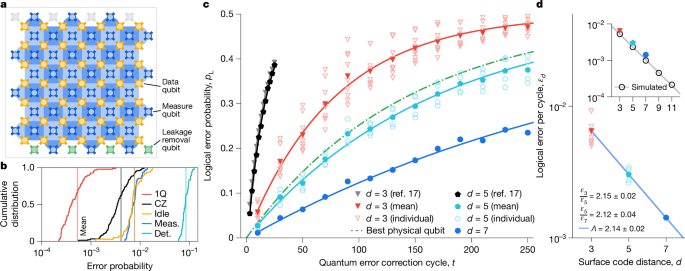
Quantum Error Correction Threshold Reached: A Nature paper demonstrated that a superconducting processor-based surface code method has entered the below-threshold regime, proving that logical error rates decrease exponentially as physical error rates rise.
-
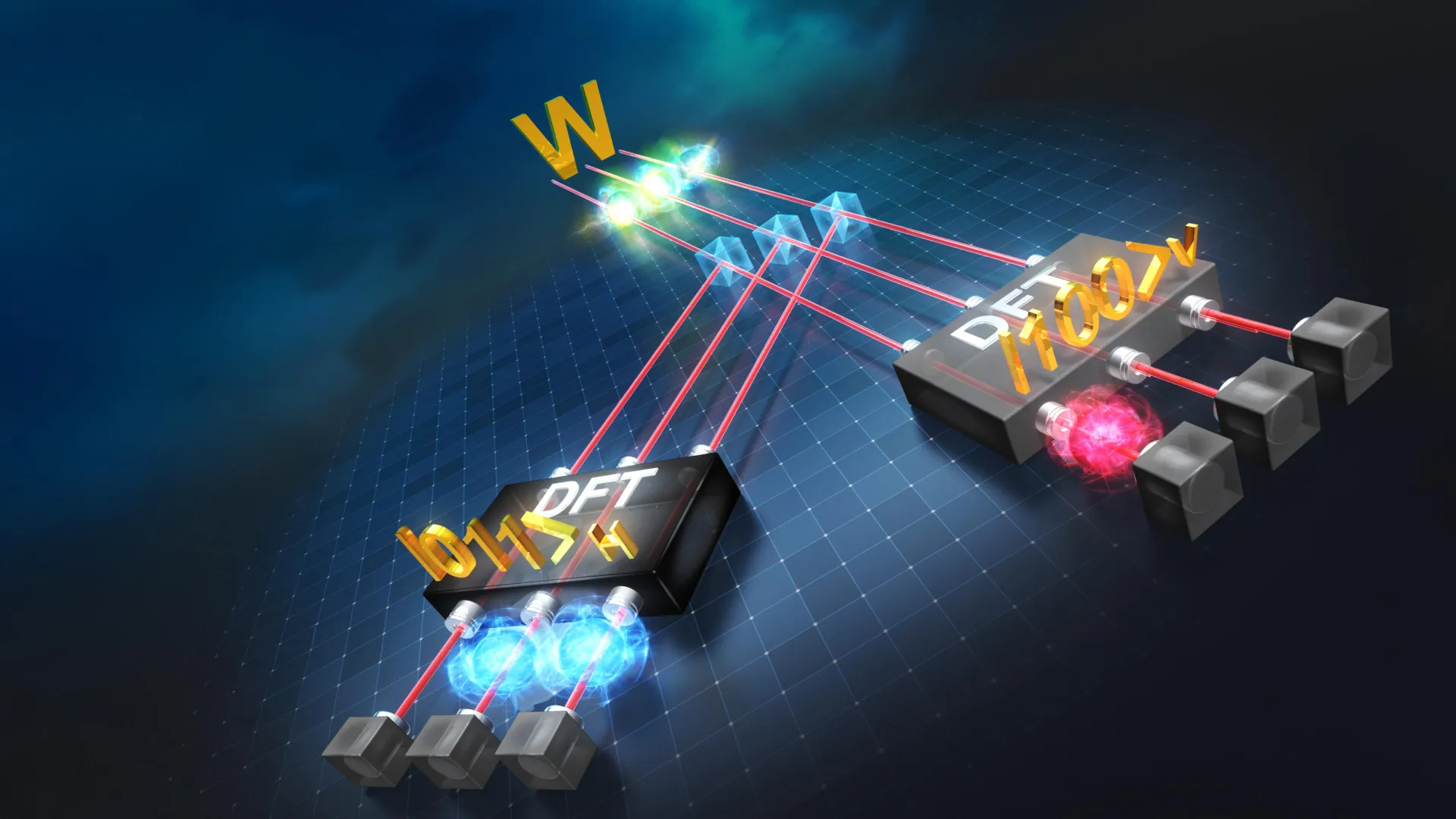
Quantum Entanglement Measurement Breakthrough: Scientists cracked a 25-year-old challenge by developing a method to identify multi-photon W states, unlocking new possibilities for quantum teleportation and entanglement measurement technologies.
-
U.S. DOE Calls for Fault-Tolerant Quantum Computers by 2028: The U.S. Department of Energy introduced a performance-based funding model offering a $250K prize for delivering a demo within 12 months.
🔬 Top Papers
Quantum Error Correction Below the Surface Code Threshold
- Authors / Affiliations: Published in Nature (Multi-institution collaboration including Google Quantum AI)
- Key Contributions: Demonstrated two below-threshold surface code memories using a superconducting processor. Achieved high efficiency via real-time decoding, proving that logical error rates decrease exponentially despite increasing physical error rates.
- Experimental Results: Reported a decrease in logical error rates ranging from 11-fold to 800-fold as the code distance increased. This is the first empirical demonstration of fault-tolerant quantum computing scalability.
- Significance: These results show that error correction—the core of building large-scale quantum computers—actually works in practice. With below-threshold phenomena, previously only predicted theoretically, now confirmed experimentally, the quantum industry is even more optimistic about achieving practical fault-tolerant systems by the mid-2030s.
Measuring W States: 25-Year Quantum Entanglement Challenge Solved
- Authors / Affiliations: International multi-institution collaboration (Reported by ScienceDaily, September 29, 2026)
- Key Contributions: Developed and experimentally validated a new method to identify multi-photon W states. W states are a crucial form of quantum entanglement that has proven notoriously difficult to measure for 25 years.
- Experimental Results: Established a technique that makes measuring complex entanglement systems significantly easier.
- Significance: Opened new doors for quantum teleportation, quantum cryptography, and advanced quantum information processing applications. This is also a vital step forward for the commercialization of photon-based quantum computing.
🖥️ Hardware & Industry Trends
IonQ Superion 256 (6th-Gen Platform)
- Announcement Details: IonQ unveiled its 6th-generation Superion quantum computing platform on September 8, with the first QPU scheduled for deployment at NVIDIA's Accelerated Quantum Research Center.
- Tech Specs: Superion 256 system. A trapped-ion quantum computer.
- Roadmap Position: Customer orders are currently open, with the first shipments expected in 2027. This marks a key milestone in IonQ's accelerated commercialization strategy.
.jpg)
Quantinuum Secures $100M in CHIPS R&D Funding
- Announcement Details: Finalized an agreement with the U.S. Department of Commerce (September 8, 2026). Supports scaling up trapped-ion quantum computer manufacturing and building a foundation for the U.S. quantum semiconductor industry.
- Tech Specs: Partnering with GlobalFoundries to manufacture next-generation ion trap devices and control electronics. Collaborating with Monarch Quantum to develop and manufacture reliable lasers and optical components.
- Roadmap Position: Part of the national strategy to expand U.S. quantum semiconductor manufacturing capacity. Supports Quantinuum's goal of achieving a universal fault-tolerant quantum computer by 2030.
🛡️ Error Correction Watch
-
Nature Paper: Achieving Below-Threshold Surface Codes: Superconducting processors showed an exponential decrease in logical error rates as code distance increased, achieving an 11-fold to 800-fold reduction in errors. This marks the first empirical proof of the technical feasibility of large-scale quantum computers.
-
Google Willow Processor Dynamic Surface Codes: Active improvements continue following its December 2024 announcement. Real-time decoding and error suppression technologies are constantly being refined, with complex algorithm testing currently underway in the below-threshold regime.
💰 Funding & Policy
-
Quantinuum Secures $100M CHIPS Funding: The U.S. Department of Commerce is backing the domestic manufacturing of trapped-ion quantum computers. A three-way collaborative framework with GlobalFoundries and Monarch Quantum diversifies the supply chain.
-
U.S. DOE Performance-Based Fault-Tolerant Quantum Computer Program: Requested the development of systems achieving a single logical error rate below 10^-3 by 2028. Offered a $250K prize to institutions delivering a prototype demo within 12 months. This signals a shift from pure basic research to a performance-driven development model.
💡 Algorithms & Applications
- Quantum Physics Applications: Successfully simulated a particle-forming process — using a 13-ion quantum simulator to recreate matter formation in the early universe (post-Big Bang). This suggests that quantum computers can serve as practical tools for exploring fundamental physics.
📊 By the Numbers
- IonQ Superion 256: 6th-generation platform, first shipments in 2027
- Quantinuum CHIPS Funding: $100M secured support
- Error Reduction Rate: 11x to 800x reduction in logical error rates (by surface code and code distance)
- U.S. DOE Prize: $250K (for institutions submitting a demo within 12 months)
- Quantum Entanglement Measurement: W-state identification technology achieved after 25 years
🔭 Trends to Watch
-
Accelerated Industrialization of Trapped-Ion Technology: With Quantinuum's $100M CHIPS funding and IonQ's commercialization roadmap running concurrently, the trapped-ion approach is catching up to superconducting and neutral atom approaches. Supply chain diversification (partnerships with GlobalFoundries and Monarch Quantum) signals the establishment of a domestic U.S. quantum semiconductor ecosystem.
-
Shift from Error Correction to Performance-Based Government Funding Models: The U.S. DOE's "fault-tolerant quantum computer by 2028" requirement marks a shift away from pure basic research toward performance-targeted commercial contracts. This reflects the industry's maturity while also introducing new pressures.
-
Resurgence of Photonic Quantum Technology: With breakthroughs in W-state measurement and quantum teleportation after 25 years, photon-based systems are catching eyes again. It's a sign of diversification away from solid-state qubit (superconducting, trapped-ion) dominance toward photonic and hybrid approaches.
✅ Action Items for Readers
-
For Researchers: Read the Nature error correction paper () to grasp the technical details of below-threshold implementation and the implications of the error reduction curves. This serves as a benchmark for reprioritizing current efforts to improve quantum gate fidelity.
-
For Practitioners: Pay attention to the expanded accessibility of dynamic surface code experiments via IonQ Superion and Google Willow APIs. Since open-source SDKs like Qiskit and Cirq are beginning to add below-threshold circuit compilation features, starting with local testing is recommended.
-
For Investors / Strategists: Quantinuum's secured $100M CHIPS funding and IonQ's 2027 customer shipping schedule signal the starting gun for the 2026–2027 quantum hardware commercialization race. It is essential to monitor the intensifying competition between trapped-ion supply chains (GlobalFoundries, Monarch) and superconducting manufacturing (IBM, Google), alongside the catch-up trends of photonic and neutral atom approaches.
🗓️ Upcoming Events & Papers
- American Physical Society (APS) Fall Meeting: Expected in late October (updates on quantum error correction and fault-tolerant statuses expected)
- Quantum 2 Business (Q2B) 2026: Scheduled for year-end (major stage for industry commercialization strategy announcements)
- arXiv quant-ph Notable Papers This Week: Multiple follow-up studies on below-threshold realizations and dynamic code improvements expected to be submitted.
This report cross-verified primary sources including Nature, ScienceDaily, official IonQ/Quantinuum announcements, The Register, and U.S. DOE policy documents. Covers materials published after 2026-09-24 only.
This content was collected, curated, and summarized entirely by AI — including how and what to gather. It may contain inaccuracies. Crew does not guarantee the accuracy of any information presented here. Always verify facts on your own before acting on them. Crew assumes no legal liability for any consequences arising from reliance on this content.
Powered by
