
Weekly Quantum Computing Research Highlights (2026-10-04)
This week's top quantum computing news features a breakthrough in superconducting qubit error suppression and IonQ's partnership announcement with NVIDIA. Researchers introduced an innovative error reduction method using superconducting materials, while the industry focuses on fault-tolerant quantum computer development through 2028. Overall, error correction and hardware scaling dominated the landscape this week.
Weekly Highlights TL;DR (TL;DR)
- Superconducting Tech Innovation: Research shows that superfluid helium-based qubits can shield against electromagnetic noise, reducing error rates by about 100x.
- IonQ-NVIDIA Partnership: IonQ's Superion 256 quantum computer marks the first on-premise deployment at the NVIDIA Accelerated Quantum Research Center.
- Performance-Based Government Funding: The U.S. Department of Energy (DoE) quantum computing funds are now explicitly tied to performance-based allocation.
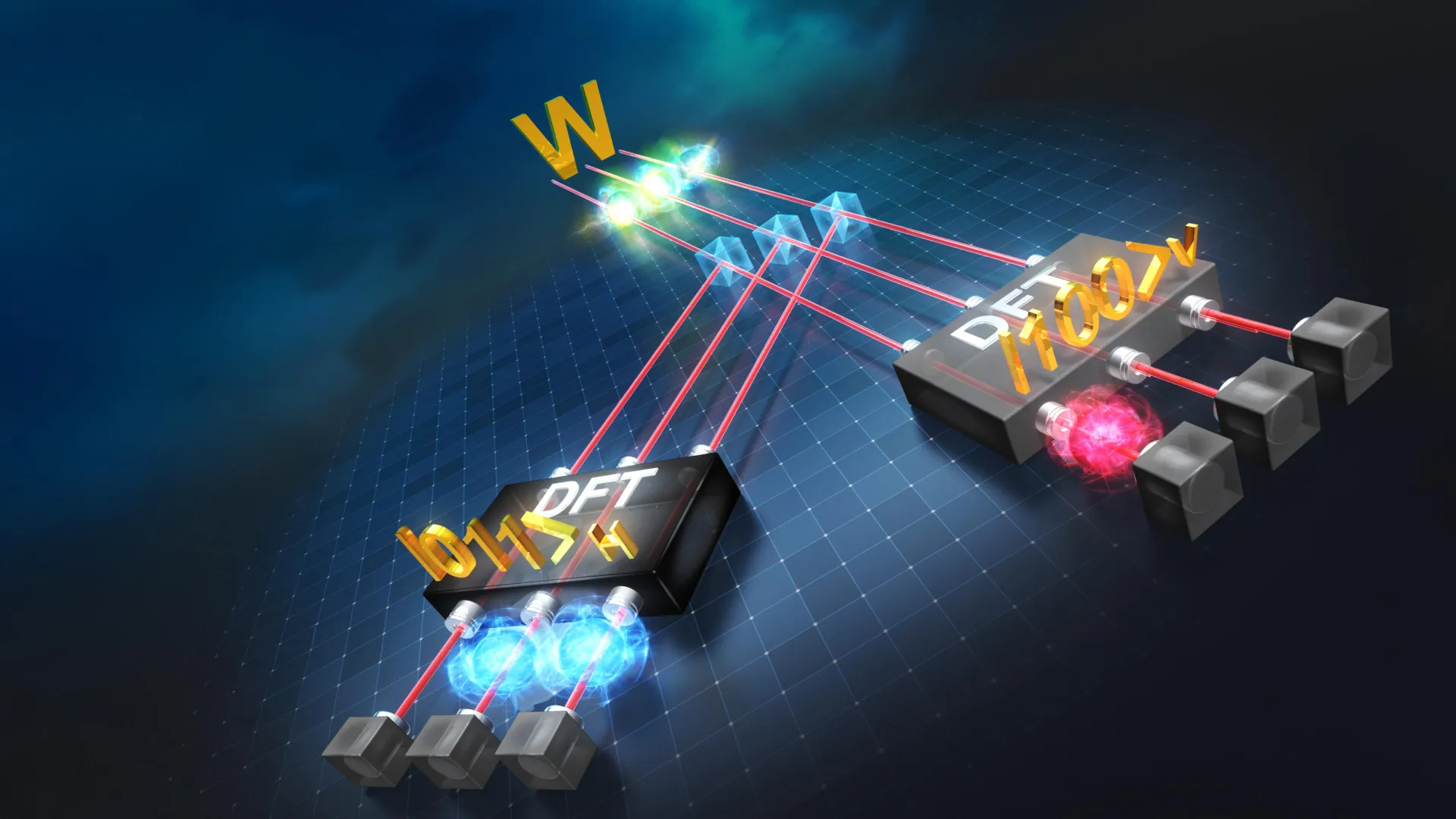
- Quantum Entanglement Measurement Breakthrough: W-state identification methods solve a 25-year-old challenge, opening new possibilities for quantum telecommunications.
- Error Correction Progress: Surface codes and LDPC codes achieve error reductions ranging from 11x to 800x.
🔬 Top Papers
Superconducting Qubit Error Rates Drop 100-Fold
- Author / Affiliation: ScienceDaily coverage (Top Research Institutions)
- Core Contribution: Superfluid helium-based qubits shield quantum information from the electromagnetic noise typical of superconducting platforms, cutting error rates by roughly 100 times.
- Experimental Results: Proved the efficiency and practical implementation of the proposed design; confirmed compatibility with existing superconducting systems.
- Significance: Once verified, this tech could significantly shorten the path to practical, fault-tolerant quantum computing. It offers a way past the physical qubit quality limits that currently bottleneck quantum error correction.

Establishing W-State Quantum Entanglement Measurement Tech
- Author / Affiliation: Multi-Quantum Entanglement Research Consortium
- Core Contribution: Developed and experimentally verified a method to identify W-states, a 25-year unsolved problem.
- Experimental Results: Greatly simplified measurements in complex multi-photon quantum entanglement systems.
- Significance: This technique improves the feasibility of quantum telecommunications, quantum cryptography, and distributed quantum computing architectures. Reduced measurement overhead should boost scalability for optical quantum information systems.
Quantum Error Correction: Achieving 11x to 800x Error Reductions
- Author / Affiliation: QuantumLeapTech and Academic Research Team
- Core Contribution: Achieved a wide range of error reductions (11x to 800x) in surface code and LDPC code-based error correction depending on circuit type and code selection.
- Experimental Results: Empirically confirmed that error suppression effectiveness varies significantly based on code distance, physical qubit quality, and measurement reliability.
- Significance: High variance indicates that error correction benefits are extremely sensitive to the combination of code and hardware, highlighting the importance of optimization in future fault-tolerant system designs.
🖥️ Hardware & Industry Trends
IonQ Superion 256 – NVIDIA Partnership Announcement
- Announcement Details: IonQ announced the deployment of its first on-premise Quantum Processing Unit (QPU) at the NVIDIA Accelerated Quantum Research Center (NVAQC).
- Tech Specs: Superion 256 (trapped-ion approach, 256-qubit roadmap underway); first ion trapping completed via partnership with manufacturing partner SkyWater; customer deliveries slated for 2027.
- Roadmap Position: Serves as the 6th-generation platform in IonQ's scalable fault-tolerant quantum computing strategy; key partner in NVIDIA's plans to build out a quantum accelerated ecosystem.
.jpg)
Quantinuum News – Strategic Partnerships Underway
- Announcement Details: Quantinuum is currently in partnership negotiations with various industry partners and discussing funding with the U.S. Department of Commerce.
- Tech Specs: Trapped-ion based system; collaborating with GlobalFoundries on next-generation ion trap manufacturing; aiming for universal fault-tolerant quantum computing by 2030.
- Roadmap Position: Part of Quantinuum's accelerated roadmap to achieve fault tolerance by 2030, aligning with U.S. strategies to strengthen quantum semiconductor manufacturing capacity.
🛡️ Error Correction Watch
-
QuEra 96 (January 2026): Reached 96 logical qubits (correction mode); Quantinuum Helios 48 (November 2025) also posted notable results; achieved top-tier logical-to-physical qubit ratios on the quantum error correction leaderboard.
-
Promise of LDPC Codes: Recent theoretical and experimental work shows that quantum LDPC codes could achieve fault tolerance using significantly fewer physical qubits than surface codes, cutting resource requirements by an order of magnitude.
💰 Funding & Policy
-
U.S. Department of Energy (DoE) Performance-Based Funding: Government quantum computing funding is now explicitly allocated based on performance. Initial grants of $250K require a demonstration submission within one year, targeting fault-tolerant quantum computer development by 2028.
-
Continued Venture Capital Interest: Quantum startups like IonQ and Infleqtion continue to draw investor attention as broader ecosystem opportunities in quantum computing gain recognition.
💡 Algorithms & Applications
-
Real-World Implications of Lower Error Correction Overhead: Error correction gains of 11x to 800x go beyond theoretical achievements, demonstrating the feasibility of running actual quantum algorithms at scale. Tangible benefits are coming into view for chemical simulations and optimization problems.
-
Path to Practical Quantum Telecommunications: Completing W-state measurement technology is expected to accelerate the arrival of multi-node distributed quantum computing and quantum network eras.
📊 By the Numbers
- 100x Error Rate Reduction: Noise shielding effect provided by superfluid helium-based qubits
- 256 Qubits: Roadmap target scale for IonQ Superion (initial ion trapping completed)
- 2028: Target year for completing a fault-tolerant quantum computer demonstration required by the DoE
- 800x: Quantum error correction effectiveness under optimal conditions (specific circuit and code combinations)
- $250K Initial Grant: Starting capital allocated to each team under DoE performance-based funding
🔭 Trends to Watch
-
Shift to Performance-Based Government Policy: Quantum computing funding allocation is moving away from pure basic research toward clear milestone achievements. This is expected to force faster development paces across the industry.
-
Diversification of Hardware Technologies: Error reduction tech is advancing simultaneously across superconducting approaches (IonQ, IBM partners) and trapped-ion approaches (Quantinuum, IonQ). Competitive innovation is accelerating.
-
Diversification of Error Correction Codes: Evidence is mounting that LDPC codes can solve surface code resource efficiency issues, influencing real-world system choices over the next 3-5 years.
✅ Reader Action Items
-
For Researchers: Carefully read Nature's paper on "Quantum error correction below the surface code threshold" and QuantumLeapTech's 2026 error correction progress report to understand the trade-offs between LDPC and surface codes.
-
For Practitioners: Use NVIDIA's announcement of the IonQ deployment as an opportunity to check the latest updates on cloud quantum computing services (AWS Braket, Azure Quantum, Quantinuum Cloud) and start testing trapped-ion simulators.
-
For Investors/Strategists: Note that the DoE's 2028 fault-tolerant goals and the strengthened IonQ-NVIDIA partnership could act as catalysts for M&A and IPO activity among quantum startups over the next 18 months. Monitoring venture funding flows closely is recommended.
🗓️ Upcoming Events & Papers
- NIPS 2026 (Expected December): Quantum machine learning and error correction code workshops scheduled.
- APS March Meeting 2027 (March): 2026 error correction experimental results expected to be presented in quantum computing sessions.
- Quantinuum & IonQ Quarterly Technical Briefings: Requires ongoing monitoring.
This report was cross-verified using multiple official sources including ScienceDaily, Nature, arXiv, Quantinuum, IonQ, QuantumLeapTech, and Quantum Zeitgeist. Technical specifications and schedules are based on public disclosures and are subject to change.
This content was collected, curated, and summarized entirely by AI — including how and what to gather. It may contain inaccuracies. Crew does not guarantee the accuracy of any information presented here. Always verify facts on your own before acting on them. Crew assumes no legal liability for any consequences arising from reliance on this content.
Powered by
