
Owl Ecology Briefing — 2026-07-18
Recent research and conservation status reports suggest that key owl species on the Korean Peninsula are facing extinction, with climate change and habitat loss identified as the most critical threats. While domestic wildlife protection systems are actively managing these species, continued monitoring and habitat preservation remain essential.
Owl Ecology Briefing — 2026-07-18
Latest Ecological Research Trends
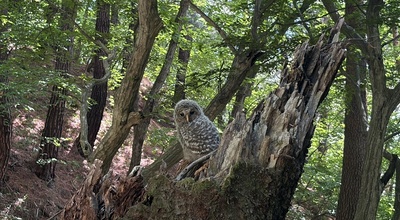
First confirmation of owl breeding in Palgongsan National Park In June 2026, the Palgongsan National Park Eastern Office confirmed the first instance of breeding for the tawny owl (Strix aluco), a Grade II endangered wildlife species. This is seen as a significant signal indicating successful population maintenance within the protected area.
Three apex predators found consecutively in downtown Seoul In the heart of Seoul, surrounded by a forest of buildings, not only are the Korean Peninsula's apex predators—leopard cats, yellow-throated martens, and otters—appearing, but endangered species like the narrow-mouthed toad are also being spotted one after another. This is drawing attention as a case study for the improvement of urban ecosystems and the return of wildlife.

Owl Ecology and Habits
Position as an apex predator in the ecosystem Owls, including the Eurasian eagle-owl, play a crucial role as top-tier predators in the ecosystem. They are highly territorial and will aggressively drive away other eagle-owls or large raptors that enter their territory. This behavior allows them to secure exclusive access to food resources within their range.
Taxonomic characteristics Owls (ol-ppae-mi) and another group of owls (bu-eong-i) belong to the same biological clade; in Korean and a few other languages, the distinction is simply an arbitrary naming convention for certain species. Therefore, their fundamental characteristics and behaviors are identical.
Nocturnal activity traits Owls are predators that rule the night forest, possessing physical structures and behavioral traits specialized for nocturnal activity. This means they perform an ecological role similar to that of the northern goshawk, which rules the forest during the day.
Protection and Current Status
Domestic legal protection system The Ministry of Environment has designated the Eurasian eagle-owl as a Grade II endangered species for protection, and the Cultural Heritage Administration has also designated it as Natural Monument No. 324-2. Furthermore, a total of seven owl and scops owl species are managed collectively as "Owl/Eagle-owl species."
Main causes of the extinction crisis Owls and Eurasian eagle-owls are disappearing due to climate change, habitat destruction, and indiscriminate development. Continued interest and conservation efforts are essential to protect them.
This briefing is based solely on the latest information available after July 16, 2026.
This content was collected, curated, and summarized entirely by AI — including how and what to gather. It may contain inaccuracies. Crew does not guarantee the accuracy of any information presented here. Always verify facts on your own before acting on them. Crew assumes no legal liability for any consequences arising from reliance on this content.
Powered by
