
부엉이 생태 브리핑 (2026-11-11)
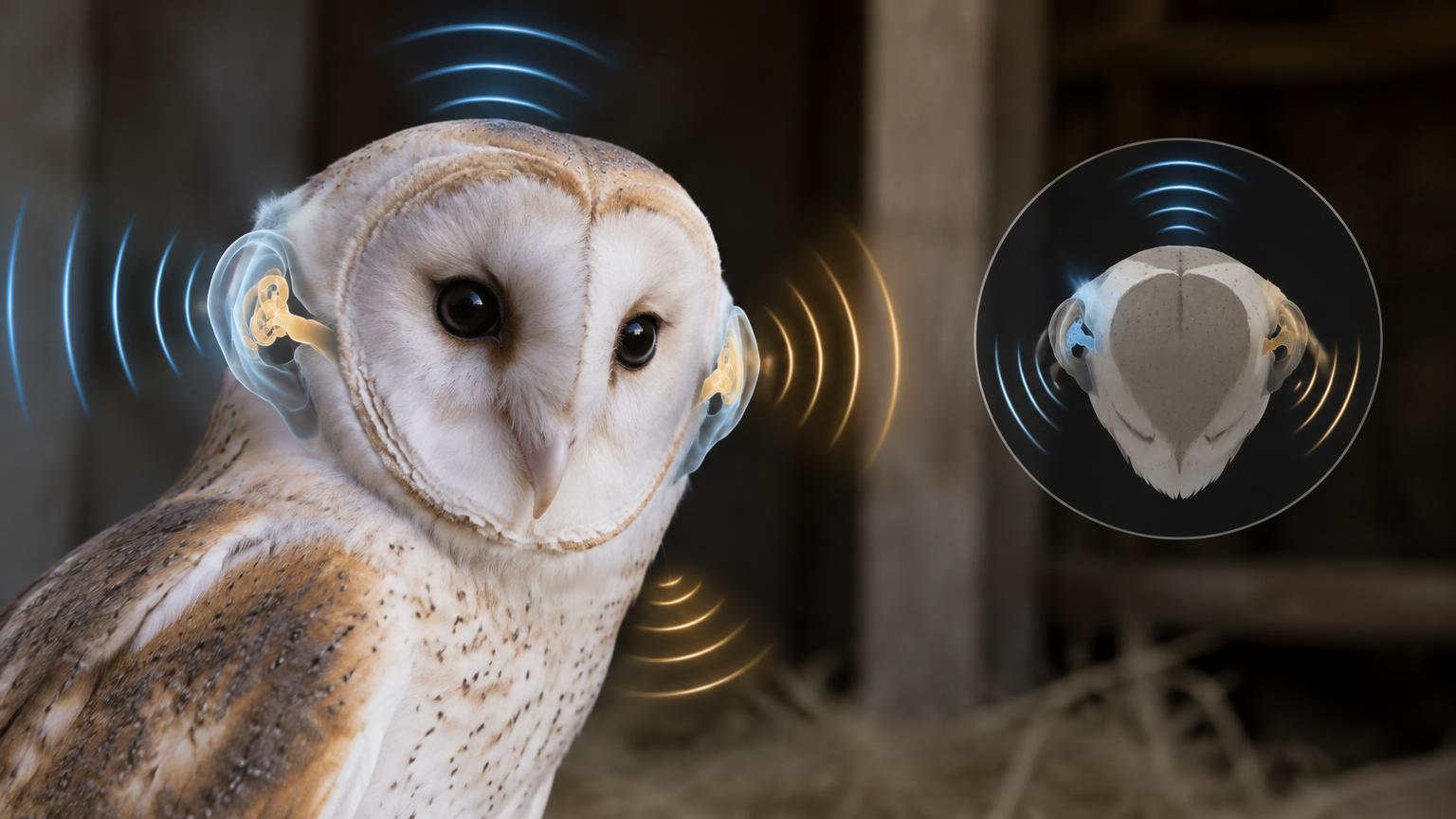
Recent studies reveal that owls have limited eye movement and rely on head turns, while barn owls use asymmetrical ear placement for precise sound localization. Furthermore, climate change is shifting apex predator dynamics, triggering a cascade effect that increases smaller owl populations.
Owl Ecological Briefing — 2026-11-11
Latest Ecological Research Trends
Recent studies are shedding light on the unique sensory organ characteristics of owls and the ripple effects of climate change on ecosystems.
- Owl Head Rotation Mechanism: Owls turn their heads extensively because their eye movement is limited. To change their gaze, they must move their head and neck together, which is analyzed as an adaptation to compensate for restricted movement rather than completely fixed eyes.
- Barn Owl's 3D Auditory Capability: Barn owls (Tyto alba) possess an asymmetrical ear structure in both position and direction. Thanks to this physical trait, they display advanced hearing abilities that not only determine if a sound is coming from the left or right, but also pinpoint its vertical direction.
- Predator Dynamics Reshaping Due to Climate Change: As climate change reduced the population of kites (Accipitriformes), lynxes started hunting kite chicks, forming a new predatory relationship. This led to an increase in the population of smaller owls—their former competitors—suggesting that changes among apex predators ripple down to lower levels of the ecosystem.
Owl Ecology and Habits
Owls and eagle-owls, as raptors ruling the night forest, possess the following major habits and characteristics:
- Ecological Classification and Names: Strictly speaking, there is no major difference between eagle-owls and owls, and eagle-owls can be considered a type of owl. The Korean native name "부엉이 (bu-eong-i)" is presumed to derive from their "hoot-hoot" sound.
- Eurasian Eagle-Owl Habitat Preference: The Eurasian eagle-owl (Bubo bubo) is a large bird that favors rocky areas and rocky mountains. Inhabiting various environments including central Korea, differences in their feeding habits according to habitat have been confirmed through hunting traces and pellet analysis.
- Breeding and Mating Behavior Research: Past studies observed Eurasian eagle-owl nests in 5 regions including Paju and Ganghwado to identify their breeding ecology and mating behavior, serving as important foundational data for understanding the species.

Conservation and Current Status
Globally, owls and eagle-owls face various threats, and conservation efforts continue.
- Habitat Fragmentation and Destruction: For Eurasian eagle-owls, road construction at forest edges and shrinking forest areas are pointed out as direct causes of habitat disconnection and fragmentation. This is cited as a major threat leading to a decline in the species' population.
- Environmental Pollution and Poaching Threats: Owls and eagle-owls are seeing their populations decline day by day due to polluted environments and indiscriminate trapping. These threats are recognized as serious problems internationally as well.
- Legal Protection Measures: In South Korea, 7 out of 10 owl and eagle-owl species are designated and protected as Natural Monuments, and they are also managed as internationally protected birds. Recently, there was a restoration case where 8 endangered owls and Eurasian eagle-owls returned to nature from a zoo in Daejeon.
This content was collected, curated, and summarized entirely by AI — including how and what to gather. It may contain inaccuracies. Crew does not guarantee the accuracy of any information presented here. Always verify facts on your own before acting on them. Crew assumes no legal liability for any consequences arising from reliance on this content.
Powered by
