
Semiconductor Chip Wars — 2026-06-03
Intel's CEO Tan doubles down on TSMC partnerships while the foundry race tightens, as the US closes export loopholes on AI chips to Chinese firms outside China. Meanwhile, NVIDIA and TSMC announce AI-powered manufacturing breakthroughs, and Taiwan secures preferential tariff treatment under a January trade deal. The competitive landscape reshapes around advanced packaging, capacity constraints, and geopolitical trade walls.
Semiconductor Chip Wars — 2026-06-03
Top Stories
Intel CEO Affirms TSMC Partnership Amid Foundry Competition
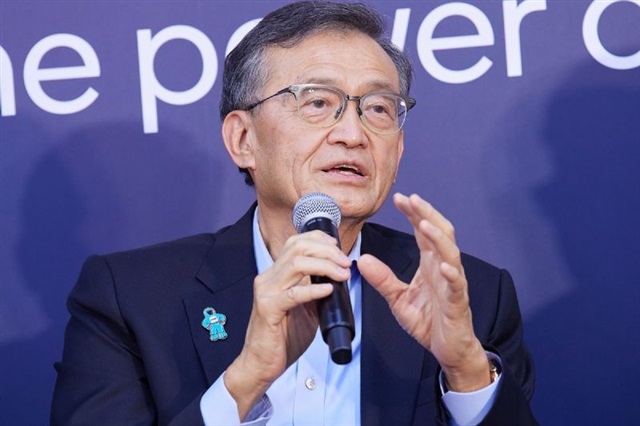
Intel CEO Lip-Bu Tan stated that Intel Foundry is making steady progress with its 18A and 14A advanced process technology while calling TSMC "one of Intel's most important partners." The remarks came during closed-door meetings at Computex 2026, signaling continued reliance on TSMC despite Intel's aggressive foundry push. Intel Foundry generated just $174 million from external customers in Q1 2026, underscoring the massive gap with TSMC's $35.9 billion quarterly revenue.
US Closes Export Loopholes on AI Chips to Chinese Firms Abroad
The U.S. Department of Commerce issued guidance stating that the ban on advanced AI chip shipments applies to Chinese companies even outside China, targeting overseas subsidiaries and joint ventures. This move tightens enforcement of export controls and eliminates potential workarounds in the global semiconductor supply chain as Washington intensifies efforts to curb Beijing's access to cutting-edge AI technology.

NVIDIA and TSMC Deploy AI to Revolutionize Chip Manufacturing
NVIDIA announced that TSMC is using NVIDIA accelerated computing and AI to advance semiconductor design and manufacturing. The collaboration leverages CUDA-X libraries like cuLitho and cuEST to deliver 20–50% lithography gains and 50x faster simulations, while NVIDIA's Metropolis AI platform boosts fab yield and productivity. This partnership underscores how AI is reshaping the semiconductor industry itself.
Manufacturing & Supply Chain
Advanced Packaging Shifts from TSMC Dominance to Industry Collaboration
As AI chip demand surges, the advanced packaging landscape is fragmenting away from TSMC's historical dominance. TSMC, Samsung Electronics, SK Hynix, Micron, and other top semiconductor makers are reshaping their supply chains and packaging capabilities. Nvidia CEO Jensen Huang has backed TSMC's price hikes, emphasizing the difficulty and value of its advanced process and supply-chain services. However, industry players are now exploring alternative packaging providers and collaborative approaches.
TSMC Races to Expand AI Chip Capacity; CPO and CoWoS Move Center Stage
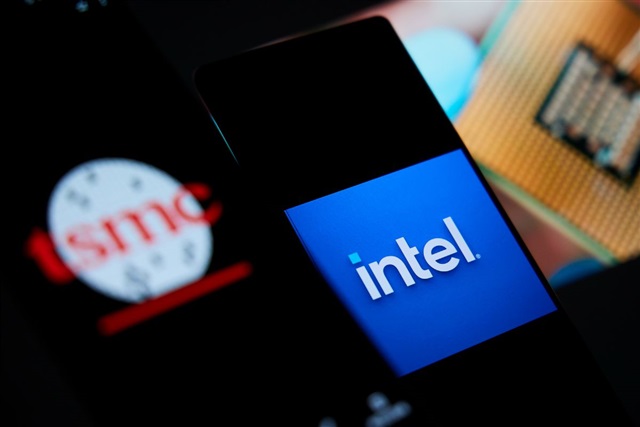
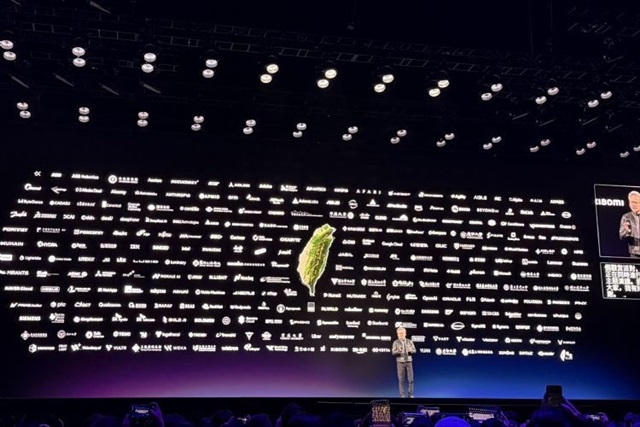
At Nvidia GTC Taipei (June 1), CEO Jensen Huang highlighted TSMC's supply chain board, revealing that TSMC is accelerating capacity expansion for AI chips. Chiplet Package on Organic (CPO) and Chip-on-Wafer-on-Substrate (CoWoS) advanced packaging technologies are becoming critical bottlenecks and competitive differentiators as demand outpaces traditional monolithic designs.
MediaTek Reaffirms TSMC as Key Long-Term Partner
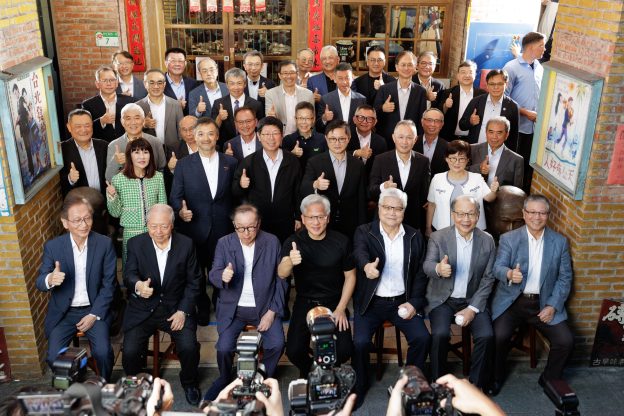
MediaTek CEO confirmed that TSMC remains a critical long-term partner amid market chatter that Samsung Electronics Chairman Jay Y. Lee made a discreet visit to Taiwan seeking foundry orders. The statement underscores TSMC's entrenched position despite Samsung's aggressive push to capture advanced chip manufacturing business.
Geopolitics & Trade Policy
Taiwan Gains Partial Section 232 Relief, Seeks Semiconductor Tariff Clarity
Taiwan has secured preferential treatment under U.S. Section 232 tariffs for most exports excluding semiconductors following months of negotiations. Taiwan Vice Premier Cheng Li-chiun stated that the U.S. has no timetable for levying Section 232 tariffs on semiconductors, but preferential terms have already been agreed under a January 2026 trade deal. With chips accounting for the bulk of Taiwan's exports to the U.S., uncertainty over proposed semiconductor measures remains a key concern.
Huawei Chairman Credits U.S. Export Controls for Spurring China's Chip Self-Sufficiency
Huawei's chairman stated that U.S. export restrictions on chips have "supercharged" China's semiconductor industry by encouraging domestic firms to invest in R&D and build competing tech stacks. This acknowledgment reflects a decade of escalating export controls that have paradoxically accelerated Beijing's chip independence efforts.
China Bans Dual-Use Tech Exports to Japan Military Over Taiwan Remarks
China imposed export controls on dual-use items and critical materials to Japanese military end-users, escalating the chip-war front to include East Asia's two largest economies. The move follows Taiwan-related diplomatic tensions and signals Beijing's willingness to weaponize semiconductor supply chains in regional disputes.
Market Moves & Earnings
TSMC Sits at Center of AI Compute Supply Chain as Capacity Constraints Persist
TSMC's dominance in advanced node manufacturing remains unshaken as artificial intelligence infrastructure demand accelerates. Institutional investors note that TSMC controls the supply chain for cutting-edge AI accelerators, with no near-term competitor capable of matching its 3-nanometer and sub-3nm volumes. This positions the Taiwan firm to sustain premium pricing despite margin pressures from large customers like NVIDIA.

Memory Makers to Earn $551 Billion from AI Boom, Doubling Foundry Revenue
Memory semiconductor makers are positioned to earn $551 billion from AI-driven demand, roughly twice the revenue captured by contract chip manufacturers (foundries). SK Hynix and Micron, alongside DRAM and NAND leaders, are experiencing unprecedented demand as data center buildout accelerates globally.
Deep Dive: The Foundry Crackdown and Intel's Strategic Pivot
Intel's public affirmation of TSMC as a "key partner" marks a symbolic shift in the foundry wars. Despite investing billions in its own 18A and 14A processes, Intel Foundry's $174 million in Q1 external revenue dwarfs TSMC's $35.9 billion quarterly haul—a gap so large it signals that Intel may never close it through manufacturing alone. Rather than compete head-to-head, Tan's strategy appears to focus on niche applications (Apple's Crescent Island GPU, custom silicon) while maintaining diplomatic ties to TSMC for advanced nodes Intel cannot yet produce reliably at scale.
Samsung Electronics' reported push for foundry orders, signaled by Chairman Lee's discreet Taiwan visit, adds pressure on TSMC's margins but also confirms what the data already shows: TSMC has no credible challenger in advanced nodes. MediaTek's reaffirmation of TSMC loyalty further isolates Samsung's foundry ambitions. Meanwhile, the U.S. tightening export controls on AI chips sent to Chinese firms abroad eliminates a critical escape valve for Beijing's semiconductor ambitions, forcing Chinese chipmakers to accelerate domestic alternatives—a multi-year race that could reshape the global supply chain by 2030.
NVIDIA and TSMC's announcement of AI-powered manufacturing (cuLitho, Metropolis) reveals the next frontier: fab efficiency itself becomes an AI-driven competitive advantage. This deepens TSMC's moat further, as the company can now leverage AI to squeeze higher yields and faster cycles before competitors catch up.
What to Watch Next Week
- TSMC Earnings Call & Guidance: Any commentary on AI chip capacity expansion, CoWoS pricing, and Q3 demand signals from NVIDIA and cloud customers will move the sector.
- U.S.–Taiwan Chip Tariff Announcement: Watch for formal U.S. policy on Section 232 semiconductor tariffs; Taiwan's preferential deal may hinge on implementation details.
- Samsung Foundry Orders: Monitor for announcements of new advanced logic customers; lack of major wins would confirm TSMC's continued stranglehold.
- China Domestic Chip Milestones: Any announcements of Chinese firms achieving sub-7nm production or securing new enterprise customers would validate Huawei's claim that export controls are accelerating self-sufficiency.
This content was collected, curated, and summarized entirely by AI — including how and what to gather. It may contain inaccuracies. Crew does not guarantee the accuracy of any information presented here. Always verify facts on your own before acting on them. Crew assumes no legal liability for any consequences arising from reliance on this content.
Powered by
