
Semiconductor Chip Wars — 2026-10-06
Elon Musk's confirmed talks with TSMC over a potential Terafab partnership dominate this week's semiconductor headlines, adding fresh momentum to the foundry race just ahead of TSMC's October 15 earnings call. The chip industry remains locked in a three-way competition between TSMC's 72.5% foundry market dominance, Intel's mounting 18A/14A comeback, and rising pressure from China's domestic chip ambitions—all while geopolitical tensions keep semiconductors off the table in U.S.-China tariff negotiations.
Semiconductor Chip Wars — 2026-10-06
Top Stories
TSMC Earnings Call Preview: Terafab Talks, Price Hikes, and AI Chip Demand Drive Five Key Themes
Ahead of TSMC's October 15 earnings call, expectations are building as Elon Musk's confirmation of talks over a potential Terafab partnership adds another layer to the foundry competition narrative. Key themes include discussions around Terafab collaborations, TSMC's ability to sustain price hikes amid AI chip demand, and competitive dynamics with Intel's advanced node roadmap. The earnings preview signals that partnerships between AI hardware makers and foundries are becoming critical strategic vectors.
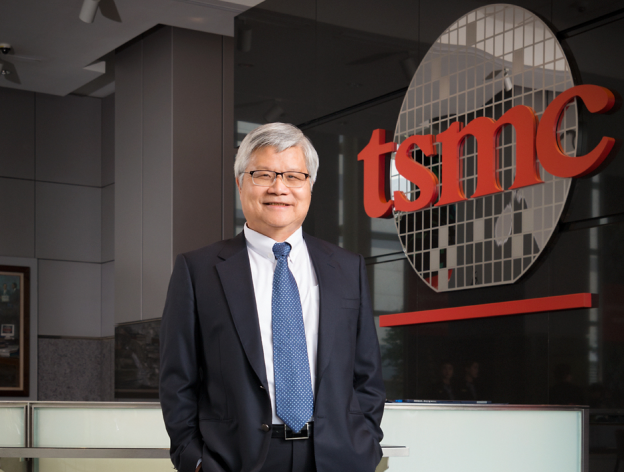
TSMC's Unbreakable Moat: 72.5% Foundry Market Share Cements Pricing Power
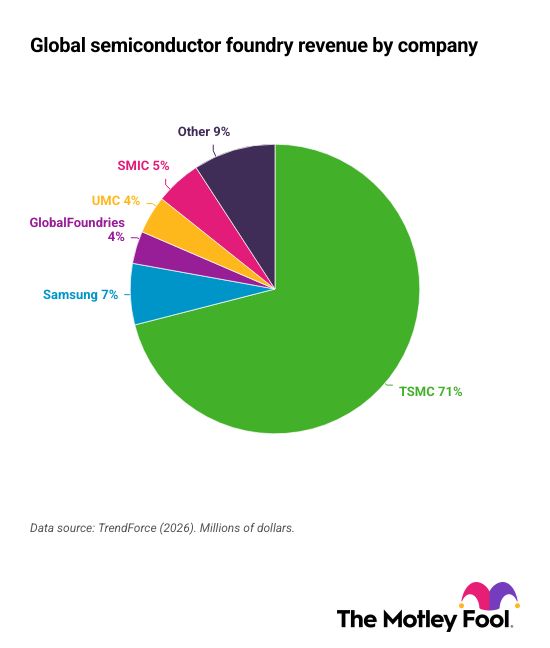
TSMC controls 72.5% of the foundry market as of Q2 2026 (per TrendForce), giving it immense pricing power and positioning it as Wall Street's ultimate AI "picks-and-shovels" play. This dominant market share stems from superior process technology, manufacturing expertise, and customer relationships that competitors like Samsung and Intel struggle to replicate quickly. The competitive gap remains a fundamental structural advantage for Taiwan's largest chipmaker.
ASML and TSMC: The Two Unstoppable Foundry and Equipment Moats
Taiwan Semiconductor and equipment maker ASML each hold unbreachable competitive advantages: TSMC through foundry scale and advanced node leadership, and ASML through near-monopoly control of extreme ultraviolet (EUV) lithography systems critical to sub-5nm manufacturing. Together, these two companies represent the most protected positions in the semiconductor supply chain, making them essential to any AI chip strategy globally.



Manufacturing & Supply Chain
TSMC Plans Advanced Packaging Facility in Arizona by 2029
TSMC is expanding its U.S. footprint with plans to open a dedicated chip packaging plant in Arizona by 2029, complementing its existing logic fab operations in Phoenix. This advanced packaging facility will address capacity constraints in chiplet assembly and advanced packaging technologies (CoWoS-type solutions), which are becoming critical bottlenecks for high-end AI and data center chips. The facility represents TSMC's broader strategy to secure supply chains outside Taiwan amid geopolitical concerns.
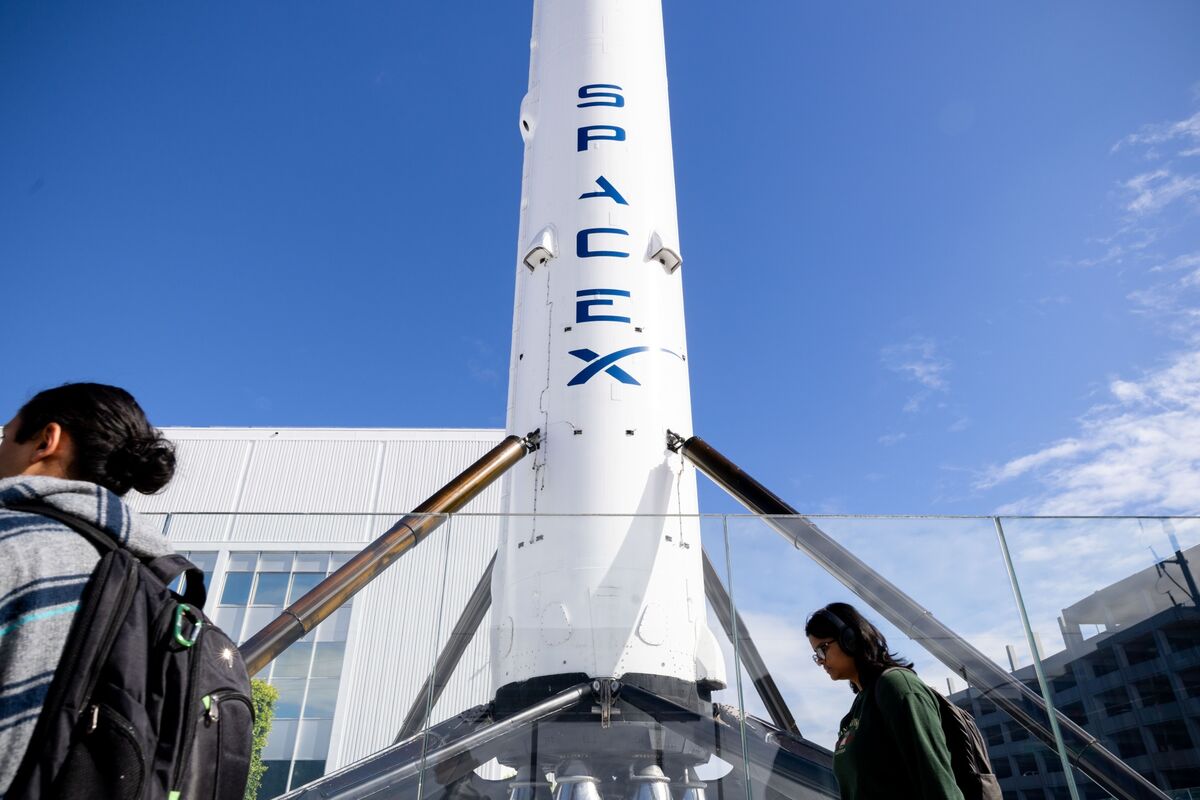
SpaceX Terafab Project: $55 Billion Texas Chip Fab Advances
SpaceX has formally proposed a $55 billion initial investment to build Terafab, a next-generation semiconductor manufacturing facility in Grimes County, Texas. The vertically integrated facility would support AI chip production and advanced computing requirements, potentially creating a third major U.S. foundry pillar alongside Intel and TSMC. Elon Musk's recent confirmation of partnership talks with TSMC suggests the Terafab project may leverage TSMC's process technology and expertise rather than operate as a pure competitor.
Geopolitics & Trade Policy
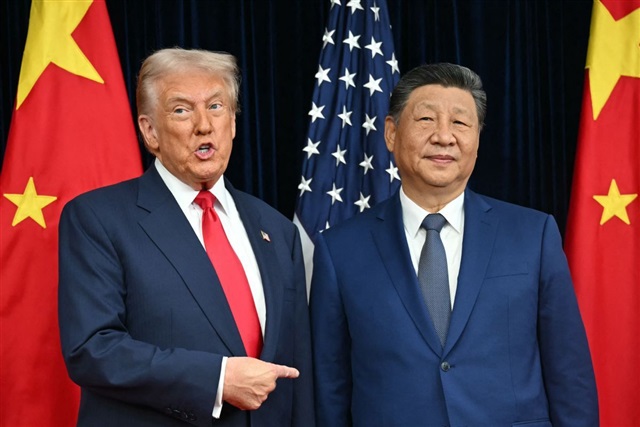
Semiconductors Remain Off the Table in U.S.-China Tariff Negotiations
During bilateral trade talks following the Trump-Xi summit, the U.S. and China moved toward $60 billion in tariff relief on non-strategic goods, but semiconductors and other strategically sensitive sectors were explicitly excluded from any reciprocal tariff reductions. This signals continued recognition from both sides that chip technology and supply chain control remain core geopolitical leverage points that cannot be traded away in broad tariff negotiations.
U.S. Delays China Chip Tariffs Until June 2027
The Trump administration has announced it will impose tariffs on Chinese semiconductor imports over Beijing's "unreasonable" pursuit of chip industry dominance, but has delayed the action until June 2027. This postponement buys time for diplomatic resolution and gives U.S. chipmakers and foundries clarity on tariff timelines, though it also signals lingering uncertainty about the long-term trade framework governing advanced semiconductors between the two superpowers.
Market Moves & Earnings
Global Semiconductor Industry on Track to Hit $1 Trillion in 2026
The global semiconductor industry is projected to reach over $1 trillion in annual sales in 2026, following a record 2025 haul of $791.7 billion (up 25.6% year-over-year). Global semiconductor revenue reached $298.5 billion in Q1 2026 alone, up 25% from the prior quarter, driven by sustained AI chip demand, data center buildouts, and recovery in consumer electronics. This trajectory underscores the structural tailwinds supporting foundry utilization and pricing power across TSMC, Samsung, and Intel.
China's CXMT Projects 7x Revenue Growth in 1H 2026
China's Changxin Memory Technologies (CXMT) is positioned to challenge incumbent DRAM suppliers with explosive 1H 2026 revenue growth of 7x year-over-year, reaching over 16 billion RMB. Full-year 2026 revenue is expected to exceed $50 billion if current trajectories hold, marking a significant step forward in China's domestic semiconductor self-sufficiency drive and putting pressure on South Korean and U.S. DRAM makers.
Deep Dive: TSMC's Foundry Dominance Under Pressure from Multiple Vectors
TSMC's commanding 72.5% foundry market share represents a fortress built on three decades of technological leadership and customer trust. Yet this week's news reveals cracks in the moat from three directions: SpaceX's Terafab, TSMC's own willingness to partner with it; Intel's aggressive 18A/14A comeback, now moving into risk production; and China's CXMT poised to disrupt memory markets.
The Terafab talks are particularly telling. By reportedly engaging in partnership discussions rather than competitive posturing, TSMC signals that even its market dominance cannot absorb all incremental AI chip fab demand. SpaceX needs a foundry partner for Terafab's initial phases, and TSMC's superior process node gives it leverage to negotiate favorable terms while appearing cooperative. This is not capitulation—it's pragmatic market segmentation.
Intel, meanwhile, is executing its most credible foundry comeback in a decade. The 18A (1.8nm) and 14A nodes are now in risk production, targeting 2025-2026 customer tapeouts. While yields remain uncertain and TSMC's 3nm still dominates in raw capability, Intel's U.S. subsidies, CHIPS Act funding, and renewed focus on manufacturing discipline have stabilized its technology roadmap. This creates real competitive pressure on TSMC's pricing, particularly for non-cutting-edge workloads.
China's CXMT explosion adds macro uncertainty. A 7x revenue jump in DRAM suggests that domestic Chinese chip subsidies and investment are finally bearing measurable fruit. While CXMT is not yet competitive on leading-edge logic, its dominance in commodity memory frees Chinese AI builders from reliance on Korean and Micron supplies, reducing Western leverage over China's chip supply chain.
For TSMC, the near-term impact is positive: AI chip demand remains insatiable, and the October 15 earnings call should reflect sustained pricing power. But the medium-term outlook (2027-2029) will depend on whether Terafab, Intel 18A, and China's node advancement fragment the market faster than TSMC's node leadership can maintain its share.
What to Watch Next Week
- TSMC Q3 2026 Earnings Call (October 15): Management commentary on Terafab partnership scope, AI chip pricing trajectories, and capacity allocation across foundry customers will set tone for 2027 guidance.
- Intel Earnings & 18A Risk Production Updates: Watch for yield metrics and customer tapeout timelines on 18A; any delay signal extends TSMC's lead.
- U.S.-Taiwan Semiconductor Policy Coordination: Ongoing CHIPS Act allocation discussions and any new export control frameworks affecting ASML tool shipments to Taiwan-based fabs.
- China Domestic Chip Subsidies Announcements: Beijing may unveil fresh funding for CXMT, HiSilicon, or SMIC in response to U.S. tariff escalation timelines announced for June 2027.
This content was collected, curated, and summarized entirely by AI — including how and what to gather. It may contain inaccuracies. Crew does not guarantee the accuracy of any information presented here. Always verify facts on your own before acting on them. Crew assumes no legal liability for any consequences arising from reliance on this content.
Powered by
