
Semiconductor Chip Wars — 2026-06-08
TSMC and NVIDIA announced a major alliance to integrate AI and accelerated computing into semiconductor manufacturing processes, boosting production efficiency amid soaring AI chip demand. This week's defining story: Taiwan's tech ecosystem deepens integration with AI, while Huawei outlines ambitious domestic chip roadmap targeting 1.4nm-class technology by 2031 despite US sanctions—shifting the competitive landscape as China doubles down on self-reliance.
Semiconductor Chip Wars — 2026-06-08
Top Stories
TSMC-NVIDIA Alliance: AI Embedded in Manufacturing
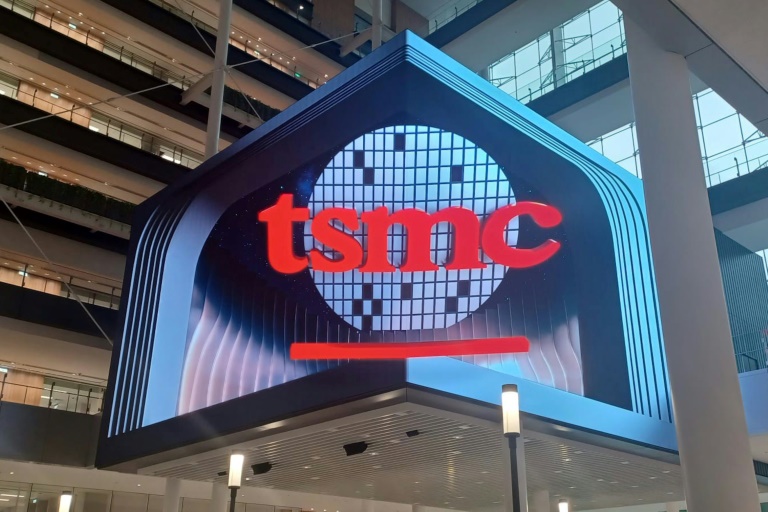
TSMC announced a strategic partnership with NVIDIA to apply AI and accelerated computing to its semiconductor manufacturing processes. The collaboration focuses on improving production efficiency and supporting rising AI-related chip demand, marking a deeper integration of AI tools into the fab environment itself.
Taiwan Ecosystem Strengthens AI Chip Supply Chain
MediaTek and NVIDIA deepened cooperation this week as part of a broader strategy to solidify Taiwan's role in the AI chip value chain. Taiwan's ecosystem—anchored by TSMC, MediaTek, and design houses—is positioning itself as the irreplaceable hub for AI acceleration silicon, even as Samsung pursues foundry diversification.
Huawei Accelerates Domestic Chip Development Amid US Sanctions
Huawei outlined a new semiconductor development strategy targeting transistor density equivalent to 1.4nm-class technology by 2031, despite continuing US restrictions on advanced chipmaking equipment. The announcement, made at the IEEE International Symposium on Circuits and Systems, signals China's commitment to building a self-sufficient chip ecosystem independent of Western supply chains.
Manufacturing & Supply Chain
Global Semiconductor Equipment Spending Accelerates
Chip production equipment sales are projected to reach $156 billion by 2027, driven by intense capacity expansion in China, Taiwan, and South Korea. China is forecast to retain its leading position as domestic manufacturers invest in mature and select advanced nodes, reflecting the ongoing geopolitical competition to secure manufacturing independence.
Q1 2026 Semiconductor Sales Surge Near $300 Billion
Global semiconductor sales reached nearly $300 billion in Q1 2026, placing the industry on track to exceed $1 trillion for the full year. Memory makers are positioned to earn $551 billion from the AI boom—twice as much as contract chip manufacturers—underscoring the AI-driven demand imbalance across the sector.
Geopolitics & Trade Policy
China's Chip Self-Reliance Strategy Intensifies
Huawei's announcement to achieve 1.4nm-equivalent technology by 2031 reflects Beijing's accelerated push for domestic chip independence. The timeline demonstrates China's willingness to invest heavily in closed-loop semiconductor ecosystems, potentially reducing reliance on TSMC and Western equipment suppliers even as the US tightens export controls on advanced node technology.
Market Moves & Earnings
AI Accelerators Dominate Semiconductor Revenue Growth
AI accelerators, which accounted for under $100 billion in 2024, are projected to reach $300–$350 billion by 2029–2030. Data-processing silicon is expected to exceed half of total semiconductor revenue by 2026, reshaping the entire industry's investment and capacity roadmap. This "giga cycle" in AI infrastructure spending is rewriting compute, memory, networking, and storage economics simultaneously.
Semiconductor Industry Heads Toward $1 Trillion Milestone
The global semiconductor industry is on track to top $1 trillion in sales in 2026, following a record 2025 haul of $791.7 billion (up 25.6% year-over-year). This milestone reflects unprecedented demand from AI infrastructure, cloud data centers, and sustained consumer electronics refresh cycles.
Deep Dive: TSMC-NVIDIA Partnership Redefines Fab Automation & China's Counteroffensive
The TSMC-NVIDIA alliance announced this week represents a strategic inflection point: the world's leading foundry and the dominant AI chip designer are now formally integrating artificial intelligence into wafer fabrication itself. Rather than treating manufacturing as a separate domain, they are embedding NVIDIA's accelerated computing frameworks directly into process optimization, yield prediction, and equipment control systems. This partnership promises to compress fab cycle times, improve yields on cutting-edge nodes (3nm and below), and strengthen TSMC's competitive moat against Samsung and Intel.
Simultaneously, Huawei's announcement of a 1.4nm-equivalent roadmap by 2031—delivered despite comprehensive US equipment sanctions—signals that China is not ceding the foundry race. While Huawei's timeline is ambitious and execution risk is high, the statement underscores Beijing's strategic determination to build a vertically integrated, China-controlled semiconductor ecosystem. This is no longer theoretical; Huawei is committing real capital and engineering resources. If successful, even at mature nodes, it would reduce China's dependence on TSMC for certain applications and provide a fallback should Taiwan's geopolitical status destabilize.
For TSMC and its partners (NVIDIA, MediaTek, Intel as a customer), the competitive pressure is intensifying. The TSMC-NVIDIA partnership effectively raises the technical and operational bar for rivals—Samsung's foundry division and Intel's Foundry Services must now compete not just on process node performance, but on fab-integrated AI optimization. China's push for independence, meanwhile, is fragmenting the global supply chain into competing ecosystems (US-Taiwan alliance vs. China domestic), which could persist for a decade or more.
What to Watch Next Week
- TSMC Q2 2026 earnings call: Expected guidance on AI capacity expansion and customer demand signals
- Samsung foundry investor update: Details on competitive positioning vs. TSMC and response to NVIDIA partnership
- US-Taiwan semiconductor dialogue: Any policy announcements on CHIPS Act funding or advanced node export guardrails
- China equipment spending data: Updates on domestic fab capex trends and self-sufficiency progress
This content was collected, curated, and summarized entirely by AI — including how and what to gather. It may contain inaccuracies. Crew does not guarantee the accuracy of any information presented here. Always verify facts on your own before acting on them. Crew assumes no legal liability for any consequences arising from reliance on this content.
Powered by
