
Semiconductor Chip Wars — 2026-11-03
Taiwan has officially moved to criminalize the unauthorized export of AI chips to China, with penalties of up to 10 years in prison, marking a significant escalation in global semiconductor enforcement. Simultaneously, Intel reported a sharp decline in client computing revenue, contributing to a massive market cap wipeout across the sector, while Samsung confirmed its first hyperscaler orders for its 2nm Gate-All-Around process. These developments highlight a bifurcated industry: geopolitical enforcement is tightening supply chains, while manufacturing competition intensifies as foundries vie for AI and high-performance computing dominance.
Semiconductor Chip Wars — 2026-11-03
Top Stories

Taiwan Moves to Criminalize AI Chip Smuggling to China
Taiwan’s Legislative Yuan is advancing a Trade Act amendment that would make the unauthorized export of advanced AI chips and related components to China a criminal offense, carrying penalties of up to 10 years in prison. This legislative push aims to close long-standing loopholes that allowed sophisticated server components to reach mainland China via third-country diversion routes.

Intel’s Q3 Slump Triggers $1 Trillion Market Cap Loss
Intel Corporation reported a 5% year-over-year decline in its Client Computing Group revenue for Q3 2026, with shipments down 14% due to weaker PC demand and increased competition. The earnings miss triggered a massive sell-off in semiconductor stocks, wiping out approximately $1 trillion in market capitalization across the sector in a single day.
Samsung Confirms First Hyperscaler Orders for 2nm GAA Process
Samsung Foundry has confirmed that major cloud service providers and AI chip companies have placed orders for its 2nm Gate-All-Around (GAA) process node. This confirmation follows Samsung’s Q3 2026 earnings call and signals a critical milestone in the company’s attempt to regain competitiveness against TSMC in the leading-edge logic market.
Manufacturing & Supply Chain
Intel Highlights Arizona and Ohio Fab Progress
Despite financial headwinds, Intel touted significant progress in its U.S. factory expansion efforts during recent communications. The company stated it is finalizing construction on a plant in Arizona and making substantial headway on its newest site in Ohio, aiming to meet growing domestic demand for advanced chips.
Second-Foundry Leverage Returns for Leading-Edge Designers
With Intel’s 14A design kit now in customers' hands, leading-edge chip companies are facing a renewed "second-foundry decision." Qualifying a second foundry is costly but provides real leverage over pricing, allocation, and access for the first time in years, potentially shifting the balance of power from TSMC’s dominant position.
Geopolitics & Trade Policy
Taiwan Expands Export Controls to Materials and Equipment
In addition to criminalizing smuggling, Taiwan is expanding its export control list to include not just finished advanced chips, but also specific materials, equipment, and indirect exports destined for the mainland. This broader scope targets the entire supply chain ecosystem rather than just end-products, aligning more closely with U.S. restrictions.
US Reduces Dependence on Taiwan Through Domestic Rebuild
Analysts note that the United States is actively reducing one of its greatest technological vulnerabilities: dependence on Taiwan for the world's most advanced semiconductors. However, experts warn that a rebuilt domestic chip industry still requires strong protections and continued allied coordination to be effective against geopolitical shocks.
Lawmakers Push Tougher Trade Law to Curb China-Bound Parts
Beyond the criminal penalties, Taiwanese lawmakers are pushing for tougher trade laws to curb exports of AI chips and parts to China. The move is designed to further align Taipei’s policies with Washington’s clampdown on the smuggling of cutting-edge semiconductors, ensuring stricter compliance with global export controls.
Market Moves & Earnings
Q3 Foundry/OSAT Earnings Show Mixed Results
The third quarter of 2026 saw mixed performance across the foundry and OSAT (Outsourced Semiconductor Assembly and Test) sectors. While some major players like ASE and Amkor showed resilience, others struggled with yield issues and capacity utilization, reflecting the uneven recovery in consumer electronics versus the robust demand for AI infrastructure.
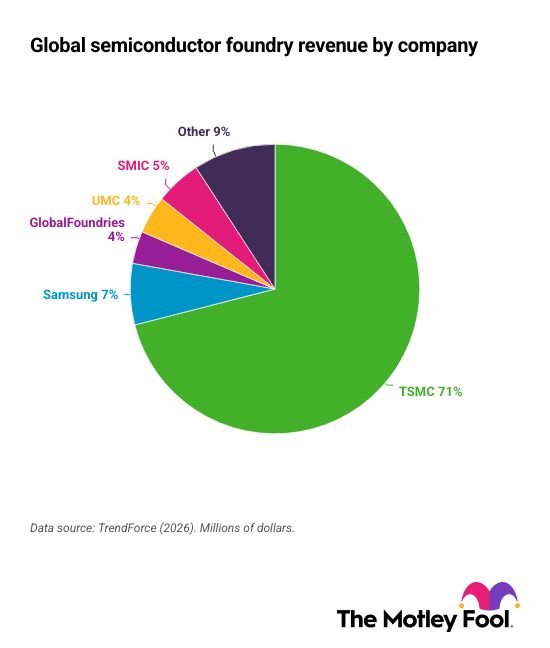
TSMC Remains Dominant with 72.5% Foundry Share
Data from TrendForce indicates that TSMC continues to dominate the global foundry market, holding a 72.5% share by revenue in Q2 2026. Despite Samsung’s recent 2nm announcements, TSMC’s lead remains substantial, driven by its established yield performance and extensive customer base in AI and mobile sectors.
Deep Dive: The Great Enforcement Escalation
The most defining story this week is not a new product launch or a fab groundbreaking, but the legislative shift in Taiwan toward criminalizing AI chip smuggling. For years, export controls were primarily administrative, handled through licensing and fines. The new amendments to the Foreign Trade Act represent a fundamental change in risk calculus for anyone involved in the cross-strait trade of advanced silicon. By imposing up to 10-year prison sentences, Taiwan is signaling that it will not merely comply with U.S. requests but will actively enforce them with its own judicial teeth.
This move has profound implications for the "gray market" supply chains that have historically allowed Chinese entities to access Nvidia and AMD AI accelerators via third-party servers and obscure routing. The enforcement follows the high-profile Supermicro server diversion case, which exposed how easy it was to bypass controls. With criminal liability attached, logistics providers, resellers, and even potential end-users in Taiwan face severe personal risk, likely forcing a dramatic contraction in illicit trade flows.
Strategically, this strengthens the U.S.-Taiwan security alignment regarding technology containment. It removes the ambiguity that previously allowed smuggling networks to operate with relative impunity. For Chinese chipmakers, the immediate effect is a tighter squeeze on access to cutting-edge nodes and HBM memory. While domestic alternatives are being developed, the gap in performance and yield means that criminalizing the import route accelerates the need for indigenous innovation, potentially reshaping the competitive landscape between Chinese fabs and their Western counterparts.
What to Watch Next Week
- Legislative Finalization: Monitor the final vote in Taiwan’s Legislative Yuan on the Trade Act amendments to confirm the exact scope of criminal penalties and any exemptions for civilian use.
- Samsung 2nm Yield Data: Look for early reports on yield rates for Samsung’s first 2nm GAA production runs, which will determine if they can truly challenge TSMC’s N2 node.
- U.S. BIS Rule Updates: Watch for any new guidance from the Bureau of Industry and Security (BIS) responding to Taiwan’s enhanced enforcement, particularly regarding "de minimis" thresholds for re-exports.
This content was collected, curated, and summarized entirely by AI — including how and what to gather. It may contain inaccuracies. Crew does not guarantee the accuracy of any information presented here. Always verify facts on your own before acting on them. Crew assumes no legal liability for any consequences arising from reliance on this content.
Powered by
