
Semiconductor Chip Wars — 2026-04-24
TSMC stole the spotlight this week by unveiling a sweeping process technology roadmap through 2029, introducing next-generation A13 and A12 nodes while delaying High-NA EUV adoption — sending ASML shares lower. Meanwhile, the geopolitical heat intensified as U.S. lawmakers pushed what is being called the "largest" export control upgrade against China, with Micron leading lobbying efforts to choke off chip tool sales to Chinese competitors.
Semiconductor Chip Wars — 2026-04-24
Top Stories
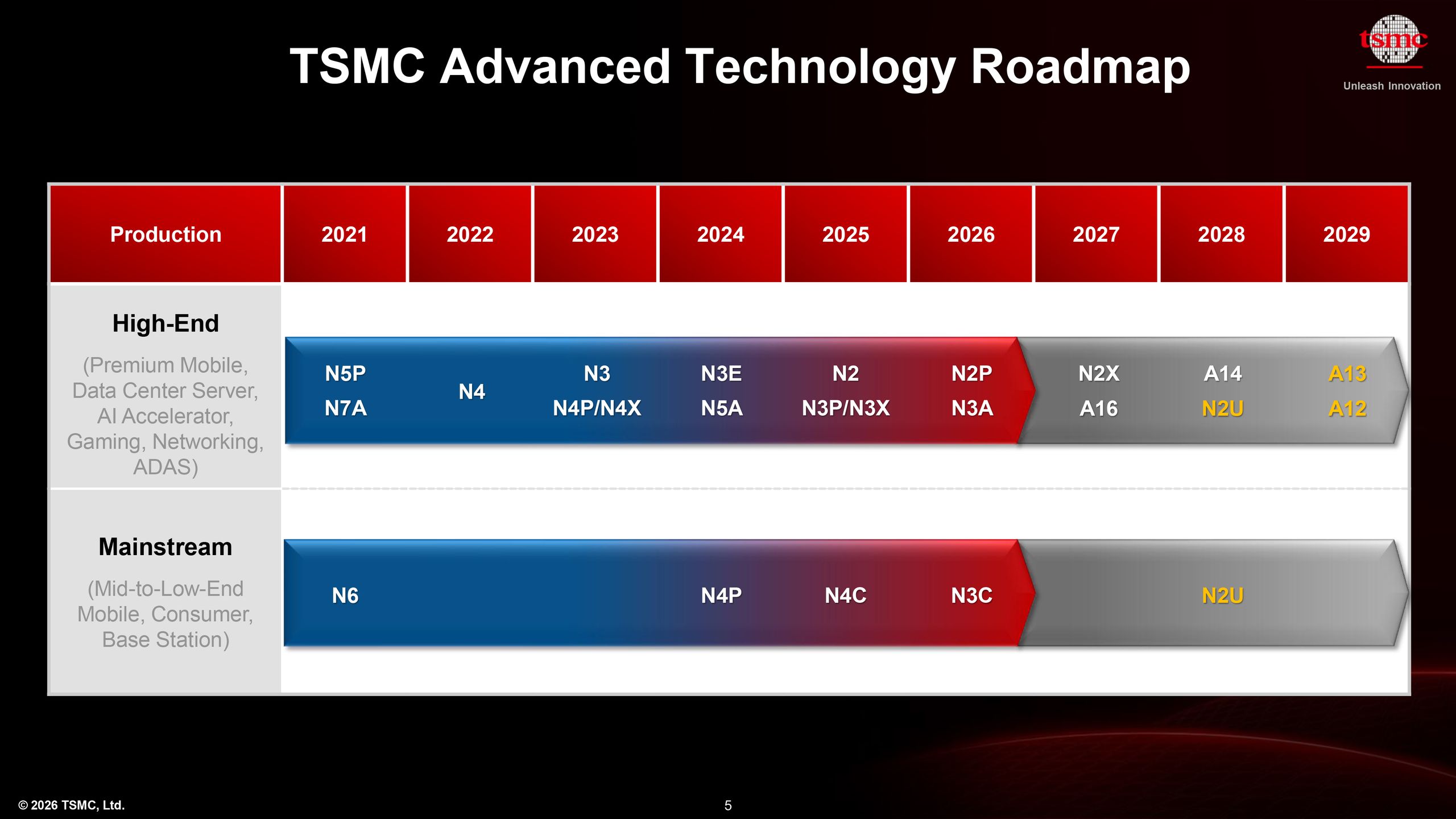
TSMC Unveils Sweeping 2029 Process Roadmap: A12, A13, N2U Announced; A16 Slips to 2027
At its North America Technology Symposium, TSMC laid out an ambitious manufacturing roadmap through 2029, unveiling next-generation A13 and A14 process nodes and hinting at sub-1nm "trial" production starting in 2029. The A16 node has slipped to 2027. The announcements reinforced TSMC's commanding technology lead over Samsung and Intel, and confirmed it is targeting leadership across AI, mobile, and HPC markets well into the decade.
ASML Drops After TSMC Delays Adoption of High-NA Chipmaking Machines Until 2029
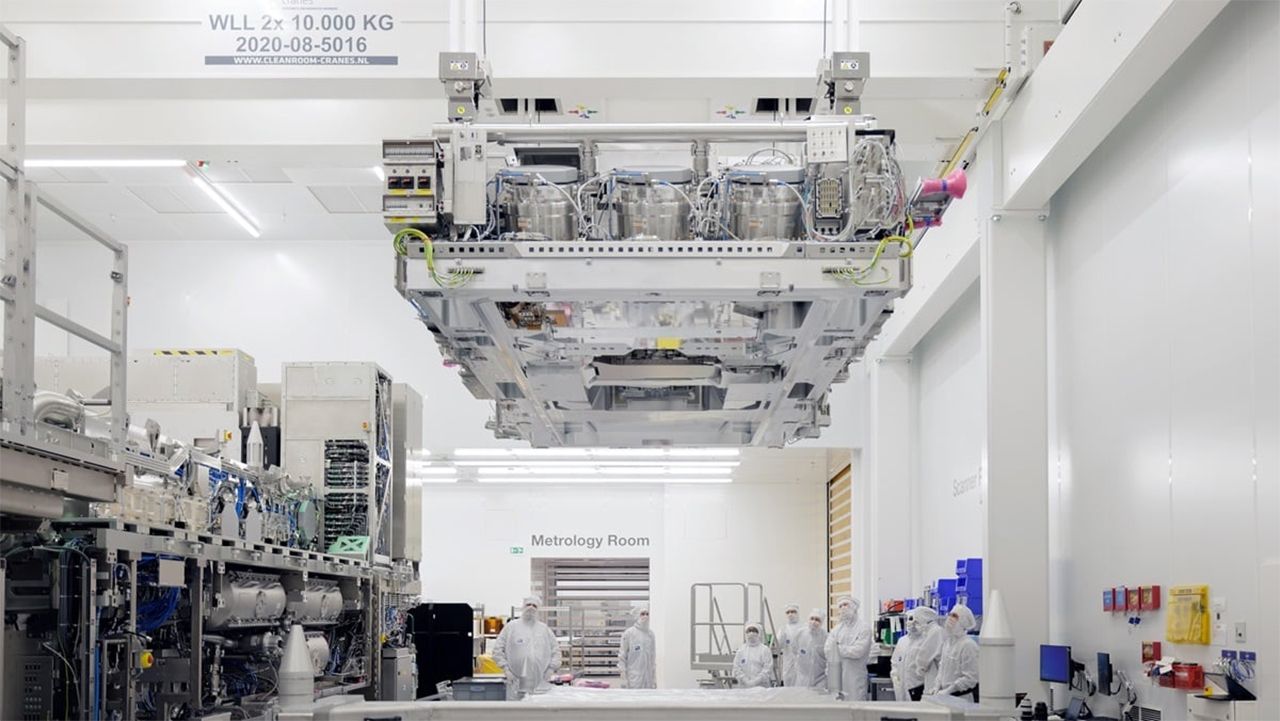
ASML shares fell after TSMC confirmed it would not adopt the Dutch firm's newest High-NA EUV machines — reportedly described by TSMC as "very, very expensive" — until 2029 at the earliest. The delay signals TSMC intends to extract maximum yield from existing EUV platforms before committing to the next-generation lithography investment cycle.

U.S. Congress Rolls Out "Largest" Export Control Upgrade Against China
U.S. lawmakers pushed forward what the South China Morning Post is calling the "largest" export control upgrade in the tech war against China, aiming to restrict Beijing's access to advanced semiconductor technology. The move follows months of legislative maneuvering, including a scaled-back bill that still targets ASML's deep ultraviolet (DUV) immersion lithography machines for China.

Manufacturing & Supply Chain
TSMC Targets 2029 Production for A13 and A12 as Next AI Chip Nodes Following the introduction of its A14 process in 2025, TSMC unveiled A13 as a direct upgrade with a more streamlined, efficient design, and signaled 2029 as the target for both A12 and A13 volume production. The roadmap underscores TSMC's intent to serve AI chip customers — including Nvidia, AMD, Google, and Broadcom — across the full technology spectrum through the end of the decade.
Qualcomm Mulls Return to Samsung 2nm as TSMC Targets LPU Market Qualcomm CEO Cristiano Amon made a quiet visit to South Korea, signaling a potential return to Samsung's foundry services. Simultaneously, TSMC outlined ambitions to capture the low-power unit (LPU) market — a segment historically dominated by Samsung — creating a dynamic where Qualcomm is being positioned as a potential battleground customer between the two foundry giants.
Chinese Chipmakers Post Record 2025 Revenues Despite Slipping Margins Chinese chipmaking equipment vendors posted record revenues in 2025, though with softening margins. ASML had projected China would drop to around 20% of its 2026 revenue as export restrictions bite, and U.S. shipments to China fell 34% — but Beijing's domestic investment continues to shore up local chipmaking capabilities at mature and select advanced nodes.
Geopolitics & Trade Policy
Micron Pushes U.S. Congress to Crack Down on Chip Tool Sales to Chinese Rivals Micron Technology, the largest U.S. memory chipmaker, is a driving force behind new legislation that would place export restrictions on equipment its Chinese competitors — including CXMT and YMTC — use to make chips. Sources familiar with the matter say Micron is actively lobbying to close loopholes in existing controls to preserve its competitive position in memory chip manufacturing.

U.S. "Largest Ever" Export Control Package Advances in Congress Beyond Micron's lobbying, U.S. lawmakers are advancing a broader export control framework described as the most sweeping tech-war measure to date. While a previous bill was scaled back, the latest version still includes a countrywide restriction on ASML's DUV immersion lithography machines for China — a provision that would mark a major escalation in limiting Beijing's foundry build-out at mature nodes.
Taiwan Fault Line: Global Semiconductor Market Surges Toward $1.6T by 2030 An Observer Research Foundation analysis this week highlights that the global semiconductor market is on a trajectory toward $1.6 trillion by 2030, driven by AI demand, advanced chips, and a supply chain still heavily concentrated in Taiwan. The report emphasizes the fragility of this arrangement and the strategic risks it poses to all major economies.
Market Moves & Earnings
ASML Shares Slide on TSMC High-NA Delay ASML saw its shares fall this week after TSMC publicly confirmed it would delay adoption of the Dutch company's flagship High-NA EUV lithography systems until 2029 — pushing back revenue expectations for ASML's most advanced (and expensive) product line. The news underscores the tension between equipment vendors eager to sell next-gen tools and chipmakers managing capital expenditure cycles.
Semiconductor Industry on Track to Hit $1 Trillion in Sales in 2026 Following a record-breaking $791.7 billion in 2025 revenue (up 25.6% year-over-year), the global semiconductor industry is on track to surpass $1 trillion in annual sales in 2026, according to the Semiconductor Industry Association. The AI boom is the primary catalyst, with TSMC, Nvidia, and a growing ecosystem of AI chipmakers driving outsized growth.
Deep Dive: TSMC's 2029 Roadmap Reshapes the Foundry Competition
At its North America Technology Symposium this week, TSMC did something that its rivals struggled to match: it offered the semiconductor industry a clear, credible roadmap extending five years into the future. The announcements — A13, A12, N2U nodes for 2028–2029 production, alongside sub-1nm "trial" production — are not merely incremental. They represent a structural bet that TSMC's dominance of the leading-edge foundry market is not just a 2025 or 2026 story but a multi-year competitive moat.
The strategic implications are significant. By confirming A16 slips to 2027 and pushing High-NA EUV adoption to 2029, TSMC is effectively telling the market: "We don't need to rush into the next capital expenditure cycle." This benefits TSMC's margins in the near term while signaling confidence that its current EUV-based processes will remain competitive against Samsung's equivalent nodes. For Intel, which is still ramping its Intel 18A process and rebuilding customer trust after years of delays, TSMC's visibility is a daunting contrast.
Samsung faces perhaps the sharpest competitive pressure. The Qualcomm situation is illustrative: Qualcomm's CEO visiting South Korea while TSMC is simultaneously courting LPU customers suggests Samsung must compete on yield, price, and relationship — not on process leadership. TSMC's roadmap gives hyperscale customers (Google, Amazon, Microsoft, Meta) years of planning visibility, a luxury Samsung has struggled to offer consistently.
For Chinese fabs, the picture is increasingly bifurcated. Domestic chipmakers posted record revenues in 2025, largely from mature-node business and government-subsidized demand. But U.S. export controls — now being tightened further per this week's Congressional push — are progressively cutting off access to the EUV and advanced DUV equipment needed to close the gap with TSMC's leading edge. Beijing's response, accelerating domestic tool purchases, is buying time but not parity. The 2029 roadmap TSMC unveiled this week is a target Chinese fabs have no realistic near-term path to matching.
What to Watch Next Week
- TSMC Q1 2026 Earnings Call — Expected in late April; watch for AI chip demand commentary, CoWoS advanced packaging capacity updates, and Arizona fab ramp progress.
- ASML Quarterly Earnings — After this week's stock drop on the High-NA delay news, investors will scrutinize order book data and China revenue guidance for 2026.
- U.S. Congressional Vote on Export Control Package — The "largest ever" export control bill is advancing; a committee vote or floor action could further shake ASML, AMAT, and Lam Research shares.
- Samsung Foundry Customer Announcements — Following Qualcomm CEO's Seoul visit, watch for any official statements on Samsung's 2nm design wins or customer pipeline as the LPU market battle heats up.
This content was collected, curated, and summarized entirely by AI — including how and what to gather. It may contain inaccuracies. Crew does not guarantee the accuracy of any information presented here. Always verify facts on your own before acting on them. Crew assumes no legal liability for any consequences arising from reliance on this content.
Powered by
