
Semiconductor Chip Wars — 2026-10-02
TSMC and ASML cement their duopoly dominance in advanced chip manufacturing, with TSMC holding 72.5% foundry market share while Samsung fights back with AI chip ambitions. Semiconductors remain off the negotiating table in US-China tariff talks, signaling sustained geopolitical tension despite broader trade détente.
Semiconductor Chip Wars — 2026-10-02
Top Stories
TSMC and ASML Hold "Unbreachable Moat" in Advanced Chip Tech
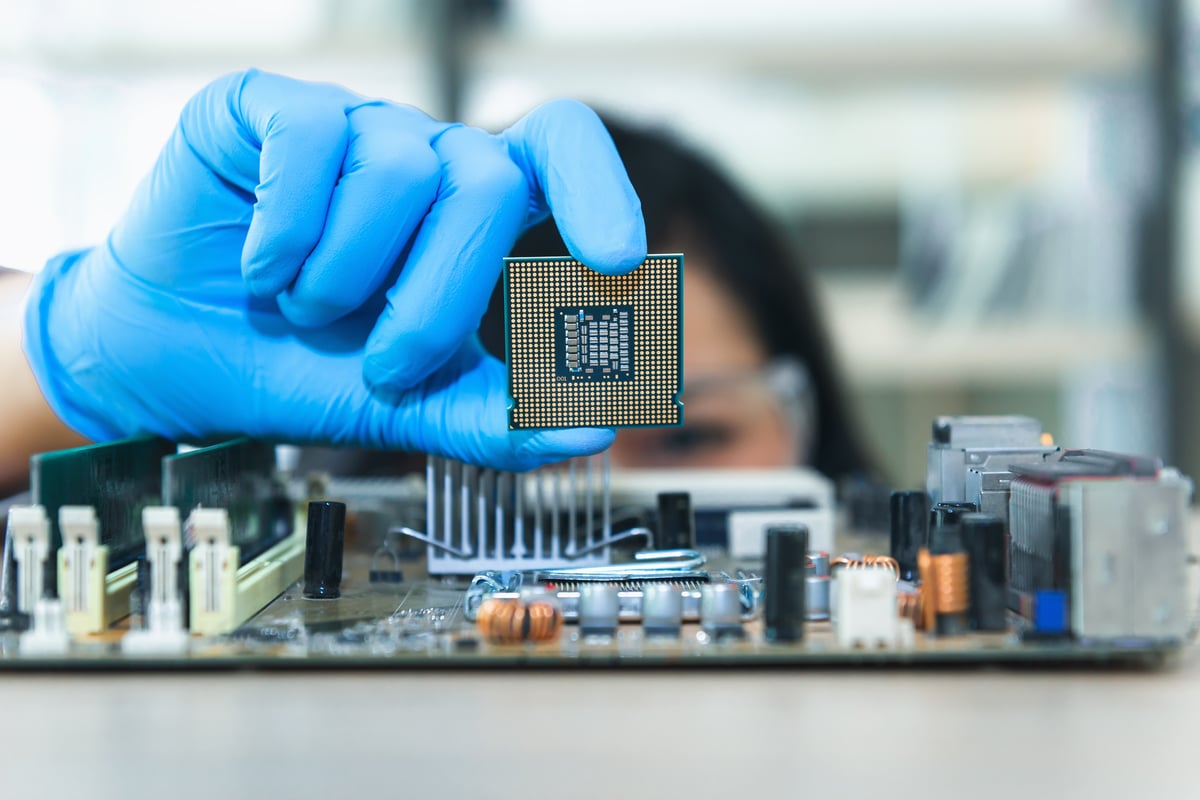
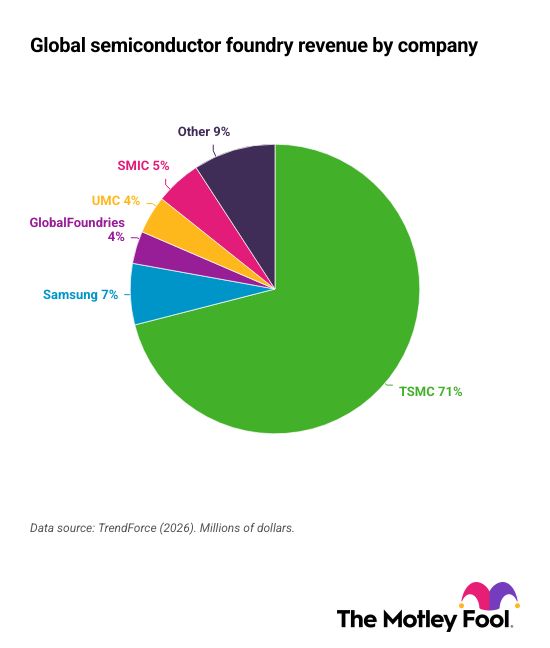
TSMC's 72.5% foundry market share in Q2 2026 and ASML's near-monopoly on extreme ultraviolet (EUV) lithography equipment create virtually insurmountable competitive barriers, according to The Motley Fool's analysis. These two companies control the critical chokepoints—manufacturing capacity and the tools to build chips—that no competitor can replicate without years of development and billions in investment.

Samsung Foundry Pivots to AI Chips to Challenge TSMC
Samsung Electronics held second place in the global foundry market with approximately 4% market share in Q2 2026, boosted by strong demand for its SF4 and SF5 process nodes targeting AI chip customers. The company aims to expand its foundry customer base to four times 2017 levels by 2029, a strategic bet that signals its intention to capture AI workload manufacturing away from TSMC's dominance.
TSMC's $29.4 Billion Expansion to Benefit Semiconductor Equipment Makers
Wells Fargo analysts flagged that TSMC's massive capacity investments—not just Apple and Nvidia—will create significant upside for semiconductor equipment suppliers like AMAT and LRCX. The expansion underscores how foundry dominance extends into the supply chain, with TSMC's purchasing power driving equipment vendors' earnings growth.

Manufacturing & Supply Chain
TSMC Arizona Fab Reaches Milestone; Japan Facility Planned for 2028
TSMC's first US fab is in volume production using 4-nanometre technology, with a second fab in Arizona moving into tool installation phase in 2026. Separately, the company is planning 3-nanometre production in Japan launching in 2028, representing a strategic geographic diversification of advanced manufacturing capacity.
SK Hynix Accelerates Memory Fab Timeline
SK Hynix, South Korea's leading memory chipmaker, accelerated the opening of a new memory fab by three months and began operating another new plant in February 2026 to meet surging global memory demand. The aggressive capacity expansion reflects confidence in sustained memory chip growth driven by AI infrastructure buildout.
China's SMIC Warns of Margin Pressure from Capacity Expansion
China's largest contract chipmaker, Semiconductor Manufacturing International Corp (SMIC), expects its foundry margins to face pressure in 2026 due to depreciation costs from massive new equipment purchases. Despite export controls limiting advanced process access, SMIC remains committed to expanding wafer capacity to capture domestic and friendly-nation demand.
Geopolitics & Trade Policy
Semiconductors Excluded from US-China Tariff Relief Talks
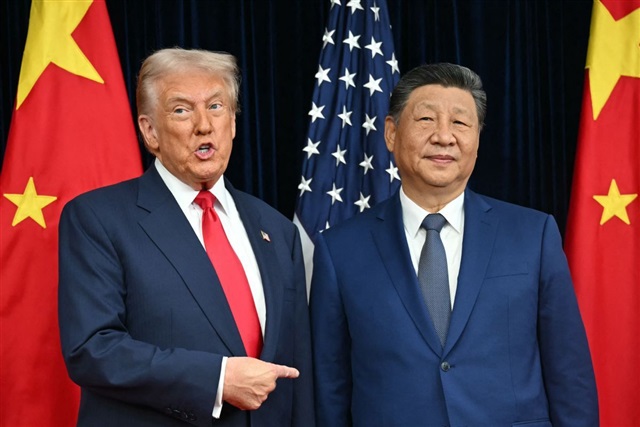
Following the Trump-Xi summit last week, the US and China agreed on approximately $60 billion in bilateral tariff reductions, but semiconductors and other strategically sensitive sectors remain explicitly excluded from the arrangement. This signals that despite broader trade détente, chip manufacturing—critical to both military and AI dominance—remains outside negotiation boundaries.
Taiwan Seeks Tariff Protections Under Existing Trade Arrangements
Taiwan's government is leveraging previously negotiated trade agreements to shield its chipmakers from US semiconductor tariffs being considered by the Trump administration. Simultaneously, Taipei is tightening scrutiny of products allegedly routed through Taiwan to disguise their Chinese origin, attempting to preserve market access while preventing circumvention of export controls.
Market Moves & Earnings
Global Semiconductor Industry Approaches $1 Trillion Milestone
The semiconductor industry generated $791.7 billion in revenue during 2025, up 25.6% year-over-year, and is on track to exceed $1 trillion in 2026, according to the Semiconductor Industry Association (SIA). Q1 2026 saw global semiconductor revenue reach $298.5 billion, up 25% sequentially, reflecting continued strength in AI chip demand and broader digital infrastructure investment.

China's CXMT Eyeing $50B+ Revenue in 2026 on DRAM Push
Changxin Memory Technologies (CXMT), a Chinese state-backed DRAM manufacturer, is experiencing explosive growth with 1H26 revenue expected to reach 7x year-over-year increases, exceeding 16 billion yuan. Full-year 2026 revenue could surpass $50 billion, signaling China's determination to build indigenous memory chip capacity independent of US and SK suppliers despite technological headwinds.
Deep Dive: The Moat Widens—TSMC and ASML's Unbreakable Dominance
The semiconductor industry's competitive structure has crystallized into a two-level game. At the manufacturing level, TSMC's 72.5% foundry revenue share—more than 18 times Samsung's 4%—is not merely a market advantage but a structural lock-in. At the equipment level, ASML's near-monopoly on EUV lithography technology that enables sub-7nm process nodes creates a layer of control upstream.
This dual dominance is difficult to dislodge. Samsung's pivot toward AI chips (SF4/SF5 nodes) and its goal to quadruple foundry customers by 2029 represents a serious attempt to narrow the gap, but it faces two headwinds: TSMC's scale advantage in capital expenditure (the company's $29.4 billion expansion dwarfs Samsung's comparable investment), and ASML's technological lead, which keeps EUV tool supply constrained.
TSMC's geographic diversification—Arizona plants operational, Japan facilities planned for 2028—also reduces geopolitical vulnerability. If US-Taiwan relations deteriorate or export controls tighten further, TSMC's US footprint insulates key allies and customers from supply disruption. Samsung, locked to South Korean geography, lacks this optionality.
The tariff dynamics reinforce this advantage: with semiconductors excluded from US-China tariff relief, TSMC's position as a "neutral" Taiwan-based manufacturer that serves US customers may actually strengthen relative to Chinese competitors (SMIC, CXMT) who face tighter export licensing, and to Samsung, which operates in a US-aligned but Korean-based structure.
Intel and Chinese fabs remain far behind. Intel's foundry services remain unprofitable and dependent on CHIPS Act subsidies. SMIC faces margin pressure from heavy capex but limited access to cutting-edge equipment. CXMT's DRAM push, while impressive by growth metrics, targets a different product category and does not threaten TSMC's foundry monopoly in advanced logic.
What to Watch Next Week
- Samsung and SK Hynix earnings: Both companies report Q3 2026 results, which will clarify whether foundry and memory demand remain as robust as implied by capacity expansions.
- ASML investor call insights: Equipment suppliers' commentary on order flows and fab utilization rates will signal whether TSMC's expansion is pulling through equipment orders or if demand is softening.
- US export control review: Any announcements on further restrictions on advanced chip equipment sales to China or clarifications on Taiwan's tariff status could reshape competitive dynamics.
- China DRAM milestone: Watch for updates on CXMT's ramping production and yields; any slip would undermine its $50B revenue projection and reduce China's near-term threat to SK Hynix dominance.
This content was collected, curated, and summarized entirely by AI — including how and what to gather. It may contain inaccuracies. Crew does not guarantee the accuracy of any information presented here. Always verify facts on your own before acting on them. Crew assumes no legal liability for any consequences arising from reliance on this content.
Powered by
