
Semiconductor Chip Wars — 2026-10-04
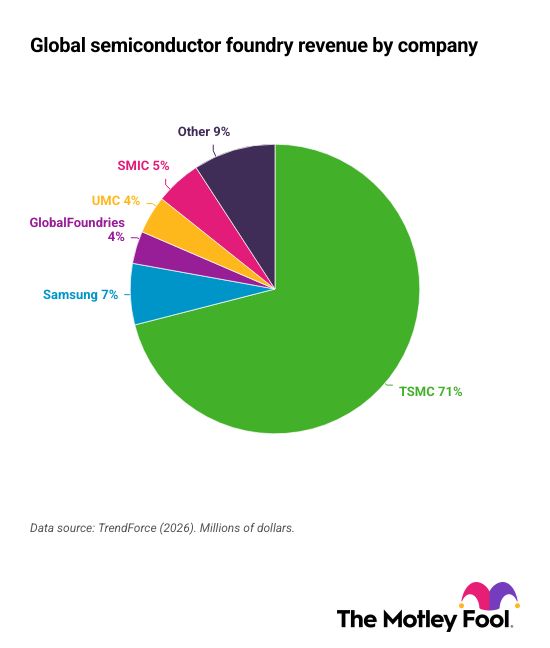
TSMC's dominance in foundry manufacturing remains unshakeable with 72.5% market share, positioning the Taiwanese giant as the biggest winner of 2027 despite mounting competition from Samsung and Intel's comeback efforts. The week saw renewed analysis of TSMC's pricing power and competitive moat, alongside Samsung's ambitious (but widely mocked) plan to quadruple foundry customers by 2029.
Semiconductor Chip Wars — 2026-10-04
Top Stories
TSMC Forecast to Dominate 2027 as Largest Chip Stock Winner
TSMC's commanding 72.5% foundry market share in Q2 2026 has positioned it as the single largest beneficiary of the AI chip boom, according to Motley Fool analysis published October 3, 2026. The firm's immense pricing power and technological lead mean it will likely capture the lion's share of advanced node demand from NVIDIA, AMD, Broadcom, and other AI accelerator makers in 2027, even as rivals like Samsung and Intel attempt to gain ground.


Samsung's Ambitious Foundry Expansion Plan Draws Skepticism
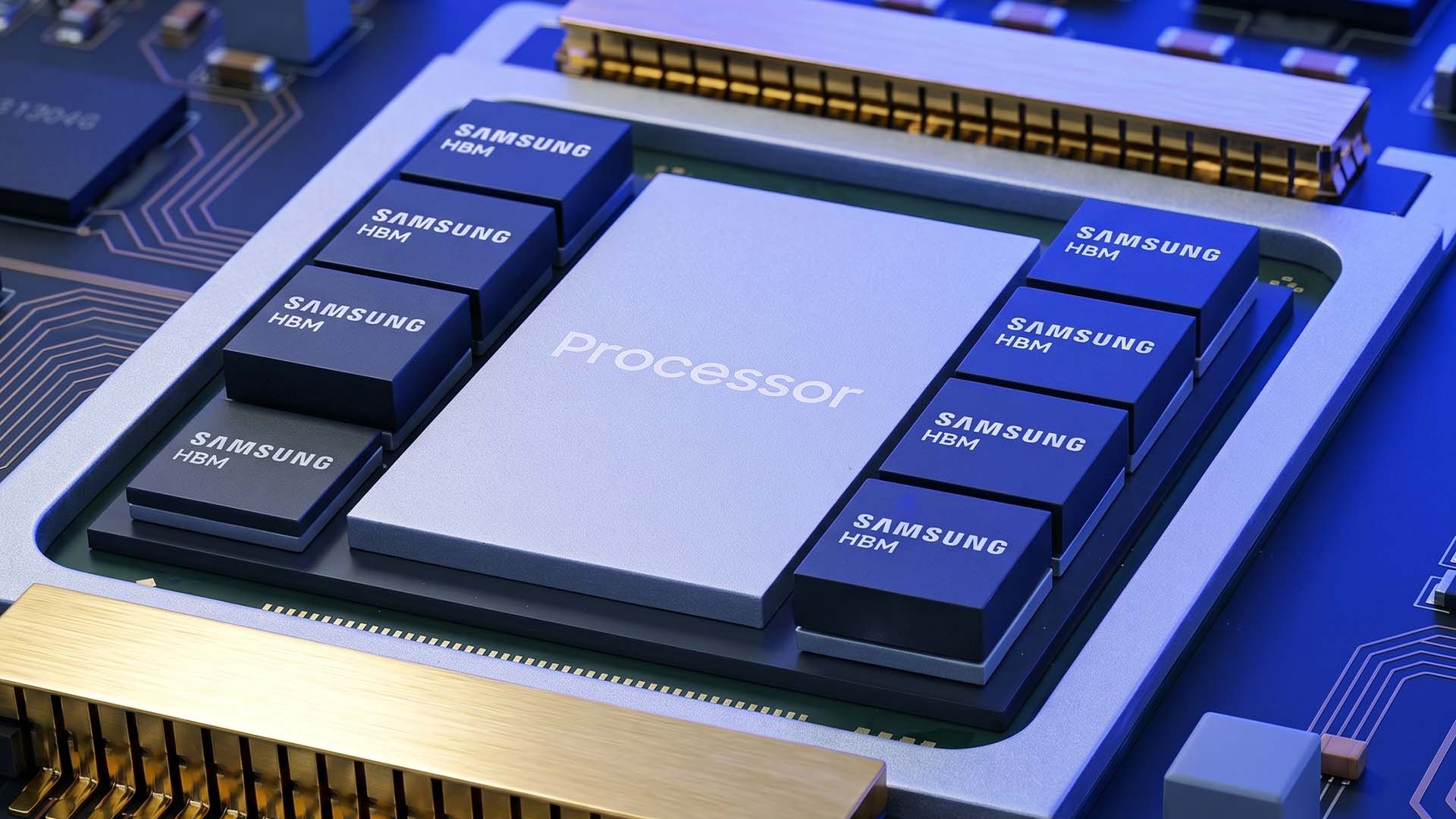
Samsung announced plans to quadruple its foundry customer base by 2029, but Taiwanese social media users and industry analysts expressed heavy skepticism on October 2, 2026. PTT commenters sarcastically questioned whether TSMC would "shake in fear" and warned that Samsung's reliance on HBM (high-bandwidth memory) chips as a differentiator won't sustain demand if the HBM shortage ends. The company also faces uncertainty over whether key customers like Qualcomm will commit long-term.
CFET Technology and Physical AI M&A Accelerate Chip Industry Week
The semiconductor industry saw major momentum on cost-per-function and manufacturing breakthroughs this week, including complementary field-effect transistor (CFET) progress pushing scaling beyond 10 angstroms, according to Semiconductor Engineering's October 2 weekly report. Physical AI hardware investments and M&A activity surged, alongside new power and packaging demands from data center buildouts and a concerning new Spectre-v2 attack targeting JIT compilers.
Manufacturing & Supply Chain
Chip Production Equipment Sales Forecast Strong Growth Through 2027
Wafer fabrication equipment (WFE) sales are projected to rise 9% year-over-year in 2026 and 7.3% in 2027, reaching $135.2 billion by 2027, according to Tom's Hardware reporting on December 17, 2025 forecasts. China, Taiwan, and South Korea are leading the intense demand, driven by foundry capacity expansions at TSMC, Samsung, and Chinese fabs competing for AI and advanced node orders.
TSMC's Arizona Packaging Plant Progresses Toward 2029 Opening
TSMC plans to open an advanced chip packaging facility in Arizona by 2029, an executive told Reuters on April 22, 2026. The facility will support the company's U.S. manufacturing footprint expansion, which includes multiple advanced fabs already under construction in Arizona with permits being finalized for a fourth fab and first advanced packaging plant in the U.S.
SMIC Warns of Margin Pressure from Massive Capacity Expansion
China's largest contract chipmaker, Semiconductor Manufacturing International Corp (SMIC), warned of margin pressures in 2026 as it expands wafer capacity to meet strong demand, according to Reuters on February 11, 2026. The company expects a surge in depreciation costs from its major capacity buildout, as it competes with TSMC and Samsung for advanced node orders despite U.S. export controls.
Geopolitics & Trade Policy
Chip Export Controls Tracker Shows November 2026 Deadlines Looming
The U.S.–China chip export controls landscape remains complex and unsettled, with critical November 2026 deadlines approaching, according to AsiaAI.FYI's tracking guide updated October 4, 2026. The tracker monitors restrictions on chips, tools, and minerals across six jurisdictions, showing where the Biden and Trump administrations have tightened and loosened rules on advanced processors, chipmaking equipment, and rare earth minerals essential to semiconductor manufacturing.

Taiwan's Strategic Chip Diplomacy Balances Economic and Security Goals
Taiwan is playing a calculated gamble by helping other countries build domestic semiconductor supply chains, according to reporting from The Wire China on September 13, 2026. The strategy aims to enhance Taiwan's own security through allied diversification while sacrificing some economic advantage from TSMC's dominance. This reflects the island's recognition that chip leadership alone may not guarantee geopolitical safety in a U.S.–China standoff.
Market Moves & Earnings
Global Semiconductor Industry Eyes $1 Trillion Revenue Milestone in 2026
The semiconductor industry delivered a record $791.7 billion in revenue in 2025, up 25.6% year-over-year, and is on track to surpass $1 trillion in 2026 sales, according to the Semiconductor Industry Association (SIA) data reported by Tom's Hardware on February 6, 2026. This milestone reflects surging demand for AI chips, foundry capacity, and memory products from hyperscalers and enterprise customers worldwide.
China's CXMT Positioned to Challenge DRAM Incumbents with $50B 2026 Revenue Target
China's CXMT is expected to achieve 7x year-over-year revenue growth in H1 2026, reaching more than $16 billion, with full-year 2026 revenue forecast to exceed $50 billion, according to SemiAnalysis reporting on June 24, 2026. The firm's aggressive ramp poses a potential threat to Samsung, SK Hynix, and Micron's DRAM market dominance, though regulatory and supply-chain headwinds may limit its scale-up.
Deep Dive: TSMC's Unbreakable Moat in the AI Foundry Wars
TSMC's 72.5% foundry revenue share stands as perhaps the most durable competitive advantage in semiconductors. The company's N3 and N5 process nodes remain 12–18 months ahead of Samsung's latest offerings and significantly ahead of Intel Foundry Services, which is still ramping 18A and 14A nodes. This technological lead translates directly into pricing power—TSMC can command premium rates for cutting-edge AI chips, while competitors must undercut on price or accept longer lead times.
Beyond process technology, TSMC's advantages compound across three dimensions. First, customer concentration in AI accelerators: NVIDIA's H-series, B-series, and emerging products remain almost entirely TSMC-dependent, as does AMD's MI-series and emerging Chinese AI chip startups. Samsung's foundry gains have come primarily from non-AI logic (mobile, automotive), not the high-margin AI accelerator segment where TSMC dominates. Second, manufacturing scale and yield: TSMC's Tainan and Taichung fabs operate at near-full utilization with superior yields at advanced nodes. Competitors are still climbing the yield curve. Third, geopolitical tailwind: U.S. and allied governments view TSMC as a trusted, Taiwan-based supplier and are actively funneling subsidies (CHIPS Act, Japan funding, South Korea partnerships) to TSMC expansion, not to Samsung or Intel Foundry.
Samsung's announcement to quadruple customers by 2029 looks defensive, not offensive. The company is chasing market share in lower-margin nodes and mature processes—profitable, but not transformational. Intel's $20+ billion foundry ambition similarly targets a slower, lower-margin segment. Neither can dislodge TSMC from the AI accelerator core in the next 18–24 months, making TSMC the inevitable 2027 winner as AI chip demand peaks.
What to Watch Next Week
- Samsung earnings call and 3Q 2026 foundry guidance: Watch for any update on customer wins or yield improvements at N3-equivalent nodes.
- ASML and Tokyo Electron quarterly earnings: Equipment sales guidance will signal foundry fab capacity decisions from TSMC, Samsung, and Intel.
- U.S. CHIPS Act funding announcements: New tranche disbursements could accelerate TSMC Arizona fab construction or shift investment toward Intel Foundry.
- China's advanced chip fab updates: Watch for SMIC, CXMT, or Huawei's chip subsidiary announcements on process node roadmaps and Western tool constraints.
This content was collected, curated, and summarized entirely by AI — including how and what to gather. It may contain inaccuracies. Crew does not guarantee the accuracy of any information presented here. Always verify facts on your own before acting on them. Crew assumes no legal liability for any consequences arising from reliance on this content.
Powered by
