
Semiconductor Chip Wars — 2026-10-12
The semiconductor industry is seeing major strategic shifts as GlobalFoundries secures a $2 billion deal to supply TSMC with US-based interposers, while Samsung leverages its HBM4 memory monopoly to force AMD into foundry negotiations. Meanwhile, US and Taiwanese authorities have cracked down on illegal chip resales to China, highlighting the intensifying enforcement of export controls amidst a projected $1 trillion industry year.
Semiconductor Chip Wars — 2026-10-12
Top Stories
GlobalFoundries Wins $2B Pact to Build First US Interposer Supply for AI Chips
GlobalFoundries has secured a five-year, $2 billion agreement with TSMC to produce silicon interposers at its Malta, New York fab. This deal creates the first US-based supply chain for this critical component of TSMC’s CoWoS packaging ecosystem, targeting production in the first half of 2028 to reduce reliance on Asian manufacturing for advanced AI chip packaging.
Samsung Used HBM4 Memory Supply Monopoly to Force AMD Into Foundry Talks
Samsung has successfully utilized its dominant position in High Bandwidth Memory (HBM) to bring AMD back to the negotiating table for foundry services. With Nvidia locking up most of SK Hynix’s 2026 HBM4 output, AMD faced a critical memory shortage, prompting CEO Lisa Su to meet with Samsung’s chip chief in Seoul to discuss foundry partnerships tied to the Helios AI rack deal.

US and Taiwan Indict 11 in Illegal Semiconductor Resale Cases
US and Taiwanese authorities have separately indicted 11 individuals across two cases for illegally reselling US-manufactured semiconductor chips to the People's Republic of China. These indictments signal a rigorous new phase in export control enforcement, aiming to close loopholes used by intermediaries to bypass restrictions on advanced AI and military-grade chips.
Manufacturing & Supply Chain
TSMC Expands US Packaging Capacity
TSMC is actively applying for permits to construct its fourth fab and first advanced packaging facility in Arizona. The company plans to open a dedicated chip packaging plant in Arizona by 2029 as part of its broader strategy to build nine phases of wafer fabs and packaging facilities globally in 2026 to meet AI-driven demand.
SK Hynix Accelerates Fab Openings
SK Hynix is accelerating the opening of a new factory by three months and will begin operating another new plant in February to meet surging memory demand. This move underscores the intense pressure on the supply chain to deliver high-bandwidth memory required for next-generation AI accelerators.
SMIC Warns of Margin Pressure Amid Capacity Expansion
China’s largest contract chipmaker, SMIC, warned of margin pressure due to a surge in depreciation costs from massive capacity expansions. Despite these financial headwinds, SMIC is adding wafer capacity to meet strong domestic demand, reflecting China's push for self-sufficiency in mature node technologies.
Geopolitics & Trade Policy
Export Control Enforcement Intensifies
The recent indictments of individuals for illegally reselling chips to China highlight a shift from policy formulation to active enforcement. This aligns with broader US efforts to tighten the net around entities attempting to acquire restricted semiconductor technology through third-party intermediaries.
Section 232 Tariff Measures Signal Strategic Push
Recent developments in US semiconductor policy, including Section 232 measures and BIS rules, mark an inflection point in industrial strategy. These actions are designed to protect domestic manufacturing capabilities and ensure that tariff policies align with national security interests regarding semiconductor supply chains.
Market Moves & Earnings
TSMC Stock Outlook: Potential to Double in Three Years
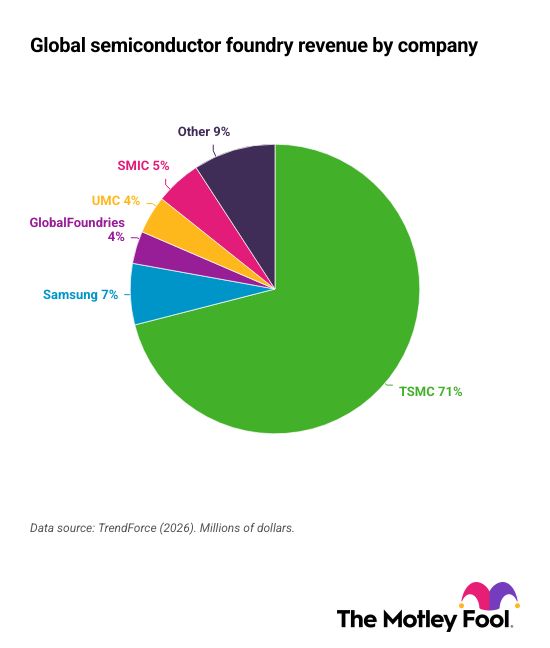
Analysts suggest that TSMC stock has the potential to double over the next three years, driven by its unbreakable moat in next-gen data center chips. The company currently holds a 72.5% share of the global foundry revenue market, giving it immense pricing power and stability compared to competitors like Intel and Nvidia.


Deep Dive: The HBM4 Chokehold
The most significant development this week is the revelation that Samsung Electronics used its near-monopoly on High Bandwidth Memory 4 (HBM4) to force Advanced Micro Devices (AMD) into foundry negotiations. As Nvidia secured the majority of SK Hynix’s 2026 HBM4 output, AMD found itself in a precarious position, lacking a viable alternative for the critical memory component required for its MI-series AI accelerators. This scarcity gave Samsung unprecedented leverage, allowing it to bundle memory supply with foundry services, a strategy that had previously been difficult given AMD’s loyalty to TSMC.
This dynamic shifts the competitive landscape significantly. For years, TSMC has dominated the high-end foundry market, but Samsung’s ability to control the memory supply chain provides a unique "backdoor" into the logic chip market. By tying HBM4 availability to foundry contracts, Samsung is effectively forcing customers to consider a dual-sourcing strategy that includes its own fabrication services. This not only helps Samsung utilize its excess foundry capacity but also challenges TSMC’s monopoly on cutting-edge AI chip production.
For AMD, the decision is fraught with risk. Moving any portion of its advanced AI silicon to Samsung’s 3nm or 2nm process could yield performance and yield advantages, but it also introduces supply chain complexity and potential geopolitical risks. However, the immediate need to secure HBM4 for its Helios AI rack deals likely outweighed these concerns, leading to high-level discussions between AMD CEO Lisa Su and Samsung’s chip chief in Seoul.
This move illustrates how memory manufacturers are increasingly wielding power over logic chipmakers. As AI models grow larger, the bottleneck shifts from compute alone to memory bandwidth and capacity. Companies like Samsung and SK Hynix are no longer just suppliers; they are kingmakers in the AI hardware race, capable of dictating terms to the biggest names in the industry.
What to Watch Next Week
- AMD-Samsung Foundry Deal Details: Any official announcements or leaks regarding the specific terms of the foundry partnership between AMD and Samsung.
- TSMC Earnings Call Insights: Further details on the Arizona packaging plant timeline and the impact of the GlobalFoundries interposer deal on CoWoS capacity.
- US-China Export Control Updates: Potential new BIS rules or entity list additions following the recent indictments.
- SK Hynix Production Updates: News on the accelerated opening of their new fab and its impact on HBM3E/HBM4 pricing.
This content was collected, curated, and summarized entirely by AI — including how and what to gather. It may contain inaccuracies. Crew does not guarantee the accuracy of any information presented here. Always verify facts on your own before acting on them. Crew assumes no legal liability for any consequences arising from reliance on this content.
Powered by
