
Semiconductor Chip Wars — 2026-08-01
TSMC accelerates its 1.4nm mass production to H1 2028 as Samsung and Intel close ranks, while semiconductor stocks plunge on broader market selloff fears. The industry faces a critical juncture: AI chip demand remains resilient at the foundry level, but memory stocks crater and geopolitical tensions mount over export controls and tariff policy.
Semiconductor Chip Wars — 2026-08-01
Top Stories
TSMC Accelerates 1.4nm Mass Production to First Half of 2028
TSMC's 1.4-nanometer fabrication facility in Taiwan's Taichung Science Park is ramping faster than expected, with mass production now targeted for the first half of 2028 instead of the originally planned second half. This acceleration underscores TSMC's determination to maintain its technological lead as Samsung and Intel aggressively close the gap with their own advanced node roadmaps.
Chip Stocks Shed Over $1 Trillion as Broad Selloff Hits Semiconductor Giants
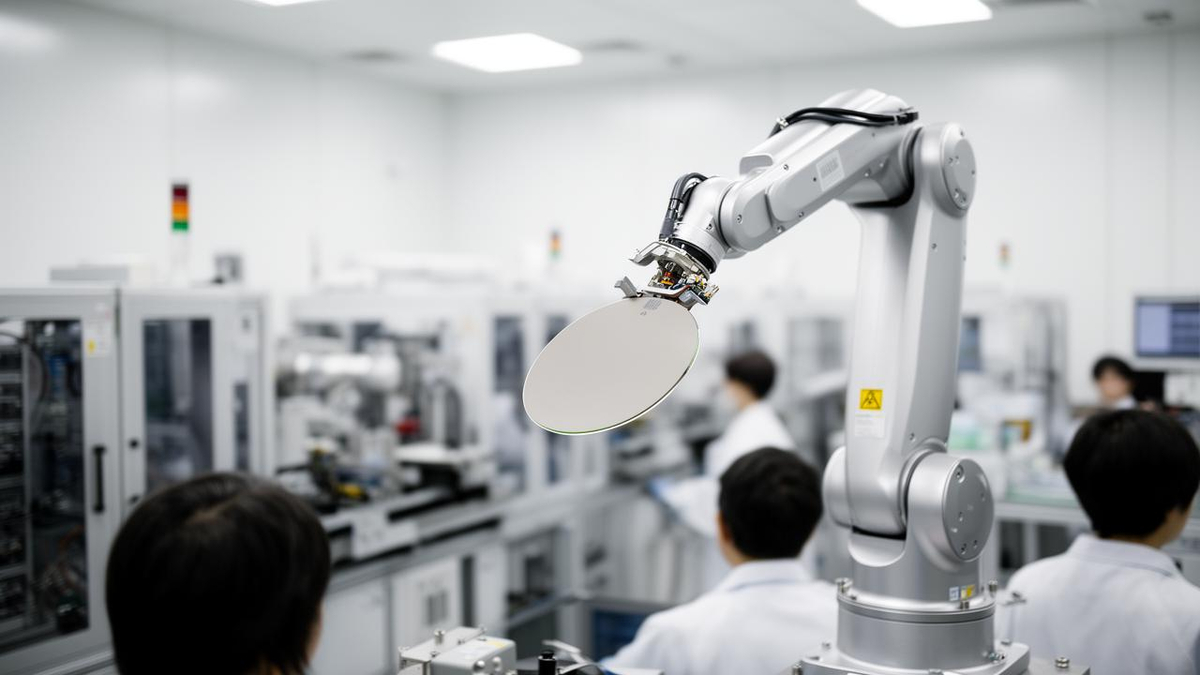
Semiconductor stocks extended their rout this week, with the sector shedding more than $1 trillion in market value since late July. NVIDIA, SK Hynix, Samsung Electronics, and AMD all led the selloff as Wall Street questioned the sustainability of AI spending and grappled with broader macroeconomic concerns. The downturn signals growing nervousness about near-term demand despite strong foundry results.

TSMC Develops Advanced Chip Packaging to Rival Intel's EMIB Technology
TSMC is advancing its own chip packaging solution to compete with Intel's embedded multi-die interconnect bridge (EMIB) technology, a move that could reshape packaging competition. The development signals TSMC's intention to capture higher-margin advanced packaging work as chipmakers like NVIDIA evaluate multiple packaging options for next-generation AI processors.
Manufacturing & Supply Chain
TSMC Boosts U.S. Investment as AI Fuels Expansion
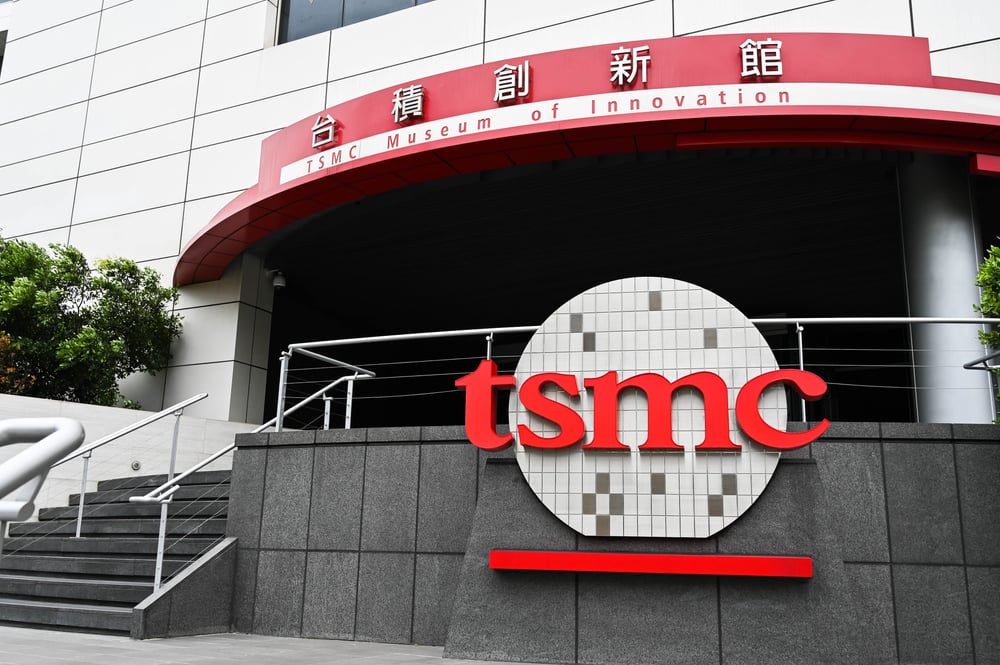
TSMC is ramping up its U.S. manufacturing footprint with a $265 billion total commitment to chip production in America, driven by AI demand tailwinds and a strong backlog of customer orders. The expansion underscores TSMC's strategy to diversify production away from Taiwan while maintaining its technological edge.
China's CXMT Emerges as Aggressive DRAM Competitor
China's state-backed CXMT (ChangXin Memory Technologies) is rapidly scaling production with an expected H1 2026 revenue of over 16 billion yuan—7 times year-over-year growth. Analysts project CXMT's full-year 2026 revenue could exceed $50 billion, signaling Beijing's determination to challenge incumbent DRAM makers like SK Hynix and Samsung in memory chips.
Memory Equipment Demand Reaches Record Levels Amid Capacity Build
Sales of semiconductor production equipment are expected to hit $156 billion by 2027, with China, Taiwan, and South Korea driving intense demand for advanced manufacturing tools. The surge reflects massive foundry and memory fabs coming online to meet insatiable AI chip demand.
Geopolitics & Trade Policy
Trump 2.0 Tariff Tracker Adds Uncertainty to Chip Supply Chains
The Trump administration continues implementing new tariff measures affecting semiconductors and technology exports. The evolving tariff landscape creates cross-currents for U.S. chip manufacturers, adding complexity to already-strained supply chain planning and pricing strategies.
China Expands Rare Earth Export Controls Targeting U.S. and EU Firms
China widened rare earth export controls to 10 U.S. firms in June and 14 EU firms in July 2026, directly targeting GPU and chip supply chains. The tactic represents Beijing's escalating counter-measure to Western semiconductor export restrictions and signals a deepening tech decoupling.
Export Bans Have Slowed China's Chip Push—But Older Equipment Still Narrows the Gap
While U.S. export controls have demonstrably slowed China's advanced chipmaking capabilities, Beijing's access to older—yet still capable—manufacturing equipment continues to narrow the technology gap in legacy nodes. The strategic stalemate suggests long-term semiconductor decoupling will remain incomplete without tighter multilateral coordination.
Market Moves & Earnings
Global Chip Sales Track Toward $1 Trillion in 2026
The semiconductor industry is on pace to exceed $1 trillion in annual sales in 2026, up from $791.7 billion in 2025, according to the Semiconductor Industry Association. Q1 2026 alone saw nearly $300 billion in global chip sales, with memory makers poised to earn $551 billion from the AI boom—double the revenue of contract manufacturers like TSMC.
AMD, Intel, Micron Extend Losses Amid AI Capex Doubts
Semiconductor stocks continued their broad decline this week, with AMD, Intel, and Micron all posting losses as investors question whether the AI spending surge can sustain current valuations. The selloff reflects a divergence: foundry strength (led by TSMC) versus memory chip weakness and chip equipment concerns.
Deep Dive: The Foundry Fortress vs. The Memory Battlefield
TSMC's Q2 earnings and H1 2028 1.4nm acceleration signal a widening divide in the semiconductor industry. While foundries—particularly TSMC, which reported a 34% revenue jump and 60%+ operating margins—continue to capture the AI upside, memory chip makers face pricing pressure and inventory correction. SK Hynix and Samsung have been disproportionately hit in this week's $1+ trillion market selloff, suggesting Wall Street is bifurcating its bets.
The deeper strategic story: TSMC is now pulling forward its most advanced nodes at accelerating pace, raising the bar for Samsung (targeting 1.4nm in 2029) and Intel (ramping 18A and 14A with new design wins). Yet this technological sprint comes amid geopolitical headwinds. China's CXMT is moving aggressively into DRAM—a lower-technology but critical commodity—while Beijing's rare earth controls are forcing U.S. and EU chip firms to reconsider supply chains. Meanwhile, the Trump administration's tariff uncertainty and Taiwan's ongoing strait risks loom over all long-term capacity planning.
The market's message is clear: foundry leadership (TSMC) is durable; memory competition (SK Hynix, Samsung) is brutal; and U.S. re-industrialization (Intel, Micron) is still unproven at scale. The chip wars are now fought on three fronts—technology, geopolitics, and cost—and TSMC's acceleration may be as much a race to lock in customer commitments before tariffs or export controls change the game as it is a race to beat Samsung.
What to Watch Next Week
- Samsung and Intel earnings updates on foundry progress and 2027 capacity plans; any guidance cuts could signal broader demand softening beyond memory.
- TSMC's advanced packaging announcements for customer wins (NVIDIA, Broadcom) that could validate the EMIB-rival technology's competitive viability.
- U.S. semiconductor tariff and trade policy developments following recent Trump administration moves; any announcements on CHIPS Act funding reallocation or export licensing changes.
- China domestic chip production milestones (CXMT IPO finalization, SMIC yield ramps) as indicators of Beijing's near-term competitiveness in memory and mature nodes.
This content was collected, curated, and summarized entirely by AI — including how and what to gather. It may contain inaccuracies. Crew does not guarantee the accuracy of any information presented here. Always verify facts on your own before acting on them. Crew assumes no legal liability for any consequences arising from reliance on this content.
Powered by
