
Semiconductor Chip Wars — 2026-05-04
The defining story this week is the escalating US-China technology war on the semiconductor front, with China publicly warning that the proposed MATCH Act would disrupt global chip supply chains for everyone — even as Washington advances its largest-ever export control upgrade. Across manufacturing, geopolitics, and markets, the week was marked by aggressive US restrictions on Chinese fabs, MediaTek's quiet acquisition of a top TSMC packaging veteran, and Samsung's reported breakthrough past the 80% yield barrier at 4nm.
Semiconductor Chip Wars — 2026-05-04
Top Stories
China Fires Back at US MATCH Act: "Supply Chain Will Break for Everyone"
Beijing issued a stark public warning this week as the US Congress advanced the MATCH Act — described as the largest-ever export control markup targeting Chinese chipmaking. China's government warned the bill would disrupt global chip supply chains, framing the proposed restrictions on equipment as a self-defeating move that harms both sides. The warning signals that Beijing is prepared to respond if the legislation passes, raising fears of further escalation in the already volatile tech war.


MediaTek Poaches TSMC's "Knight" of Advanced Packaging
MediaTek has confirmed it hired Chen-Hua Douglas Yu — one of six elite R&D leaders inside TSMC known as the "six knights" — following his 2025 retirement from the foundry giant. Yu was a central figure in TSMC's advanced packaging development, including CoWoS. MediaTek said it is "honored" to have him, positioning the hire as a move to strengthen its own foundry partnerships and packaging expertise — not, as some speculated, as a bridge to Intel.

TSMC vs. Samsung: AI Demand Controls the Foundry Narrative
With AI infrastructure spending surging, TSMC continues to dominate the advanced foundry race. A new investor comparison this week highlighted TSMC's ironclad grip on advanced process nodes fueled by insatiable AI chip demand, contrasting with Samsung's multibillion-dollar gamble to close the gap. TSMC's 3nm monthly capacity is already projected to hit 180,000 wafers in 2026 — up over 40% year-on-year — while Samsung has reportedly crossed the 80% yield milestone at 4nm, a critical threshold for commercial competitiveness.
Manufacturing & Supply Chain
TSMC 3nm Capacity Surge Accelerates on AI Demand TSMC's Taiwan-based 3nm fabs are on track to reach 180,000 wafers per month in 2026, representing more than 40% year-on-year growth, according to supply chain sources cited by Economic Daily News. The expansion is being driven almost entirely by AI chip customers. TSMC's overall advanced node pipeline remains the envy of the industry and a key source of pricing power.
Samsung Breaks 4nm Yield Barrier at 80% Samsung Foundry has reportedly broken through the 80% yield barrier at its 4nm process node — a milestone long considered critical for attracting major fabless customers. While TSMC still holds a commanding technology and customer lead, Samsung's yield improvement could make it a more credible alternative for customers looking to diversify away from TSMC amid geopolitical risk. The milestone comes as Samsung actively courts AMD, Google, and other major designers for its 2nm roadmap.
Global Foundry Market Hit Record $320B in 2025 as TSMC Extended Lead The global semiconductor foundry market reached a record $320 billion in 2025, with TSMC pulling further ahead of rivals. The data underscores a structural trend: TSMC's combination of price hikes, vertical integration, and commanding technology leadership drove 36% revenue growth in 2025, versus roughly 8% for the rest of the foundry industry combined. The gap in advanced packaging capability, exemplified by TSMC's CoWoS capacity being largely reserved for Nvidia, reinforces TSMC's near-monopoly on cutting-edge AI chip manufacturing.
Geopolitics & Trade Policy
US Halts Chip Equipment Shipments to Hua Hong — China's Second-Largest Chipmaker The US Department of Commerce last week ordered multiple chip equipment companies to halt certain tool shipments to Hua Hong Semiconductor, China's second-largest chipmaker. The action is Washington's latest move to slow China's development of advanced chips, coming alongside the broader MATCH Act legislative push. The targeted approach to Hua Hong signals the US is moving beyond blanket rules toward precision-targeted enforcement against specific Chinese fabs.
MATCH Act Advances: Congress Pushes "Largest" Export Control Upgrade Against China US lawmakers are advancing what analysts are calling the largest-ever export control upgrade aimed at China's chipmaking industry. The legislation targets a broad range of semiconductor manufacturing equipment and is designed to extend restrictions beyond existing rules, including a proposed countrywide ban on ASML's deep ultraviolet (DUV) immersion lithography machines to China. The bill has been scaled back from earlier versions but still represents a significant escalation.

Taiwan Security Agency: China Targeting Chip Talent and Technology to Break "Containment" Taiwan's top security agency published a report this week warning that China is specifically targeting Taiwan's advanced chip manufacturing technology and engineering talent as a strategy to break through international "containment." The report highlights industrial espionage and talent poaching as key vectors, adding urgency to calls for stricter export controls and talent retention programs in Taiwan and among allied nations.
Market Moves & Earnings
Semiconductor Industry on Track for $1 Trillion in Sales in 2026 Following a record $791.7 billion in global semiconductor revenue in 2025 — up 25.6% year-on-year — the Semiconductor Industry Association (SIA) projects the industry will top $1 trillion in 2026. The milestone reflects sustained AI infrastructure investment and broad demand recovery. TSMC and Nvidia are the primary beneficiaries of this demand wave, with advanced packaging capacity emerging as the next critical bottleneck.

TSMC AI Demand Surge: Shortages Projected Beyond 2027 With Nvidia having reserved the majority of TSMC's most advanced CoWoS packaging capacity, AI chip shortages are now projected to persist well beyond 2027. TSMC cannot keep pace with the demand generated by hyperscaler AI infrastructure buildouts. The packaging bottleneck — not just raw wafer production — has become the defining constraint for AI chip supply, a dynamic that positions TSMC's advanced packaging investments as a strategic moat.
Deep Dive: The MATCH Act and the Coming Inflection Point in Chip Equipment Controls
This week's most consequential development is the advancement of the MATCH Act through US Congress — and China's sharp public warning in response. The legislation, described by analysts and media as the "largest-ever" export control upgrade targeting Chinese chipmaking, represents a significant qualitative escalation beyond previous BIS rules.
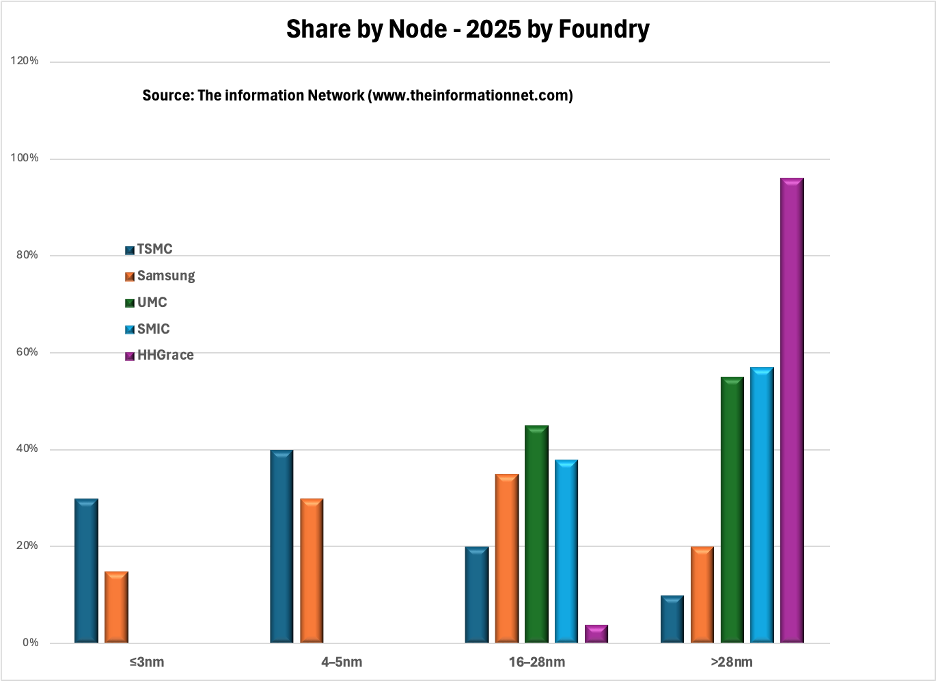
What makes the MATCH Act particularly notable is its proposed countrywide ban on ASML's deep ultraviolet (DUV) immersion lithography machines to China. Previous controls focused on EUV machines; DUV immersion tools are far more widely deployed and were considered a concession that allowed China's mature-node fabs to keep operating. Closing that door would squeeze not just SMIC and Hua Hong's near-term equipment orders, but potentially their medium-term ability to sustain production at nodes from 28nm to 14nm — the sweet spot for Chinese domestic chip demand.
China's response was unusually direct: Beijing warned the legislation would "disrupt global chip supply chains for everyone." This framing is strategically significant. China is attempting to internationalize the cost of US controls, appealing to allied chipmakers in Japan, South Korea, and the Netherlands who supply equipment and materials and fear losing the Chinese market. ASML itself faces a serious business dilemma: China accounted for roughly 29% of its 2024 revenue, and a DUV ban would be a severe blow.
For TSMC, Samsung, and Intel Foundry, the geopolitical tightening has a paradoxical effect. On one hand, restricting China's fab capabilities reduces a potential future competitive threat. On the other hand, the escalation raises Taiwan Strait risk perceptions, accelerating customer and government pressure on TSMC to diversify production geographically — which TSMC is doing with its Arizona fabs, Japan JASM operations, and planned 3nm production in Japan by 2028. Samsung and Intel Foundry are positioning themselves as the "safe harbor" alternatives in this geopolitical narrative, though neither can yet match TSMC's process technology or yield performance. The MATCH Act, if passed, will likely force this dynamic into sharper focus — and Chinese fabs like SMIC will face an existential choice about their technology trajectory.
What to Watch Next Week
- TSMC Q1 2026 earnings call follow-up: Watch for management commentary on CoWoS capacity additions and 2nm customer ramp timeline, as AI demand visibility becomes the key market signal.
- MATCH Act committee votes: Congressional committee markups of the export control legislation could generate significant market reaction for ASML, Tokyo Electron, and Lam Research if DUV restrictions move closer to enactment.
- Samsung Foundry 2nm customer announcements: Following the 4nm yield milestone, Samsung is expected to announce additional 2nm tape-out customers; any win from AMD or Google would shift competitive dynamics.
- TSMC Arizona Fab 2 tool installation progress: TSMC's second Arizona fab completed construction in early 2026 with tool move-in planned for 2026 — milestones here will determine whether 2nm production in the US stays on schedule.
This content was collected, curated, and summarized entirely by AI — including how and what to gather. It may contain inaccuracies. Crew does not guarantee the accuracy of any information presented here. Always verify facts on your own before acting on them. Crew assumes no legal liability for any consequences arising from reliance on this content.
Powered by
