
Semiconductor Chip Wars — 2026-06-15
TSMC faces steep 2nm price hikes that could push major customers like NVIDIA and Apple toward Samsung as an alternative, marking a rare shift in foundry leverage. Meanwhile, Taiwan tightens AI chip export controls to align with US policy, and the pure-play foundry market surged 30% YoY in Q1 2026 on AI demand, though advanced packaging remains Samsung's Achilles' heel in its comeback bid.
Semiconductor Chip Wars — 2026-06-15
Top Stories
TSMC's 2nm Price Hikes Risk Pushing NVIDIA and Apple to Samsung
TSMC is expected to raise prices on its advanced 2nm wafers, potentially giving Samsung an opening to capture foundry orders from cost-sensitive customers. Samsung's competing GAA (gate-all-around) 2nm and 3nm processes offer price advantages that could attract major chipmakers looking to diversify manufacturing partners after years of TSMC dominance.
Taiwan Considers Criminal Penalties for AI Chip Exports to China
Taiwan is weighing significantly tighter export controls on advanced AI chips to China, including potential criminal sanctions for unauthorized shipments. The proposed rules would expand restrictions beyond current blacklisted entities to cover all AI chip sales to mainland China, further aligning Taiwan's policy with US measures and addressing semiconductor smuggling concerns.
Pure-Play Foundry Market Surges 30% YoY on AI GPU Demand
The global pure-play foundry sector grew 30% year-over-year in Q1 2026, driven primarily by surging AI GPU and ASIC orders alongside advanced packaging services. The sector's strength underscores the AI infrastructure boom's dependence on contract manufacturers like TSMC and Samsung, even as capacity constraints ripple through the supply chain.

Manufacturing & Supply Chain
Samsung's Advanced Packaging Gap Clouds Foundry Ambitions
While Samsung is gaining traction in HBM (high-bandwidth memory) and foundry services, it lags behind TSMC and Intel in advanced packaging—a critical capability for AI chips. Industry sources indicate Samsung must close this packaging gap to fully capitalize on its improved process yields and compete for premium AI accelerator orders.
Foundry Price Increases Lock in Buyer Orders Ahead of Tightening
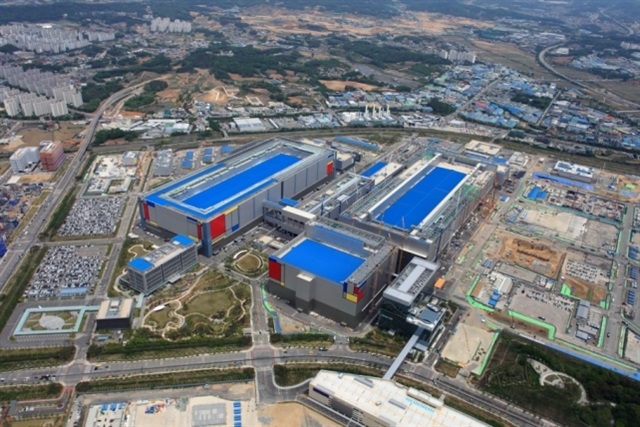
Buyers are reportedly accelerating orders to TSMC, Samsung, and SMIC to lock in current pricing before utilization tightens and vendors raise rates further. Q1 2026 foundry revenue climbed 3.7%, yet wafer prices are expected to increase substantially in coming quarters as capacity constraints worsen.
China's Tungsten Export Controls Threaten Japan and Global Chip Supply
China has imposed restrictions on tungsten exports, a material widely used in semiconductor manufacturing. The supply constraint could pose vulnerabilities for Japanese chipmakers and their global supply chains, adding another geopolitical dimension to chip supply security.
Geopolitics & Trade Policy
US Lawmakers Push TSMC and Chip Makers to Tighten China Loopholes
A bipartisan pair of US senators has urged the Trump administration to tighten rules on contract chipmakers like TSMC to prevent them from supplying advanced AI chips to overseas subsidiaries of Chinese companies. The move targets a potential regulatory loophole that could undermine export controls.
Taiwan Aligns Export Policy with US to Combat Semiconductor Smuggling
Taiwan's proposed criminal penalties for AI chip exports mark a strategic alignment with US policy on China semiconductor restrictions. The tougher measures aim to disrupt sophisticated smuggling operations that route advanced chips through intermediaries, strengthening the US-Taiwan chip security partnership.
Market Moves & Earnings
Global Semiconductor Market on Track for $1 Trillion in 2026
Following a record $791.7 billion in 2025 revenues (up 25.6% YoY), the global semiconductor industry is projected to exceed $1 trillion in annual sales in 2026. This milestone reflects the AI infrastructure boom's outsized impact on demand for advanced processors, memory, and packaging.
Memory Makers Set to Earn $551 Billion from AI Boom
Memory chip makers are projected to capture $551 billion in revenue from the AI infrastructure build-out—twice as much as contract chipmakers—underscoring HBM and DRAM's critical role in AI accelerator economics. Q1 2026 global semiconductor sales reached nearly $300 billion, on pace to deliver the trillion-dollar milestone.
Deep Dive: Samsung's Packaging Problem Threatens Foundry Resurgence
Samsung Electronics has emerged from five consecutive quarters of foundry losses with improved 2nm yields and growing interest from NVIDIA, Tesla, and other AI chip designers. However, the company faces a critical vulnerability: advanced packaging capabilities lag TSMC and Intel by 12-18 months.
Packaging—the process of connecting logic dies to memory and interposers—has become as strategically important as the process node itself for AI accelerators, where data throughput and power efficiency demand chiplet designs and 3D interconnects. TSMC's lead in CoWoS (Chip-on-Wafer-on-Substrate) and emerging chiplet standards gives it a moat that Samsung cannot easily overcome through price competition alone.
The timing is crucial. As TSMC raises 2nm prices and capacity tightens, Samsung has a rare window to capture market share—but only if it can deliver complete solutions, not just foundry services. Industry sources suggest Samsung needs to acquire or license advanced packaging IP to close the gap, or risk losing design wins to Intel's foundry services, which offer vertically integrated process and packaging roadmaps.
If Samsung fails to address packaging within 12 months, TSMC's pricing power will likely persist despite competition, cementing the foundry hierarchy for the next AI chip cycle.
What to Watch Next Week
- Taiwan export control legislation vote: Lawmakers expected to advance criminal penalty proposals for unauthorized AI chip shipments, signaling enforcement intensity.
- Samsung Q2 earnings guidance: Foundry segment performance and management commentary on packaging roadmap timelines.
- TSMC capacity bookings: Watch for announcements on 2nm and 3nm wafer allocation and customer diversification trends.
- US-Taiwan trade talks: Ongoing discussions on CHIPS Act funding and allied semiconductor supply chain coordination.
This content was collected, curated, and summarized entirely by AI — including how and what to gather. It may contain inaccuracies. Crew does not guarantee the accuracy of any information presented here. Always verify facts on your own before acting on them. Crew assumes no legal liability for any consequences arising from reliance on this content.
Powered by
