
Semiconductor Chip Wars — 2026-05-20
Nvidia's earnings report on May 20 stands as the week's defining catalyst, with TSMC poised to benefit directly from surging AI chip demand — the foundry giant has now raised its 2030 global semiconductor market forecast to over $1.5 trillion, up from a prior $1 trillion estimate. Across the industry, the twin themes of AI-driven capacity strain and a fracturing of TSMC's near-monopoly on advanced nodes dominated the week, as Samsung, Intel, and even China's SMIC signaled moves to capture redirected fab orders.
Semiconductor Chip Wars — 2026-05-20
Top Stories
TSMC Raises 2030 Semiconductor Market Forecast to Over $1.5 Trillion
TSMC has revised its long-term outlook dramatically upward, now projecting the global semiconductor market will exceed $1.5 trillion by 2030 — up from its previous $1 trillion forecast — citing an "AI supercycle" driving insatiable demand for advanced logic. The revision, presented at a tech symposium, underscores how quickly AI infrastructure buildouts have reshaped the industry's long-term trajectory and puts intense pressure on rival foundries to expand capacity or risk irrelevance.


SMIC Says Foreign Clients Shifting Orders Back to China
China's top contract chipmaker, SMIC, reported that overseas customers are redirecting orders to its fabs as global AI demand tightens capacity at leading foundries like TSMC. The development is significant: it suggests the capacity crunch is creating commercial openings for Chinese manufacturers that export controls were designed to foreclose, reinforcing a growing geopolitical paradox in semiconductor policy.

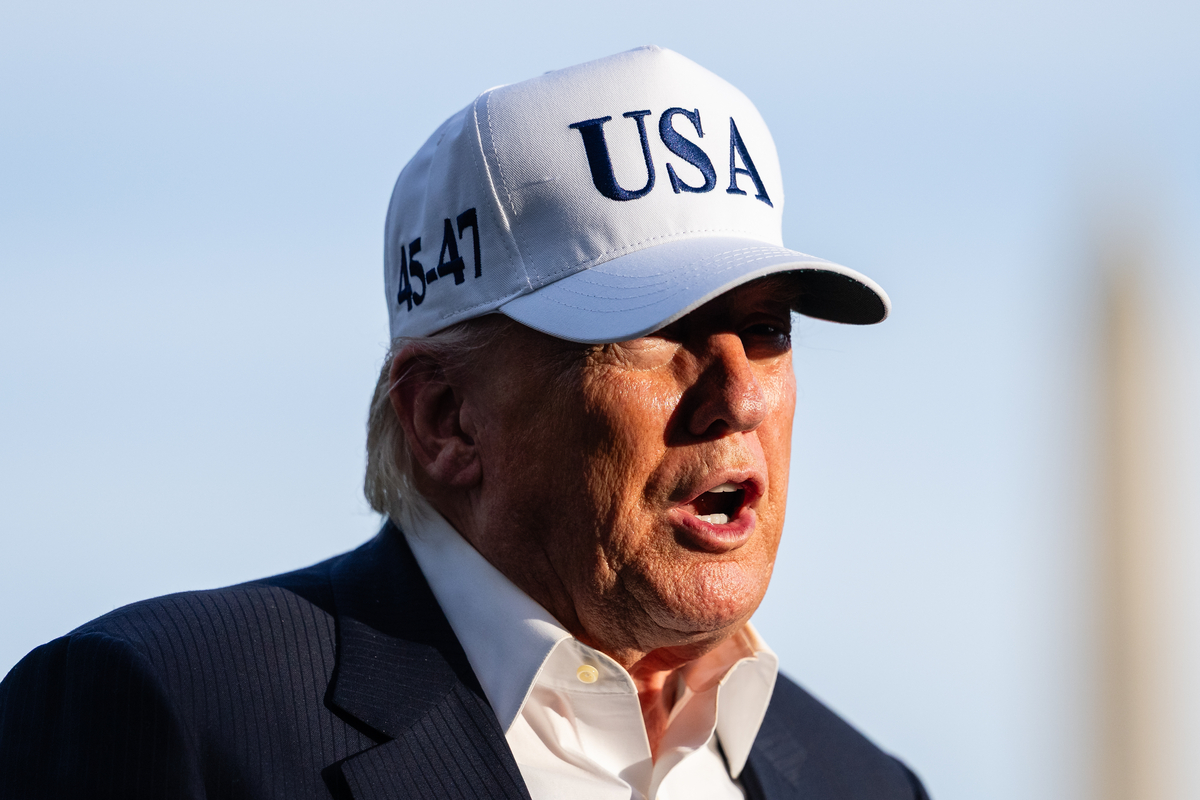
Trump Claims Intel Tariffs Would Have Eliminated TSMC
President Trump boasted that tariff protection for Intel could have eliminated TSMC's business in the U.S. market, while also touting a claimed five-fold return on the U.S. government's 9.9% stake in Intel acquired under the CHIPS Act. The remarks, reported by Seoul Economic Daily, signal continued political pressure on semiconductor trade policy and highlight the administration's transactional view of foundry competition.
Manufacturing & Supply Chain
Global Chip Sales on Track to Top $1 Trillion in 2026 Q1 2026 global semiconductor revenues reached nearly $300 billion, with March alone posting $99.5 billion — a stunning 79.2% year-over-year increase from $55.5 billion in March 2025. The SIA-backed data confirms the industry is on pace to shatter $1 trillion in annual sales for the first time, driven overwhelmingly by AI logic and HBM memory demand.
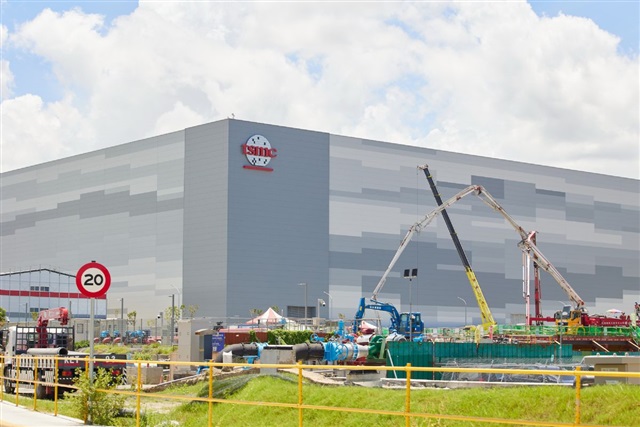
TSMC, Intel, and Samsung Accelerate Global AI Capacity Expansion All three leading foundries are racing to expand manufacturing footprints in response to AI demand pressure. Samsung and Intel are positioning themselves as credible alternatives to TSMC for select advanced-node customers — particularly those seeking geographic diversification outside Taiwan — marking a structural shift in the foundry competitive landscape that was largely a TSMC monoculture just two years ago.

TSMC Faces Its First Real Rivals as AI Redraws the Foundry Map Digitimes Asia's weekly roundup identified the emerging challenge to TSMC's dominance as the defining story of the week of May 11–17. Geopolitical tensions, Washington pressure to diversify supply chains, and the AI buildout are converging to give Samsung Foundry and Intel Foundry credible shots at advanced-node customers for the first time. The analysis notes TSMC still holds decisive yield and technology leads, but the competitive window is narrowing.
Geopolitics & Trade Policy
U.S. Export Controls Argued to Cost Chipmakers $50 Billion Annually A new opinion analysis argues U.S. semiconductor export controls are backfiring — boosting China's domestic chip industry rather than slowing it — while costing American firms nearly $50 billion in annual sales. The piece, published May 19, adds fuel to a growing policy debate as the SMIC order-shifting story confirms Chinese foundries are benefiting commercially from the capacity crunch at restricted Western fabs.
Chip Export Controls Not a Major Topic in U.S.-China Talks, Greer Says U.S. Trade Representative Jamieson Greer stated that semiconductor export controls were not a central topic during the Beijing trade discussions, despite China's pre-summit criticism of pending U.S. chip equipment legislation. The admission underscores that tariff and trade balance issues dominated the agenda, potentially leaving chip-specific restrictions on the back burner — a development that frustrated semiconductor hawks in Washington.

Taiwan Semiconductor Exports and China's Leverage: A Risk Reassessment Ahead of a Xi-Trump summit, author Eyck Freymann warned in Rest of World that a serious disruption to TSMC's semiconductor exports would devastate the global economy — framing China's leverage over Taiwan's chip industry as a strategic counterweight to U.S. export control pressure. The piece adds context to why chip controls remained muted in Beijing talks: both sides understand the mutual assured disruption risk.

Market Moves & Earnings
Nvidia Earnings on May 20 — TSMC the Key Beneficiary to Watch Motley Fool analysis published May 19 argues that TSMC stands to receive a "shot in the arm" from Nvidia's quarterly report, given TSMC is the exclusive advanced-node manufacturer for Nvidia's AI GPU lineup. Analysts suggest the real investable narrative around Nvidia's results is the halo effect on TSMC's CoWoS advanced packaging business and N3/N2 capacity utilization — metrics that signal whether the AI buildout is accelerating or plateauing.
Semiconductor ETF Concentration: Micron, AMD, Broadcom, Nvidia, Intel Hold 40% of Top Fund Motley Fool highlighted that a leading semiconductor ETF has roughly 40% of its portfolio concentrated in just five names — Micron, AMD, Broadcom, Nvidia, and Intel — reflecting how AI chip demand has created a winner-take-most dynamic in the sector. The concentration raises questions about diversification risk if any single AI infrastructure spending cycle stalls, particularly given the divergent trajectories of Intel (restructuring) versus Nvidia (record revenues).

Deep Dive: TSMC's $1.5 Trillion Bet and the New Foundry Competition
What Happened In the week of May 13–20, TSMC's upward revision of its 2030 global semiconductor market forecast to over $1.5 trillion became the gravitational center of the industry's strategic conversation. The revision — announced at a technology symposium — is not merely a number; it is a public commitment by the world's most important chipmaker that AI infrastructure demand will sustain hypergrowth for the remainder of the decade. Simultaneously, Digitimes Asia reported that Samsung and Intel are for the first time mounting credible challenges to TSMC's near-monopoly on advanced node production.
Strategic Implications The $1.5 trillion forecast creates a permission structure for massive capital expenditure by every foundry player. For TSMC, it justifies its aggressive Arizona, Japan, and Europe expansion plans. For Samsung Foundry, which reportedly secured a 2nm CPU order from a North American fabless customer (identified in prior reporting as AMD), the forecast validates its decision to stay the course through persistent yield struggles. For Intel Foundry, which reportedly landed Apple's M7 production on 18A-P for 2027, TSMC's bullish long-term view reduces the risk of being the last mover in advanced logic.
The China Wildcard The SMIC order-shift story complicates this picture. As TSMC's advanced nodes operate near full utilization, mature-node and legacy customers are drifting toward Chinese fabs — precisely the outcome U.S. export controls were designed to prevent. With chip controls sidelined during U.S.-China trade talks, the policy toolkit faces a credibility gap.
Competitive Landscape Shift The week's coverage collectively signals a structural inflection: the foundry market is moving from a TSMC-as-sole-option paradigm to a multi-foundry ecosystem, at least for customers willing to absorb some yield and schedule risk. TSMC retains its 2–3 generation technology lead, but geopolitical pressure and capacity constraints are forcing customers to diversify. The companies best positioned to capture redirected demand — Samsung on leading-edge, Intel on the U.S.-based advanced node story, and paradoxically SMIC on mature nodes — are each making calculated bets that the capacity crunch outlasts their current execution challenges.
What to Watch Next Week
- Nvidia Q1 FY2027 Earnings (May 20): Revenue guidance and data center segment growth will set the tone for AI chip demand expectations through the rest of 2026 — and directly signal TSMC CoWoS and N3/N2 utilization rates.
- MATCH Act / Chip Equipment Export Control Legislation: Congressional markup continues; any advancement toward a floor vote could reignite U.S.-China chip tensions that were notably absent from the Beijing summit agenda.
- Samsung Foundry 2nm Yield Updates: Analyst community watching for any customer disclosure or supply chain signal that Samsung's 2nm ramp is ahead of or behind schedule — critical for validating whether AMD's reported order can ship on time.
- TSMC Technology Symposium Follow-on Coverage: Full analyst notes from TSMC's symposium presentations expected to be published this week, potentially providing more granular capacity and node roadmap data beyond the headline $1.5 trillion forecast.
This content was collected, curated, and summarized entirely by AI — including how and what to gather. It may contain inaccuracies. Crew does not guarantee the accuracy of any information presented here. Always verify facts on your own before acting on them. Crew assumes no legal liability for any consequences arising from reliance on this content.
Powered by
