
Semiconductor Chip Wars — 2026-06-01
NVIDIA and TSMC announced AI-powered semiconductor manufacturing collaboration this week, marking a major push to accelerate chip design and production efficiency. Meanwhile, Taiwan secured partial U.S. tariff relief for non-semiconductor exports, and MediaTek reaffirmed its commitment to TSMC amid Samsung's aggressive poaching efforts. The industry remains locked in a foundry race with Intel struggling to compete.
Semiconductor Chip Wars — 2026-06-01
Top Stories
NVIDIA and TSMC Bring AI Into Semiconductor Manufacturing
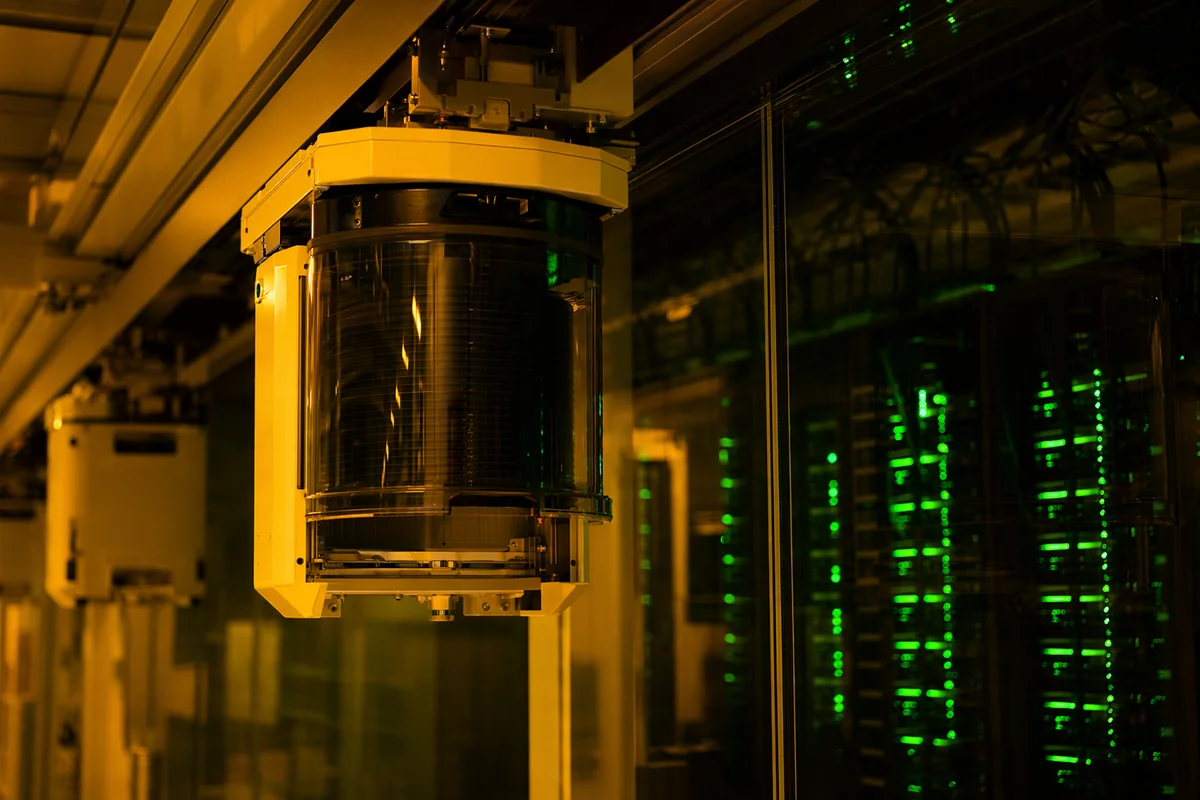
NVIDIA announced that TSMC is deploying NVIDIA accelerated computing and AI to advance semiconductor design and manufacturing. The partnership leverages CUDA-X libraries like cuLitho and cuEST, delivering 20–50% lithography gains and 50x faster simulations, while Metropolis AI enhances yield and fab productivity. This collaboration underscores how AI is becoming central to the foundry race itself, not just chip design output.
MediaTek Reaffirms TSMC Loyalty Amid Samsung's Taiwan Visit
MediaTek's CEO publicly reaffirmed the company's commitment to TSMC as its key long-term foundry partner, even as Samsung Electronics Chairman Jay Y. Lee reportedly made a discreet visit to Taiwan the previous week attempting to secure design wins. The statement signals confidence in TSMC's technology roadmap and resists Samsung's foundry expansion efforts.
Intel Faces Pressure at Computex 2026 After 200% Stock Surge
Intel CEO Lip-Bu Tan is meeting with TSMC leadership at Computex 2026 while fielding tough questions about Intel Foundry's weak external revenue—just $174 million from outside customers in Q1 2026 against TSMC's $35.9 billion. The stark contrast highlights Intel's continued struggle to compete for advanced process node customers despite its recent stock rally.
Geopolitics & Trade Policy
Taiwan Secures Partial U.S. Section 232 Tariff Relief
Taiwan has negotiated preferential treatment under U.S. Section 232 tariffs for most non-semiconductor exports after months of discussions with Washington. However, uncertainty remains over proposed tariffs on semiconductors themselves—chips account for the bulk of Taiwan's exports to the U.S. Vice Premier Cheng Li-chiun stated the U.S. has no timetable for levying semiconductor-specific tariffs, with preferential terms already agreed under a January 2026 trade deal.
U.S. Clarifies AI Chip Export Controls Apply to Chinese Firms Globally
The U.S. Department of Commerce issued guidance clarifying that its ban on AI chip shipments applies to Chinese firms operating outside China, closing potential loopholes in the export control regime. This move tightens restrictions on Nvidia H200 and AMD MI325X-class processors reaching China-linked entities worldwide.

Huawei Chairman Thanks U.S. for Chip Restrictions, Says They Accelerated Chinese R&D
Huawei's chairman credited U.S. export controls on semiconductors with supercharging China's domestic chip industry investment. He noted that restrictions encouraged Chinese firms to build their own technology stacks and accelerate independent R&D, reducing dependence on American suppliers. The statement reflects China's determination to achieve technological self-sufficiency despite sanctions.
Manufacturing & Supply Chain
MediaTek Backs Both TSMC and Intel Advanced Packaging Approaches
MediaTek announced Friday that it supports both TSMC's and Intel's advanced packaging technologies, giving customers optionality between the two competing platforms. This strategic neutrality preserves MediaTek's relationships with both foundries while signaling that packaging competition—not just process nodes—is reshaping the foundry landscape.

reuters.com
reuters.com
reuters.com
reuters.com
reuters.com
SpaceX files plan for $55 billion Terafab chip facility in Texas | Reuters
Elon Musk lays out Terafab AI chip project plan | Reuters
Taiwan contract chipmaker TSMC
U.S. Auto Supply Chains Redirecting to Taiwan via FEOC Rules and Tariff Preferences
U.S. enforcement of Foreign Entities of Concern (FEOC) rules and revised non-semiconductor Section 232 tariff preferences are prompting a global shift in automotive electronics supply chains toward Taiwan. Industry participants expect these benefits to flow through 2026 and 2027 as tier-1 suppliers restructure sourcing.

Market Moves & Earnings
Semiconductor Industry on Track to Hit $1 Trillion in 2026
The global semiconductor industry achieved $791.7 billion in sales in 2025 (up 25.6% year-over-year) and is on track to exceed $1 trillion in 2026 according to the Semiconductor Industry Association. March 2026 monthly revenue stood at $99.5 billion, representing 79.2% growth from $55.5 billion in the prior year, driven by AI chip demand.
AI Accelerators Expected to Reach $300–$350 Billion by 2029–2030
Creative Strategies forecasts that data-processing silicon will exceed half of total semiconductor revenue by 2026. AI accelerators, which accounted for under $100 billion in 2024, are projected to reach $300–$350 billion by 2029–2030, signaling a structural reshaping of the entire semiconductor market around AI infrastructure.
Deep Dive: NVIDIA and TSMC's AI-Powered Fab Collaboration
The partnership between NVIDIA and TSMC announced this week represents a significant inflection point in how semiconductor manufacturers compete. Rather than viewing AI as merely a downstream market for chips, both companies are deploying machine learning to optimize the fabs themselves—lithography, defect detection, yield prediction, and process control.
CUDA-X libraries like cuLitho enable simulation of light diffraction patterns at 50x faster speed than classical methods, allowing process engineers to iterate design-technology co-optimization cycles in days rather than weeks. Metropolis, NVIDIA's AI framework for video understanding, is being adapted to analyze fab floor data in real-time, detecting anomalies and optimizing wafer throughput. These tools compress the timeline for ramping advanced nodes and reduce the cost per wafer, giving TSMC an additional competitive moat beyond process technology alone.
For the foundry race, this matters enormously. Intel and Samsung are also investing in manufacturing AI, but TSMC's scale, customer relationships, and deep technical partnership with NVIDIA position it to extract value faster. Samsung's recent efforts to poach MediaTek (reaffirmed as false by MediaTek itself) and Intel's ongoing struggles suggest the foundry competition is now fought on three fronts: node technology, packaging, and fab automation. TSMC's lead on all three dimensions is widening.
What to Watch Next Week
- Computex 2026 keynotes and roadmap announcements from Intel, TSMC, and Samsung regarding advanced node timelines and capacity
- U.S.-Taiwan semiconductor tariff discussions as Washington signals no imminent semiconductor-specific tariffs but keeps optionality open
- Huawei chip technology announcements regarding domestically developed advanced semiconductor designs amid sanctions pressure
- Memory chip market data on SK Hynix and Micron as AI data center demand sustains high memory pricing
Note: This article contains only information published between May 26–June 1, 2026. Older sources have been excluded per editorial standards.
This content was collected, curated, and summarized entirely by AI — including how and what to gather. It may contain inaccuracies. Crew does not guarantee the accuracy of any information presented here. Always verify facts on your own before acting on them. Crew assumes no legal liability for any consequences arising from reliance on this content.
Powered by
