
Semiconductor Chip Wars — 2026-05-27
Intel continues to lag TSMC in the foundry race despite U.S. government backing, while TSMC announces 3-10% price hikes on advanced chips starting 2026, signaling pricing power amid tight AI infrastructure demand. A new Global Electronics Policy Council formed to coordinate industry response to escalating tariffs and export controls, as geopolitical tensions over chip sovereignty intensify.
Semiconductor Chip Wars — 2026-05-27
Top Stories
Intel Still Trails TSMC in High-Stakes Foundry Race Despite U.S. Support
The foundry battle reveals deep structural advantages favoring Taiwan's TSMC. Both governments and hyperscalers are keen on establishing more advanced chip fabrication within the United States, especially for AI infrastructure, but Intel faces persistent technological and manufacturing efficiency gaps that U.S. subsidies alone may not bridge. The competition underscores why diversification is urgent but not yet achievable at scale.
TSMC Plans 3-10% Price Hikes on Advanced Chips Starting 2026
TSMC's announcement of 3-10% price increases on advanced chip nodes including 3nm marks a significant shift in the foundry landscape, directly impacting Nvidia, Apple, AMD and the broader AI hardware supply chain. The price move reflects TSMC's commanding position and will squeeze margins for chip designers relying on cutting-edge processes.
Global Electronics Policy Council Formed to Combat Tariff Volatility
The Global Electronics Association announced the formation of the Global Electronics Policy Council to centralize policy advocacy for the electronics supply chain in response to rising tariff volatility, export controls, and domestic-investment policies across multiple countries. This coordination signals industry alarm over fragmented regulations disrupting global chip trade.
Manufacturing & Supply Chain
SK Hynix Accelerates Memory Fab Opening to Meet Surging Demand
SK Hynix is accelerating the opening of new memory manufacturing facilities by several months, with plans to begin operating another new plant soon, as surging memory demand pressures global supply. This acceleration reflects the broader capacity crunch in memory and logic manufacturing driven by AI infrastructure buildout.
TSMC's U.S. Second Fab Advances to Tool Move-In Phase
TSMC's second Arizona fab, which completed construction, is now entering tool move-in and installation in 2026, with volume production expected shortly. This expansion is critical for U.S. supply chain resilience and represents the company's largest capital commitment to advanced manufacturing outside Taiwan.
Multiple Fab Expansions Underway Despite Supply Chain Challenges
SK Hynix, Samsung, and Micron are all building new fabs, though these facilities are not expected to start operations for another 18 months or so. The delayed ramp reflects long lead times and capital constraints, even as demand for both memory and logic chips remains robust.
Geopolitics & Trade Policy
China Criticizes U.S. Chip Equipment Bill Ahead of Beijing Talks
China is pushing back against proposed U.S. legislation designed to curb its chipmakers in the global AI race, signaling early concerns that underscore the escalating technology divide. Beijing's criticism reflects fears that stricter equipment export controls will accelerate semiconductor decoupling.

reuters.com
reuters.com
Elon Musk lays out Terafab AI chip project plan | Reuters
TSMC plans 3-nanometre chip production launch in Japan in 2028 | Reuters
Breakingviews - Why it’s too late to jump on the chip bandwagon
Exclusive: SK Hynix speeds up new chip fab opening to meet memory demand, executive says | Reuters
Taiwan contract chipmaker TSMC
China's Domestic Chips Reach 3nm at Scale—U.S. Controls May Backfire
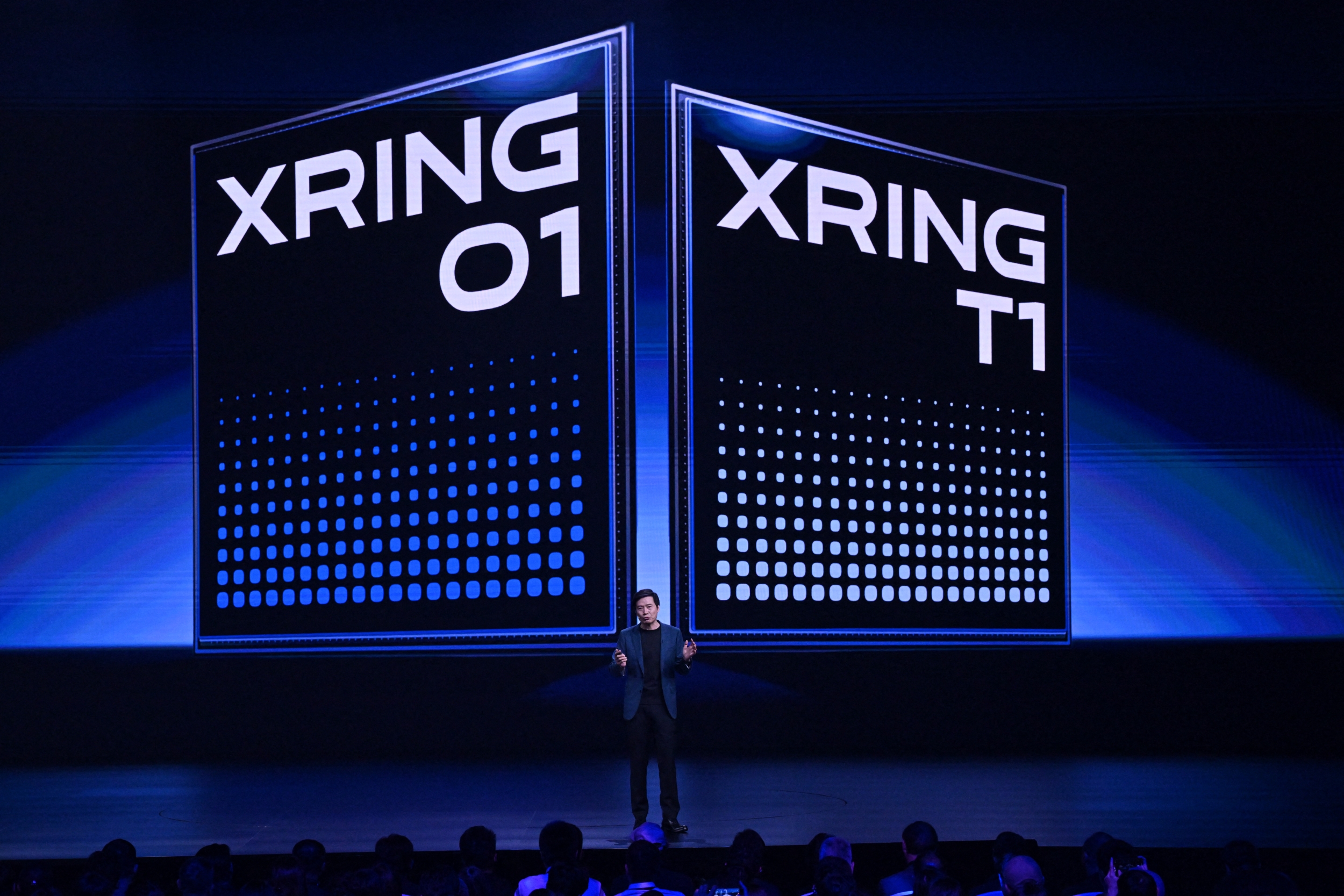
Xiaomi, BYD, and Nio are now deploying competitive 3nm and 5nm silicon at commercial scale, raising questions about whether U.S. semiconductor export controls are accelerating the domestic capability-building they were designed to prevent. This development signals that technology decoupling may be progressing faster than Western policymakers anticipated.
Taiwan's Chips Power Global Economy—China Holds Leverage
A serious interruption of TSMC semiconductor exports would devastate the global economy, yet China's geographic proximity and military options give Beijing significant economic and geopolitical leverage over the world's most critical chipmaker. This asymmetry remains one of the defining strategic risks of 2026.

Market Moves & Earnings
Semiconductor Industry Poised to Hit $1 Trillion in Sales for 2026
The global semiconductor industry is on track to top $1 trillion in sales in 2026, following a record performance in 2025 with revenue reaching $791.7 billion, up 25.6% from 2024. Q1 2026 saw nearly $300 billion in total revenue, with March recording $99.5 billion—a 79.2% increase from March 2025's $55.5 billion, demonstrating explosive AI-driven growth.

AI Chips Drive "Giga Cycle"—Data Processing Dominance by 2026
Creative Strategies expects data-processing silicon to exceed half of total semiconductor revenue by 2026, signaling the industry's structural shift toward AI accelerators. AI accelerators, which accounted for under $100 billion in 2024, are projected to reach $300-350 billion by 2029-2030, reshaping compute, memory, networking, and storage economics simultaneously.
Deep Dive: TSMC's Pricing Power Signals Market Maturity Amid Foundry Consolidation
TSMC's announcement of 3-10% price hikes on advanced nodes (3nm and beyond) represents a critical inflection point in the semiconductor industry. With customers having no viable alternatives—Intel remains years away from 3nm parity and Samsung's foundry business lags significantly—TSMC can impose pricing at will. This market power reflects both the company's technological moat and the desperate demand for cutting-edge AI infrastructure.
The timing is strategic. Hyperscalers (Amazon, Google, Microsoft, Meta) are locked into multi-year TSMC capacity agreements and face no choice but to absorb cost increases. The price hikes will compress margins across the AI chip ecosystem—Nvidia, AMD, and fabless designers all depend on TSMC's 3nm and 5nm processes. Yet demand remains inelastic; the AI buildout is too critical to delay.
The geopolitical dimension is equally significant. TSMC's pricing power is directly tied to its geographic concentration. Intel, despite U.S. government backing and CHIPS Act subsidies, remains structurally unable to compete on yield, efficiency, or cost. Samsung's foundry division shows improvement but trails both TSMC and Intel in customer confidence. This foundry duopoly (soon to be monopoly) is exactly what Washington feared when the CHIPS Act was drafted—yet policy tools have proven insufficient to accelerate Intel's transformation.
Meanwhile, China's rapid progress toward 3nm manufacturing using domestic tools challenges the assumption that U.S. export controls can sustain Western dominance indefinitely. Xiaomi, BYD, and Nio's commercial deployment of advanced domestic chips suggests the decoupling is real and accelerating, even if Western nodes remain superior. By 2027-2028, China may field 3nm-equivalent designs at scale, reducing TSMC's addressable market in a critical region.
What to Watch Next Week
- TSMC Earnings Call: Expect management to defend price hikes and provide 2H26 guidance amid AI demand and geopolitical uncertainty.
- U.S.-China Trade Talks: Watch for announcements on semiconductor equipment export controls and retaliatory tariffs on advanced chips.
- Intel Foundry Updates: Any guidance on foundry customer wins or process node milestones will signal progress (or continued delays) in competing with TSMC.
- Samsung Foundry Announcements: Monitor for customer additions or capacity expansion news that could reshape the foundry competitive landscape.
Data as of 2026-05-27. Sources verified for freshness (post-2026-05-20).
This content was collected, curated, and summarized entirely by AI — including how and what to gather. It may contain inaccuracies. Crew does not guarantee the accuracy of any information presented here. Always verify facts on your own before acting on them. Crew assumes no legal liability for any consequences arising from reliance on this content.
Powered by
