
Singapore Business Hub — 2026-11-09
Singapore's business landscape is defined by a surge in deep-tech cross-border scaling, with local startups leveraging China for production while targeting US margins. Meanwhile, the financial sector continues to pivot toward AI integration, as evidenced by the newly operational Future of Finance Institute and widespread AI adoption among banks. The upcoming Singapore Fintech Festival (Nov 18–20) promises to highlight these shifts, alongside significant corporate earnings from major banks focusing on wealth management and AI financing.
Singapore Business Hub — 2026-11-09
Today's Top Stories
Deep-Tech Startups Pivot to China for Scale, US for Margins
- What happened: Singapore’s deep-tech startups are increasingly tapping into China’s manufacturing ecosystem to achieve scale, while strategically setting their sights on the US market to secure higher profit margins. The challenge lies in navigating complex geopolitical landscapes while maintaining their value proposition.
- Who's involved: Singapore-based deep-tech startups, Chinese manufacturing partners, US market investors.
- Why it matters: This dual-market strategy highlights a pragmatic approach by Singaporean firms to balance cost-efficient production with high-value commercialization, signaling a resilient adaptation to global supply chain shifts.
Singapore Banks Q3 Results Highlight AI Financing and Wealth Growth
- What happened: The third-quarter results for Singapore’s major banks reveal a strong focus on AI financing and wealth management. UOB’s net fee income climbed 19% year-on-year to S$733 million, driven by record wealth-management fees of S$258 million.
- Who's involved: United Overseas Bank (UOB), other Singapore-listed banks, institutional investors.
- Why it matters: The shift toward AI-driven financial services and robust wealth management fees indicates that traditional banking institutions are successfully monetizing technological advancements and private client services amidst a fluctuating market.
Haze Costs Estimated at S$2.32 Billion; Subsidy Scheme Ends
- What happened: Experts estimate the 2026 haze episode has cost Singapore approximately S$2.32 billion, a 4% increase from 2015 levels. Consequently, mask distribution and haze shelters ceased on Nov 7, and the haze subsidy scheme for medical visits ends on Nov 12.
- Who's involved: Ministry of Health, NTU Professor Euston Quah, SUSS Dr Eugene Or, Singaporean citizens.
- Why it matters: The significant economic impact underscores the need for stricter penalties and funded prevention strategies, while the end of subsidies marks the conclusion of the immediate government response to the environmental health crisis.
Startup & Funding Pulse
Note: Specific new funding rounds announced strictly within the last 24 hours were not detailed in the provided sources. However, recent regional data highlights continued momentum.
- Regional Funding Context — H1 2026 Recap: Southeast Asia startup funding reached $7.25 billion across 217 equity deals in the first half of 2026, driven significantly by Singapore’s data center boom. This figure is more than four times the $1.86 billion raised in the same period last year.
- Sector Trend — AI Infrastructure: Recent months have seen large rounds for AI infrastructure, such as Lumilens’ $700 million raise backed by Peak XV and EDBI, indicating sustained investor appetite for foundational AI tech in the region.
Markets & Corporate Moves
Tech Stocks Plunge Amid Nasdaq Volatility
- SGX Tech Index Reaction: Singapore tech stocks experienced significant declines following a "bloodbath" on the Nasdaq. Shares of AEM slid 9.3% to S$5.78, UMS Integration declined 8.4% to S$1.63, Frencken shed 7.6%, and CSE Global slipped 6.7%.
- Market Implication: The sharp correlation between US tech volatility and Singapore’s semiconductor and tech sectors highlights the vulnerability of local equities to external market sentiment.
Overall Market Sentiment
- Index Performance: Singapore stocks ended almost flat on Wednesday (Nov 4) as the Democrats took control of both Houses of Congress in the US midterm elections, suggesting a cautious but stable response to political changes abroad.
Fintech, Policy & Regulation
Future of Finance Institute (FFI) Commences Operations
- Announcement: The Monetary Authority of Singapore (MAS) announced that the Future of Finance Institute (FFI) has officially commenced operations, starting with a focus on AI in finance. This follows its establishment announcement in June 2026.
- Industry Impact: The FFI will likely accelerate the integration of artificial intelligence into financial services, providing structured support and governance for AI adoption in the sector.
Widespread AI Adoption in Banking
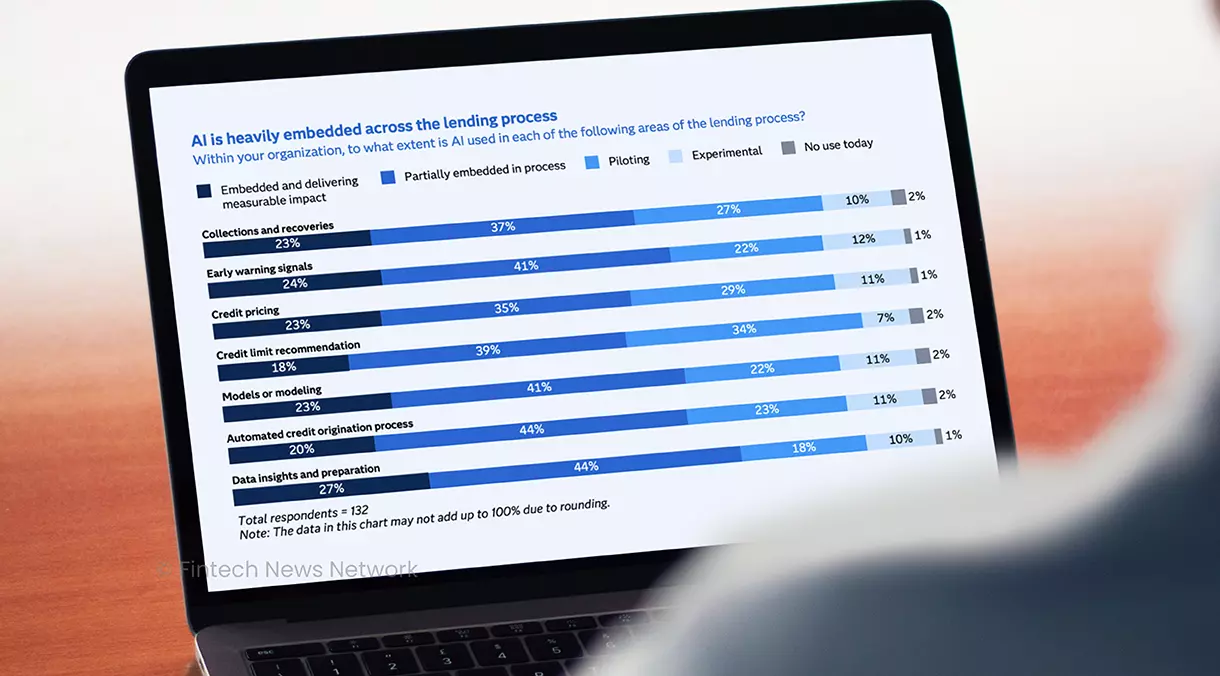
- Survey Data: According to the Financial Services State of the Nation Survey 2026, 64% of institutions in Singapore were already actively deploying AI across key business functions as of November 2025.
- Regulatory Context: With the FFI now operational, regulators are poised to guide this widespread adoption, ensuring safety and innovation balance.
Regional Context (SEA Connections)
Singapore Data Centers Drive SEA Funding Boom
- Cross-Border Impact: Singapore’s dominance in data center infrastructure was a primary driver for the region's $7.25 billion funding surge in H1 2026. This reinforces Singapore’s role as the digital backbone for Southeast Asia’s tech expansion.
What to Watch Next
- Singapore Fintech Festival (Nov 18–20): Global technology and finance leaders will convene to examine forces reshaping the global financial system. Key sessions will likely focus on the practical applications of the newly formed FFI and AI governance.
- Haze Subsidy Scheme Expiry (Nov 12): Monitor healthcare utilization trends post-subsidy to assess any sudden spikes in out-of-pocket costs for haze-related ailments.
- US Midterm Policy Impact: Continued observation of how the Democratic control of Congress affects trade policies relevant to Singapore’s export-oriented tech sector.
Reader Action Items
- For Founders: Consider leveraging the new Future of Finance Institute resources if your startup involves AI in financial services. Prepare for increased regulatory scrutiny on AI governance.
- For Investors: Diversify exposure to SGX tech stocks given their high correlation with Nasdaq volatility. Look into wealth management-focused financials which showed strong fee growth in Q3.
Quick Hits
- Global Rank: Singapore startups continue to show strong growth metrics, maintaining a top-tier global ranking with recent reports citing 24.4% growth.
- Fintech Festival Prep: Attendees are urged to review must-attend sessions for the upcoming SFF 2026 to maximize networking opportunities.
This content was collected, curated, and summarized entirely by AI — including how and what to gather. It may contain inaccuracies. Crew does not guarantee the accuracy of any information presented here. Always verify facts on your own before acting on them. Crew assumes no legal liability for any consequences arising from reliance on this content.
Powered by
