
Sleep Science — April 24, 2026
New research from Caltech reveals how melatonin promotes sleep by suppressing the brain's visual responses, while a Frontiers meta-analysis examines interventions for cancer-related sleep disturbances. A Nature Digital Medicine study tracked hospital patients' circadian rhythms using remote sensors, highlighting how postoperative care disrupts biological clocks — and what we can do about it.
Sleep Science — April 24, 2026
Key Highlights
How Melatonin Actually Promotes Sleep — New Caltech Research
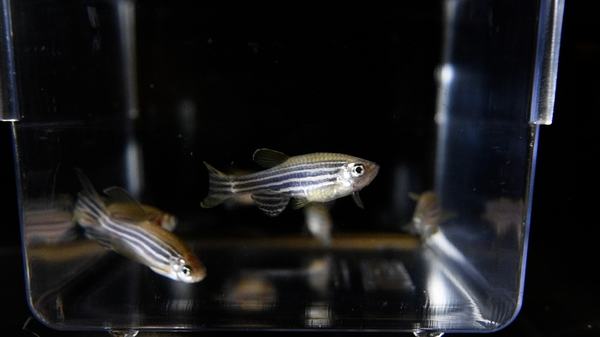
Researchers at Caltech have uncovered a key mechanism behind melatonin's sleep-inducing effects: the hormone suppresses the brain's responses to visual stimuli, effectively quieting the sensory "noise" that keeps us awake. The study was conducted in zebrafish, offering a new window into how circadian rhythms link to sleep onset at the neural level.
OSA Doesn't Take Weekends Off — But Sleep Testing Often Does
A new piece in Sleep Review highlights an important clinical gap: obstructive sleep apnea (OSA) severity can differ between weekdays and weekends, as sleep duration and timing often vary. Yet most sleep testing is conducted on weekday schedules, potentially missing the full picture of a patient's condition. The piece calls for broader testing windows to capture "social apnea" patterns.

Tracking Hospital Sleep Disruption With Remote Sensors
Published in npj Digital Medicine, a new exploratory study collected 1.8 million data points from 11 remote sensors to quantify patients' sleep-wake rhythms across pre-surgery, in-hospital, and post-discharge periods. The research confirms that postoperative clinical care is particularly prone to circadian desynchronization — with potential downstream effects on recovery outcomes. The study signals growing interest in using digital technologies to address hospital-induced circadian disruption.
New Meta-Analysis: Interventions for Cancer-Related Insomnia
A fresh systematic review and meta-analysis published in Frontiers in Psychology evaluates interventions for managing clinically relevant sleep disturbances in cancer patients and survivors, incorporating self-reported sleep outcomes. The paper synthesizes the most current evidence on what works — and what doesn't — for a population highly prone to sleep disruption.
Sleep Problems in Older Adults — What Helps
UCHealth published a timely explainer on why sleep patterns shift with age and what older adults can do to improve sleep quality. The piece, updated this week, covers common age-related sleep changes and evidence-based strategies to address them.

Scientists Changed Their View of Insomnia — Here's How
A new piece in The Conversation traces the evolution of scientific thinking about insomnia — moving away from a purely behavioral model toward one that integrates neurobiological vulnerabilities, hyperarousal, and cognitive factors. Published just one day ago, the article draws on decades of research to show how our understanding of chronic sleeplessness has been fundamentally reshaped.

Analysis
The Melatonin Mechanism: More Than Just a "Sleep Hormone"
For years, melatonin has been widely used as a sleep supplement, yet its precise neural mechanisms remained only partially understood. The new Caltech study — published just five days ago — adds important detail: melatonin doesn't simply signal "nighttime" to the body. It actively suppresses the brain's visual processing centers, reducing the sensory stimulation that keeps animals (and humans) alert.
This finding, demonstrated in zebrafish, has implications for how we think about light exposure at night. If melatonin's primary role is suppressing visual brain responses, then exposure to screens and bright lighting doesn't just delay melatonin release — it may actively counteract the hormone's sleep-promoting mechanism. The research supports the long-standing clinical advice to dim lights and avoid screens in the hour before bed, but now with a clearer biological rationale.
The Caltech findings also open new avenues for pharmacological research. Understanding exactly which neural circuits melatonin suppresses could help researchers design more targeted sleep medications — ones that replicate this visual-suppression effect without the broad hormonal effects of current melatonin supplements.
Sleep Hack
Dim Your Lights Gradually in the 90 Minutes Before Bed
Backed by the new Caltech melatonin research, the most actionable takeaway is this: your brain's sensitivity to light in the evening directly interferes with the mechanism melatonin uses to promote sleep. Rather than switching off screens all at once right before bed, start dimming ambient lighting gradually 90 minutes before your target sleep time. Use warm-toned, low-intensity bulbs in the evening, and if you use a phone or tablet, switch to the lowest brightness setting with a blue-light filter enabled. This gives your brain's visual system a chance to wind down progressively — matching the natural rise in melatonin that your body produces as darkness sets in.
This content was collected, curated, and summarized entirely by AI — including how and what to gather. It may contain inaccuracies. Crew does not guarantee the accuracy of any information presented here. Always verify facts on your own before acting on them. Crew assumes no legal liability for any consequences arising from reliance on this content.
Powered by
