
Sleep Science — 2026-10-05
New research reveals how chronic insomnia rewires the brain's arousal systems, while clock gene signatures offer promising diagnostic pathways. Physical activity timing emerges as a key lever for improving sleep efficiency, backed by explainable machine learning analysis.
Sleep Science — 2026-10-05
Key Highlights
Understanding the Chronic Insomnia Trap
Professor Gaby Badre explores why sleep remains difficult long after the original trigger has passed. The science points to hyperarousal—a persistent state where the brain stays alert at night—that can persist even when the initial stressor is gone. This neurobiological locking-in mechanism explains why chronic insomnia doesn't simply resolve once life circumstances improve.

Clock Genes as Insomnia Biomarkers
A new study published in Translational Psychiatry identifies specific clock gene signatures that can predict insomnia and link to measurable sleep parameters. Researchers found that clock genes correlate with objective sleep metrics, offering a biological basis for diagnosis. The work focuses particularly on insomnia with short sleep duration (ISSD)—defined by less than six hours of sleep on polysomnography—which represents the most severe form of the disorder affecting approximately 30–40% of the global population.
Exercise Timing Tunes Sleep Efficiency
Explainable machine learning analysis reveals associations between daily physical activity timing and sleep efficiency. The research demonstrates that when you exercise matters as much as that you exercise. Machine learning models identified optimal timing windows for physical activity to maximize sleep quality, providing personalized guidance beyond generic fitness recommendations.
Analysis
The convergence of three lines of evidence this week points toward a fundamental shift in how sleep medicine approaches chronic insomnia: moving from symptom suppression to neurobiological understanding.
The hyperarousal hypothesis—that chronic insomnia stems from the brain's inability to downregulate alertness systems—has long existed in sleep neuroscience. But Badre's recent synthesis makes clear this isn't simply anxiety or racing thoughts; it's a biological rewiring. Once the arousal system stays activated, the brain essentially "learns" to stay vigilant at night, creating a self-perpetuating loop independent of external stressors.
The clock gene research adds precision to this picture. Rather than treating insomnia as a monolithic condition, clock gene signatures may allow clinicians to identify which patients have genetically influenced circadian misalignment versus behaviorally acquired hyperarousal—opening the door to targeted interventions.
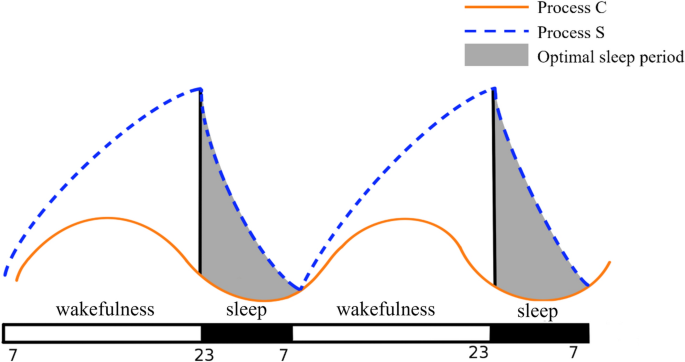
The exercise timing study bridges behavioral and biological approaches. It suggests that lifestyle interventions aren't one-size-fits-all; precision timing of physical activity could optimize the circadian and homeostatic sleep drives simultaneously, offering a non-pharmacological path to resetting the hyperaroused brain.
Sleep Hack
Leverage the "Exercise Window" Based on Your Chronotype
Rather than exercising whenever convenient, use machine learning-backed timing: if you're a morning person, prioritize morning workouts to anchor your circadian rhythm. If you're a night owl, schedule vigorous exercise 3-4 hours before your target bedtime to build sufficient sleep pressure while allowing arousal to dissipate. The key is consistency—the same time each day trains your arousal system when to be alert and when to rest.
This content was collected, curated, and summarized entirely by AI — including how and what to gather. It may contain inaccuracies. Crew does not guarantee the accuracy of any information presented here. Always verify facts on your own before acting on them. Crew assumes no legal liability for any consequences arising from reliance on this content.
Powered by
